

The Department of Civil and Construction Engineering combines teaching and research with industry needs to provide students with the skills required to build resilient infrastructure for a sustainable world. Our research focus includes innovative structural systems, digital design and construction, innovative construction materials, construction automation, and urban environmental and transport systems.
Explore our courses
Our civil and construction engineering courses combine strong theoretical foundations with a practical, real-world focus to give students the confidence and skills required for the workplace.
-
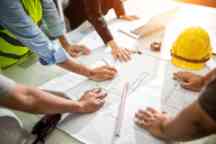
Civil Engineering
-

Construction Management
-
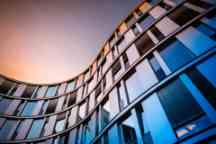
Architectural Engineering


Our facilities
-
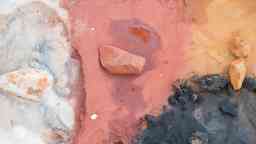
Geotechnical Laboratory
-
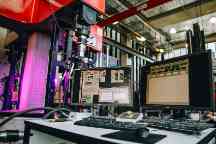
Smart Structures Laboratory


-
"Acciona Geotech wholeheartedly supports Swinburne’s Work Integrated Learning program and acknowledges the quality of Swinburne’s civil engineering programs as being both practical and relevant to industry. Thanks to the diversity and robustness of Swinburne’s courses, students quickly find their feet and undertake real work and add value in a very short period of time.”
Dene Macleod , Business Improvement Manager, ACCIONA Geotech
Our people
-
Professor Pat Rajeev
Chair, Department of Civil and ConstructionDepartment of Civil and Construction Engineering
Academic staff
| Name |
Position |
Contact |
Location |
|---|---|---|---|
| Professor Pat Rajeev | Professor in Civil Infrastructure Engineering, Department Chair |
ATC713 | |
| Professor Riadh Al-Mahaidi | Professor of Structural Engineering |
EN713c | |
| Professor Jay Sanjayan |
Professor in Structural Engineering Director, Centre of Sustainable Infrastructure and Digital Construction |
ATC716 | |
| Professor Arul Arulrajah | Professor in Geotechnical Engineering | ATC742 | |
| Professor Hussein Dia | Professor in Future Urban Mobility | ATC741 | |
| Professor Saman Fernando | Professor in Sustainable Infrastructure | +61 3 9214 4879 msfernando@swinburne.edu.au |
ATC712 |
| Adjunct Professor Nicholas Haritos | Adjunct Professor in Structural Engineering | nharitos@swinburne.edu.au | |
| Professor Monzur Imteaz | Professor of Water Engineering, Head of Water Engineering Group | ATC725 | |
| Professor Allison Kealy | Professor Director, Innovative Planet Research Institute |
akealy@swinburne.edu.au | ATC719 |
| Professor Lam Pham | Professor in Sustainable Infrastructure | lpham@swinburne.edu.au | ATC726 |
| Professor Hing-Ho Tsang | Adjunct Professor in Structural Engineering | htsang@swinburne.edu.au | |
| Professor Hao Wang | Professor of Composite Materials | haowang@swin.edu.au | ATC743 |
| Professor Javad Hashemi |
Professor, Director of MAST, Smart Structures Laboratory |
ATC717 | |
| Associate Professor Palaneeswaran Ekambaram | Associate Professor in Construction Engineering | ATC738 | |
| Associate Professor Shirley Gato-Trinidad |
Associate Professor, Associate Dean, Education | ATC727 |
|
| Associate Professor Lily Li | Associate Professor in Civil Engineering | EN705a | |
| Associate Professor Robin Kalfat | Associate Professor in Structural Engineering HDR Advisor |
ATC721 | |
| Associate Professor Jessey Lee | Associate Professor in Structural Engineering | ATC735 | |
| Associate Professor Scott Rayburg |
Associate Professor (Water, Environment and Sustainability) |
ATC729 | |
| Dr Scott Menegon | Senior Lecturer in Structural Engineering, Director of Smart Structures Laboratory |
smenegon@swinburne.edu.au |
ATC730 |
| Dr Kamiran Abdouka | Senior Lecturer in Structural Engineering | ATC740 | |
| Dr MD Morshed Alam | Senior Lecturer in Construction Management | ATC734 | |
| Dr Iqbal Hossain | Senior Lecturer in Civil Engineering | ATC728 | |
| Dr Mohamed Gomaa | Senior Lecturer in Architectural Engineering | mgomaa@swinburne.edu.au | |
| Dr Robert Evans | Senior Lecturer in Geotechnical Engineering | ATC737 | |
| Dr Amanda (Mengqi) Huang | Lecturer in Construction Management | ATC722 | |
| Dr Janitha Migunthanna | Lecturer in Construction Engineering | jmigunthannakariyaka@swinburne.edu.au | ATC723 |
| Dr Anita Amirsardari | Research Fellow | aamirsardari@swinburne.edu.au | |
| Dr Nan Zhang | Research Fellow | nanzhang@swin.edu.au | |
| Dr Xiangzhe Weng | Research Fellow | xweng@swinburne.edu.au | |
| Dr Peter Allen | Education Specialist in Construction Engineering | pnallen@swinburne.edu.au | |
| Dr Hendrik Wijaya | Education Specialist in Structural Engineering | hwijaya@swin.edu.au | ATC739 |
| Dr Tilak Pokharel | AEFAC National Technical Manager | ATC712 | |
| Dr Farshid Maghool | Senior Engineer Geotechnical Laboratory Manager |
AMDC102 |
Latest news
-
- Social Affairs
- Science
- Sustainability
- Engineering
Swinburne secures ARC Linkage funding for industry-focused research
Swinburne is the lead organisation for two ARC Linkage Projects while also contributing to four externally led projects
Thursday 28 May 2026 -
- University
- Aviation
- Engineering
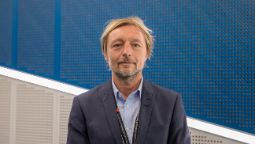
Swinburne appoints Dr Patryk Burka as AIR Hub Director
Dr Patryk Burka has been appointed as Director of Swinburne’s Aerostructures Innovation Research Hub (AIR Hub)
Monday 04 May 2026 -
.jpg/_jcr_content/renditions/cq5dam.web.256.144.jpeg)
- Design
- Science
- University
- Aviation
- Engineering
Swinburne continues its strong performance in QS World University Rankings by Subject 2026
Swinburne continues its strong performance in the QS World University Rankings by Subject 2026, with 17 subjects placing in the rankings
Thursday 26 March 2026 -
- Technology
- Science
- Sustainability
- Engineering
Swinburne’s international collaborations driving meaningful impact
Swinburne is collaborating with international researchers to tackle global challenges in clean energy, sustainable materials and energy-efficient buildings.
Monday 16 March 2026 -
- Technology
- Science
- Sustainability
- Engineering
Swinburne to drive innovation in critical minerals research and industry
Swinburne will contribute its expertise to the Critical Metals for Critical Industries Cooperative Research Centre (CMCI CRC)
Thursday 12 March 2026


.jpg/jcr:content/renditions/cq5dam.web.1024.576.jpeg)


Find more news articles about the Department of Civil Construction and Engineering.
Explore our other departments and centre
Contact the Department of Civil and Construction Engineering
For general enquiries, call 1300 794 628 to speak with our friendly team. You can also email us at Dean-SchoolofEngineering@swinburne.edu.au.