

Ten Swinburne researchers named among world's most cited

Ten Swinburne academics have been named on the Highly Cited Researchers 2026 list, released by Clarivate.
In summary
- Ten Swinburne academics have been named in Clarivate’s Highly Cited Researchers 2026 list
- Researchers are recognised across computer science, engineering, space science and cross-field research
- The annual list recognises the top researchers worldwide for significant and broad research influence
Ten Swinburne University of Technology researchers have been named in Clarivate’s Highly Cited Researchers 2026 list.
Swinburne academics are recognised across computer science, engineering, space science and cross-field research, with several recognised in multiple fields. The list demonstrates the breadth and global impact of research at Swinburne.
The list showcases leading scientists and social scientists whose publications rank in the top 1% by citations for their field and publication year.
Deputy Vice-Chancellor, Research, Professor Karen Hapgood says the recognition reflects the sustained influence of Swinburne research around the world.
“Swinburne researchers are making an extraordinary impact around the world, from advancing artificial intelligence and robotics, to improving health and deepening our understanding of the universe. This recognition demonstrates the huge impact we have as a relatively small university community,” Professor Hapgood says.
“It’s wonderful to see ten of our researchers recognised for the influence of their work. Behind this recognition are years of curiosity, collaboration and commitment to advancing knowledge. I’m proud to congratulate each of the researchers on this outstanding achievement.”
Swinburne researchers on the 2026 list
Professor Jinjun Chen has been cited for computer science. Professor Chen’s research spans distributed and cloud computing, data privacy and security.
Associate Professor Xiaohua Ge has been cited for computer science and engineering. Associate Professor Ge is a globally recognised researcher with a primary research interest in automation and control. His work includes a strong focus on networked control theories and technologies for cooperative autonomous systems.
Associate Professor Qing-Long Han has been cited for computer science and engineering. Associate Professor Han’s research spans control engineering, mechatronics and robotics, applied mathematics and artificial intelligence.
Associate Professor Ivo Labbe has been cited for space science. His research explores how the first stars and galaxies formed, evolved and came to an end.
Professor Chee Peng (CP) Lim has been cited for cross-field research. Professor Lim’s research focuses on the design and development of computational intelligence-based systems for data analytics and decision support.
Professor Neville Owen has been cited for cross-field research. Professor Owen’s research explores preventing and managing type 2 diabetes, cardiovascular disease and cancer.
Professor Ryan M Shannon has been cited for space science. Professor Shannon’s research focuses on astronomical science, space sciences, particle and high-energy physics, including the study of some of the most extreme objects in astronomy.
Associate Professor Chenghua Sun has been cited for cross-field research. Associate Professor Sun’s research areas include physical chemistry, materials engineering and macromolecular chemistry. His research focuses on catalyst design for clean energy and environmental applications.
Professor Hao Wang has been cited for cross-field research. Professor Wang is a world-leading researcher in composite materials whose research areas span carbon fibre composites, plastics recycling, low-carbon concrete and CO2 conversion.
Associate Professor Xian-Ming Zhang has been cited for computer science and engineering. Associate Professor Zhang’s research looks at repetitive control systems in networked environments.
About Clarivate’s Highly Cited Researchers 2026
The Highly Cited Researchers 2026 list represents leading scientists and social scientists whose publications have demonstrated exceptional influence within their fields and across the global research community.
Each researcher featured has authored multiple highly cited papers that rank in the top 1% by citations for their field and publication year in the Web of Science Core Collection over the past eleven years.
The 2026 list includes 6,802 researchers from more than 1,200 institutions in 62 countries and regions. This year, Australia ranked fifth globally for the number of Highly Cited Researcher awards, with a 4.1% share of the global total.
Featured
-
Professor Karen Hapgood

Professor Karen Hapgood
Deputy Vice-Chancellor (Research)

-
Media Enquiries
Media Enquiries
Related articles
-
Swinburne recognised as a national leader in research and innovation

- Technology
- Education
- Science
- University
Swinburne has been named as Australia’s leading institution in two research fields, with five researchers recognised among the nation’s best in The Australian Research Magazine 2027.
Tuesday 24 November 2026 -
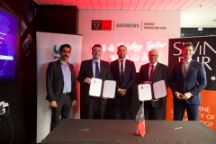
Swinburne and Siemens expand energy industry training across the Asia-Pacific
- Engineering
Swinburne University of Technology and Siemens are helping the transition to cleaner, safer and more reliable electricity across the Asia-Pacific region through a new practical, localised training initiative.
Tuesday 10 November 2026 -
Research commercialisation is a team sport, not a solo sprint

- Technology
- Education
- Science
- University
Swinburne’s Deputy Vice-Chancellor, Research, Karen Hapgood and Werner van de Merwe, Vice President, Innovation and Enterprise explores how Swinburne turns research and innovation into meaningful industry impact.
Tuesday 24 November 2026 -
Music therapy could help protect cognitive function in people living with dementia
- Science
Swinburne research explores how music therapy could support brain function, memory and cognition in people living with dementia and help delay its onset.Tuesday 10 November 2026 -
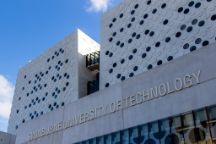
Ten Swinburne researchers named among world's most cited
- Astronomy
- Science
- Engineering
Ten Swinburne University of Technology researchers have been named in Clarivate’s Highly Cited Researchers 2026 list.
Thursday 26 November 2026


