

Swinburne and Siemens expand energy industry training across the Asia-Pacific

In summary
- Swinburne University of Technology and Siemens have established a new practical, localised training initiative
- The Siemens–Swinburne International Energy Transition Alliance for Industry Training and Innovation will help professionals and address skills shortages
- The initiative will see a network of international training and innovation nodes established across the Asia-Pacific region
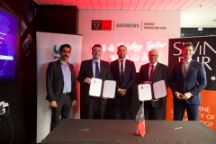
Swinburne University of Technology and Siemens are helping the transition to cleaner, safer and more reliable electricity across the Asia-Pacific region through a new practical, localised training initiative.
The Siemens–Swinburne International Energy Transition Alliance for Industry Training and Innovation will help professionals build their expertise in the industry, while addressing broader skills shortages and creating local career pathways.
The initiative will see a network of international training and innovation nodes established across the Asia-Pacific region, operating as extensions of the existing Siemens Swinburne Energy Transition Hub in Australia.
The Hub will coordinate training programs in close collaboration with local partner institutions, giving local energy professionals practical, industry-focused training using Siemens technologies and expertise in modern power systems, renewable energy integration, power system modelling and grid resilience.
Peter Halliday, Managing Director of Siemens Australia and New Zealand, said the international expansion demonstrates how industry and academia can work together to take Australian energy expertise to the world.
“The energy transition is a global challenge, and developing the right skills and capabilities is just as important as deploying the right technology. Australia has enormous expertise in tackling this transition,” he said.
“Through our collaboration with Swinburne, we’ve combined world-leading technology, research and practical industry experience. This next chapter is about taking that capability beyond Australia, starting in Malaysia, and working with local universities and industry to address each country’s own energy challenges.”
The Alliance builds on the Siemens Swinburne Energy Transition Hub, a first-of-its-kind Australian facility connecting education, research and industry.
Led by Professor Mehdi Seyedmahmoudian, it gives students, researchers and practitioners access to industry tools and supports practical work.
“Through this Alliance, we are creating a connected network of international partners to equip energy professionals across the Asia-Pacific with the skills and technologies needed for the energy transition,” Professor Seyedmahmoudian said.
“The energy transition is about more than producing renewable electricity. It is also about giving people the skills and tools to keep an increasingly complex energy system secure, reliable and resilient.”
Jose Moreira, head of Siemens Grid Software business in Asia-Pacific said the initiative has enormous potential for impact.
“Our collaboration with Swinburne continues to evolve, extending into other areas such as research on the role of AI in achieving Net Zero and the first Australian study on quantum timing to strengthen the future of power grids,” he said.
“It’s a model that connects academic expertise with real industry challenges, and one we now have the opportunity to extend internationally.”
Swinburne School of Engineering Executive Dean, Professor Emad Gad, said the new Alliance reflects Swinburne’s commitment to industry collaboration and the global energy transition.
“The Siemens–Swinburne International Energy Alliance for Industry Training and Innovation is an exciting step in expanding our collaboration beyond Australia,” Professor Gad said.
“By combining Swinburne’s research and educational expertise with Siemens’ leading technologies, we are creating new opportunities to support the workforce needed for the global energy transition while strengthening our international partnerships.”
Featured
-
Emad Gad

Emad Gad
Dean, School of Engineering -
Associate Professor Mehdi Seyedmahmoudian

Associate Professor Mehdi Seyedmahmoudian
Director, Siemens Swinburne Energy Transition Hub


-
Media Enquiries
Media Enquiries
Related articles
-
Swinburne and Siemens expand energy industry training across the Asia-Pacific
- Engineering
Swinburne University of Technology and Siemens are helping the transition to cleaner, safer and more reliable electricity across the Asia-Pacific region through a new practical, localised training initiative.
Tuesday 10 November 2026 -
Four new projects announced at the 2026 FACET Symposium in Sydney
- Science
- University
- Sustainability
- Engineering
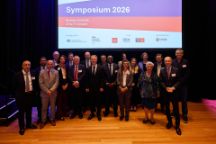
The 2026 Franco-Australian Indo-Pacific Centre for Energy Transition (FACET) Symposium held in Sydney brought together experts, researchers and industry leaders for an event that discussed building resilient infrastructure, next generation power systems and integrated energy solutions.
Tuesday 27 October 2026 -
Swinburne researchers contribute to nearly $20 million in ARC-funded projects

- Design
- Technology
- Science
- University
- Sustainability
- Engineering
Swinburne researchers are contributing to four successful projects in the latest Australian Research Council (ARC) Industrial Transformation Research Program, representing nearly $20 million in combined project funding.
Tuesday 20 October 2026 -
Swinburne continues to rise in global subject rankings

- Technology
- Health
- Education
- Science
- University
- Engineering
Swinburne has achieved strong results across 26 subjects in the ShanghaiRanking’s Global Ranking of Academic Subjects 2026.
Thursday 17 September 2026 -
Swinburne joins global biomaterials research training program

- Technology
- Health
- Science
- University
- Engineering
Swinburne has joined the prestigious German Research Foundation-funded International Research Training Group (IRTG) on Multidimensional Biomaterials (MB)2 program
Monday 17 August 2026


