

Research commercialisation is a team sport, not a solo sprint

In summary
- This article was originally published in The Australian Research Magazine.
Australia has a long and proud history of inventions that have made a global impact.
From the black box recorder to the bionic ear, we have long produced things that change lives and reach millions of people. But even with strong support for innovation, a good idea will remain just that unless it can be developed into a product, service or solution that people can use.
Traditionally, innovation is described as a sequential process which starts with a bright idea. The concept is then developed, tested to see whether it works, before finding a way to bring it to the people who need it.
Innovation sometimes happens this way, but its far rarer than people think. The sequential approach is a risky one – it can lose momentum, lose direction, and ultimately good ideas get lost to a disjointed system.
Swinburne takes a different approach. Successful inventions need the right team involved, with a shared plan and drive for turning an idea into something that can make a difference.
We see innovation as a team sport where researchers, entrepreneurs, investors and industry know their roles from the beginning and work as a team, readying themselves for their part, working together on the process and seeing their teammates through to the end.
The biggest opportunities often stem from curiosity-driven research generating new knowledge, which is at the heart of what universities do. Commercialisation is about systematically creating products and services that shape future markets unlocked by this new knowledge and then focusing the team on developing the fit between problems and solutions.
This process brings investors, entrepreneurs, companies and start-ups together and brings them on board to test, develop and ultimately bring these products or services to the public.
Bringing these worlds together is where the real impact starts, and what we at Swinburne do boldly and with ambition. Researchers working on major challenges collaborate with industry, clinicians, practitioners and policymakers from the outset.
In recent years, Swinburne has had five times as many active start-up companies for every dollar of research expenditure than the Australian average, placing us first in Australia on this metric. That result is no accident.
At Swinburne, every academic has 10 per cent of their time set aside for innovation and engagement, to turn promising ideas into practical outcomes.
We also have one of the largest and most active in-house venture funds in the sector, and the dedicated professional support to go with it.
These are bold and ambitious investments for a university, but critical to success. They are also initiatives that we hope will shape and inspire our counterparts in both research and industry.
Institutions that can connect research with the people and resources needed to put it into practice will help shape the industries of the future. Swinburne’s vision is to do exactly that: build a team with a shared goal that works together from start to finish.
Australia already has all the components and potential to do great things. We have world-class research, facilities, industry capability and talent. Bringing these components together through future investment, smarter strategies and a strong shared vision will turn knowledge into new industries and outcomes. That’s something Swinburne is prioritising, and we advocate for within the education sector, industry and beyond.
Ultimately, this is a team effort. Researchers, students, industry, investors and government must work together from the first breakthrough through to largescale use. Winning one part of the game is not enough – everyone must work together to turn a promising idea into an outcome that benefits people and contributes to a better world.
Featured
-
Dr Werner van der Merwe

Dr Werner van der Merwe
Vice President (Innovation and Enterprise) -
Professor Karen Hapgood

Professor Karen Hapgood
Deputy Vice-Chancellor (Research)


-
Media Enquiries
Media Enquiries
Related articles
-
Swinburne spinout to cut AI’s energy demands with breakthrough chip
- Technology
A new Swinburne spinout is tackling one of AI’s biggest infrastructure challenges: moving more information through data centres while using less energy.
Friday 30 October 2026 -
Swinburne climbs global university sustainability rankings for 2027

Swinburne University of Technology has climbed seven places to rank 283rd globally in the QS Sustainability Rankings 2027, recognising its social and environmental impact.
Wednesday 18 November 2026 -
50 years of psychology at Swinburne: celebrating the people behind the science
- Education
- Science
- University
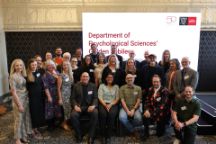
Swinburne’s Department of Psychological Sciences celebrates its 50th anniversary in 2026, reflecting on five decades of psychology education, research and professional training.
Wednesday 11 November 2026 -
Swinburne appoints Professor Simon Ridings as Vice-Chancellor and President

- University
Swinburne University of Technology is pleased to announce the appointment of Professor Simon Ridings as its Vice-Chancellor and President.
Friday 13 November 2026 -
Swinburne and Siemens expand energy industry training across the Asia-Pacific
- Engineering
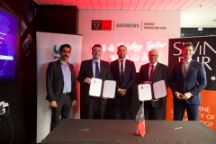
Swinburne University of Technology and Siemens are helping the transition to cleaner, safer and more reliable electricity across the Asia-Pacific region through a new practical, localised training initiative.
Tuesday 10 November 2026


