

Four new projects announced at the 2026 FACET Symposium in Sydney

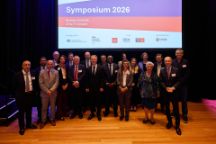
The 2026 FACET Symposium in Sydney broughgt together experts, researchers and industry leaders to discuss sustainable energy solutions.
In summary
- The Franco-Australian Indo-Pacific Centre for Energy Transition (FACET) Symposium brought together experts, researchers and industry leaders to collaborate on next generation power systems and resilient energy future
- Four new projects were unveiled at the symposium that will explore sustainable biofuels, maritime decarbonisation, mine electrification and more efficient rare earth processing
- The symposium highlighted strong collaboration between Australia and France
The 2026 Franco-Australian Indo-Pacific Centre for Energy Transition (FACET) Symposium held in Sydney brought together experts, researchers and industry leaders for an event that discussed building resilient infrastructure, next generation power systems and integrated energy solutions.
The symposium, which marked the third annual event to date, announced four new Franco-Australian projects, building on strong collaboration between Australia and France.
Deputy Vice-Chancellor, Research, Professor Karen Hapgood says the FACET Symposium brings government, researchers and industry together to explore critical opportunities across the energy transition.
“Through international collaboration and strong industry partnerships, FACET is helping turn ambitious ideas into practical solutions and Swinburne is proud to be a founding member of this remarkable international initiative.”
FACET is a bilaterally funded initiative of Australia’s Department of Foreign Affairs and Trade (DFAT) and the French Ministry for Europe and Foreign Affairs (MEAE) and founding partners Swinburne University of Technology and France’s CEA and Université Grenoble-Alpes.
Based at Swinburne’s Hawthorn campus, FACET is led by Co-Directors Gordon Chakaodza and Sarah Cumming, connecting research, industry and government to develop strategic, sustainable and inclusive energy solutions for France, Australia and the Indo-Pacific region.
Four new projects tackling sustainable energy solutions
The four new projects announced at the 2026 FACET Symposium bring $1.38 million in co-investment from project partners.
The projects focus on sustainable and inclusive energy solutions for France, Australia and the Indo-Pacific region:
- Algae to fuel – Turning CO₂-absorbing microalgae into sustainable biofuels in Queensland and helping Indo-Pacific nations adopt this process to build their own resilient local fuel supply chains.
- Pacific shipping, decarbonised – An open-source planning platform, co-designed with maritime authorities and local operators, to reduce carbon emissions and facilitate public investment.
- Cleaner mining – An electrification demonstrator in New Caledonia’s mining industry to reduce its carbon footprint and lay the foundations for replication in Australia.
- Smarter rare earths – Creation of a high value thermodynamic dataset to explore new critical minerals processing that is more sustainable, cost-effective, and efficient.
FACET Symposium 2026
The symposium brought together research experts, government officials, and energy leaders to discuss some of the biggest challenges shaping the energy transition through hard-to-abate fuels, resilient infrastructure, next-generation power systems and energy storage beyond batteries.
Swinburne’s Pro-Vice Chancellor for Flagship Initiatives and Executive Committee member of FACET, Professor Alan Duffy says the projects and annual symposium that FACET supports are intentionally industry-led and research-informed.
“With that triple helix of research, industry, and government, seeking practical and pragmatic opportunities in sustainable aviation fuels, electrification and emerging energy technologies expedites the energy transition in both our nations and the wider Indo-Pacific.”
Director of Siemens-Swinburne Energy Transition Hub, Professor Mehdi Seyedmahmoudian spoke at the event, discussing integrated energy solutions and how to make the energy transition more affordable and stable for homeowners through batteries and microgrids.
Other speakers and contributors to the FACET symposium included French and Australian government representatives and leaders from UNSW Sydney, Qantas, Airbus, CEA, CSIRO, Schneider Electric, Endeavour Energy and Université Grenoble Alpes.
The symposium also featured findings from a 2024 pre-feasibility study on a low-carbon fuel demonstration plant in New South Wales, Victoria and Queensland. The study was undertaken by Downer, CEA, Axens and H2Potential, offering a pathway to sovereign production of high-value, low-carbon fuels in Australia.
Through growing industry investment and collaboration between Australia and France, FACET is supporting practical innovations that can contribute to a more resilient, secure and sustainable energy future.
Featured
-
Professor Karen Hapgood

Professor Karen Hapgood
Deputy Vice-Chancellor (Research) -
Professor Alan Duffy

Professor Alan Duffy
Institute Director -
Gordon Chakaodza

Gordon Chakaodza
Director, Victorian Hydrogen Hub


-
Media Enquiries
Media Enquiries
Related articles
-
Swinburne secures funding to strengthen Australia's future energy networks

Swinburne has secured $2.2 million in funding as a leading university partner for a project to develop next-generation quantum timing technology for Australia's energy networks.
Friday 23 October 2026 -
Four new projects announced at the 2026 FACET Symposium in Sydney
- Science
- University
- Sustainability
- Engineering
The 2026 Franco-Australian Indo-Pacific Centre for Energy Transition (FACET) Symposium held in Sydney brought together experts, researchers and industry leaders for an event that discussed building resilient infrastructure, next generation power systems and integrated energy solutions.
Tuesday 27 October 2026 -
Swinburne researchers contribute to nearly $20 million in ARC-funded projects

- Design
- Technology
- Science
- University
- Sustainability
- Engineering
Swinburne researchers are contributing to four successful projects in the latest Australian Research Council (ARC) Industrial Transformation Research Program, representing nearly $20 million in combined project funding.
Tuesday 20 October 2026 -
World-first psilocin binge eating disorder trial reveals improvement in all patients

- Science
Swinburne University of Technology and Entropy Neurodynamics’ world-first IV-infused psilocin binge eating disorder trial has led to improvement in all participants.
Tuesday 15 September 2026 -
Swinburne’s research quality rises in global rankings
- Technology
- Education
- Science
- University
Swinburne has placed 294th globally in the 2027 Times Higher Education World University Rankings
Wednesday 30 September 2026


