

Swinburne spinout to cut AI’s energy demands with breakthrough chip

In summary
- Technology invented by a new Swinburne spinout could improve the operation of data centres
- Microcomb has officially launched, with photonic chip technology designed to address the growing energy demands of data centres
- The commericalisation of the technology shows how Australian research can have real-world impact across the globe
A new Swinburne spinout is tackling one of AI’s biggest infrastructure challenges: moving more information through data centres while using less energy.
Microcomb, a deep technology company, has officially launched with photonic chip technology designed to address the growing energy demands of data centres.
It is the first company in Australia to bring optical microcomb technology to market and one of the first in the world to apply it to data centres.
Building on research published in Nature, Microcomb’s technology uses an optical microcomb - a fingernail-sized chip that turns a single laser colour into a rainbow of laser light to transmit data.
The chip divides this light into many channels, much like turning a single-lane road into a multi-lane data highway.
Swinburne Optical Sciences Centre Director, and Microcomb Co-Founder Professor David Moss explains how the technology could improve the operation of AI data centres.
“Traditional optical transmission uses multiple lasers to generate separate channels for transmitting data,” he says.
“This energy intensive approach requires significant power to operate the lasers and detectors, while limiting the amount of data each channel can carry.”
"We use a laser to send light down a fibre, then we slot in a small microcomb chip which splits the light into multiple channels so the data can be transmitted on these individual layers.”
He says one of Microcomb’s biggest advantages is its small footprint, which could allow the technology to be introduced without large components or major upgrades.
“AI data centres rely on many servers working together as one large computer, which means they need vastly more connections, fibre optics and data movement. All of that requires power,” he says.
“The energy required to support this growth is the huge bottleneck we’re up against. We’re reaching a crisis point, and we have to solve it from multiple angles because simply throwing more money and energy at the problem won’t work.”
“We are proud to be at the forefront of this technology and look forward to seeing it make a real impact.”
Microcomb brings together leading researchers David Moss from Swinburne, Bill Corcoran from Monash University and Arnan Mitchell from RMIT University, with support from the ARC Centre of Excellence in Optical Microcombs and pre-seed investment from Innovation Victoria.
Innovation Victoria’s University Innovation Platform provided the investment pathway to help translate the company’s technology into a commercial opportunity, with Innovation Victoria investing alongside Swinburne Ventures Limited. This followed early commercialisation support from Swinburne’s Commercial Innovation team, which helped strengthen the proposition and position the company for investment.
David also credits commercialisation support from Swinburne’s Innovation and Enterprise group, led by Vice-President Werner van der Merwe and initial funding by Swinburne Ventures Limited, with helping transform pioneering research into a commercially viable technology with global market potential.
“It has been incredibly rewarding to support Microcomb’s journey from breakthrough research to real-world impact - something Swinburne is proud to champion,” van der Merwe says.
"Backing startups and spinouts like Microcomb at an early stage is critical to turning world-class research into real-world solutions, accelerating the path from discovery to impact for industry and the community."
With incorporation complete and pre-seed financing secured, Microcomb has commenced building a customer-informed demonstrator and is engaging prospective customers and partners across AI infrastructure and photonic communications.
Featured
-
Professor David Moss
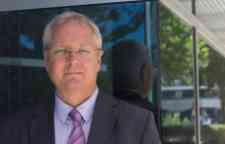
Professor David Moss
Director, Optical Sciences Centre -
Dr Werner van der Merwe

Dr Werner van der Merwe
Vice President (Innovation and Enterprise)


-
Media Enquiries
Media Enquiries
Related articles
-
Swinburne spinout to cut AI’s energy demands with breakthrough chip
- Technology
A new Swinburne spinout is tackling one of AI’s biggest infrastructure challenges: moving more information through data centres while using less energy.
Friday 30 October 2026 -
Melbourne tech company advances portable chemical threat detection for global markets

- Technology
Swinburne University of Technology and Innovation Victoria have joined forces to co-invest in Forward Deployed.
Tuesday 27 October 2026 -
Swinburne researchers contribute to nearly $20 million in ARC-funded projects

- Design
- Technology
- Science
- University
- Sustainability
- Engineering
Swinburne researchers are contributing to four successful projects in the latest Australian Research Council (ARC) Industrial Transformation Research Program, representing nearly $20 million in combined project funding.
Tuesday 20 October 2026 -
Swinburne’s research quality rises in global rankings

- Technology
- Education
- Science
- University
Swinburne has placed 294th globally in the 2027 Times Higher Education World University Rankings
Wednesday 30 September 2026 -
Swinburne continues to rise in global subject rankings

- Technology
- Health
- Education
- Science
- University
- Engineering
Swinburne has achieved strong results across 26 subjects in the ShanghaiRanking’s Global Ranking of Academic Subjects 2026.
Thursday 17 September 2026


