

Powering renewables skills for Australia's energy transition

Swinburne has developed innovative training to support renewable energy skills for electricians, in preparation for Australia's energy transition.
In summary
- Swinburne has developed new training to help electricians with emerging skills needed in renewable energy and electrification
- Swinburne-led industry engagement found electricians need stronger skills to commission, test and fault-find integrated renewable energy systems
- Five new microcredentials will help qualified electricians upskill with supporting learning modules for electrical apprentices
Swinburne University of Technology has developed new innovative training to build the skills required for Australia’s energy transition.
Five microcredentials have been created to upskill licensed electricians in integrated power systems, where solar, batteries, electric vehicle chargers, loads and the grid interact.
The training focuses on gaps in key skill areas: understanding how integrated systems work, configuration and commissioning, testing and fault-finding, and adapting to changing standards, site requirements and technologies.
Swinburne has also developed learning modules for Certificate III in Electrotechnology apprentices, alongside solar and battery digital learning materials required for installer accreditation.
Swinburne led industry engagement, incorporating small and large employers, peak bodies, policy and government bodies, learners, unions and TAFEs.
Senior Educator in Electrical Trades Ash Reid says that close industry engagement gave the team a clear picture of the challenges electricians face on the job.
"Commissioning and fault-finding are where electricians told us they need more support, particularly as every system and brand behaves differently," he says.
He explains that by understanding these challenges in depth, the team could design practical training based on real-world scenarios rather than on one product, brand or situation.
"Industry experts helped co-design the content to make sure it reflects the challenges electricians see on site. That's what makes it fit-for-purpose."
The Victorian Government is targeting 95% renewable energy by 2035, with a goal to hit net zero by 2045; consumer demand for at-home electric vehicle charging and home solar is also rapidly rising.
Madelyn Bolch, Pro Vice-Chancellor and Chief Executive of Vocational Education, says the project brought together government, industry and TAFE to build the skills needed in the transition to clean energy.
"When TAFEs, industry and government work together, we can respond quickly to changing industry needs and create training that makes a real difference for the workforce," she says.
“This initiative is a great example of our ongoing commitment to future industries, workforce innovation and Australia’s clean energy transition.”
The project was delivered as part of the Victorian Skills Authority's VET Certificates in Renewable Energy program.
Swinburne worked with industry experts and educators from TAFE Gippsland, South West TAFE and Federation University to develop the training materials.
The materials will be shared with TAFEs across Victoria and can be adapted for local delivery and to address upcoming training package changes.
-
Media Enquiries
Media Enquiries
Related articles
-
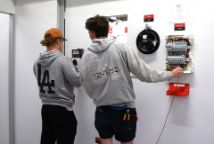
Powering renewables skills for Australia's energy transition
- Trades
- Sustainability
Swinburne has led the development of innovative training for electricians to build the skills for Australia's energy transition.Friday 06 November 2026 -
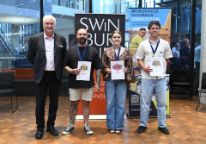
Celebrating Swinburne's WorldSkills competitors
- Trades
- Student News
Swinburne University of Technology learners have competed at WorldSkills regional competitions, with three competing at the International competition in Shanghai.
Friday 23 October 2026 -
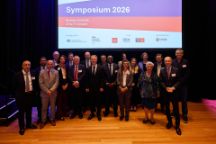
Four new projects announced at the 2026 FACET Symposium in Sydney
- Science
- University
- Sustainability
- Engineering
The 2026 Franco-Australian Indo-Pacific Centre for Energy Transition (FACET) Symposium held in Sydney brought together experts, researchers and industry leaders for an event that discussed building resilient infrastructure, next generation power systems and integrated energy solutions.
Tuesday 27 October 2026 -
Swinburne researchers contribute to nearly $20 million in ARC-funded projects

- Design
- Technology
- Science
- University
- Sustainability
- Engineering
Swinburne researchers are contributing to four successful projects in the latest Australian Research Council (ARC) Industrial Transformation Research Program, representing nearly $20 million in combined project funding.
Tuesday 20 October 2026 -
Why skills matter more than ever in technology-infused future

- University
Swinburne leaders reflect on how practical skills, digital capability and flexible learning pathways are preparing people for a changing workforce.
Wednesday 09 September 2026


