

First Nations language course graduates to revitalise community languages

The Certificate III in Learning an Australian First Nations Language helps learners reconstruct their own languages, allowing them to become language specialists in their own communities.
In summary
Swinburne’s inaugural Indigenous cohort has graduated from the Learning an Australian First Nations Language course
The course is designed to support Indigenous learners to reconstruct their own languages and strengthen cultural identity
A second round has been funded by the Victorian Government, to start in late 2026

Nine Aboriginal learners from across Victoria have graduated from Swinburne University of Technology's inaugural Certificate III in Learning an Australian First Nations Language.
Aboriginal learners from six language groups – Woi-wurrung, Dja Dja Wurrung, Yorta Yorta, Gunditjmara, Gunai, and Wadda Wurrung – began the pilot round in October 2025, with support from their communities.
Delivered via online and in person classes over 12 months, the course helps learners reconstruct and learn their languages, supporting them to strengthen community cultural identity through language education programs.
Swinburne has now received funding to deliver a second round of the course, beginning in late 2026.
Yorta Yorta woman Glynis Vickery grew up with limited learning in her own language, but has always been interested in delving deeper into language and culture.
"My grandmother spoke fluent Yorta Yorta with her brother, but she was scared people would get cross that I was speaking language, so she didn't want to teach us growing up," she said.
"I always wanted to learn it because of my Nan, because I wanted to carry on our traditions. So now, I've learned my culture as well as my language."
"I'm on the very beginning of my learning journey, some people in class have been on it a lot longer than me, but it's been great to see so many young people coming through wanting to learn language – it gives me hope."
Glynis also heavily encouraged her son, Yorta Yorta and Gunditjmara man Joshua Vickery-Stewart, to study alongside her.
Joshua had studied Indigenous history and culture at university but didn't have much exposure to language learning.
"It's been really good spending time with other Indigenous people who are learning different languages…it feels very united, like we're all going through the same struggles," he said.
Reawakening written and spoken language
The course equips learners with skills to reconstruct spoken and written language, so they can support language revitalisation efforts and strengthen culture in community and education settings.
Learners faced significant challenges as most had limited resources, few living speakers, or were reconnecting with culture after generations of disruption.
Taungurung Elder and linguist Aunty Lee Healy, who taught the course, previously created a Taungurung dictionary and grammar guide based off just 12 primary resources.
"Language and culture also go hand in hand. It's a connection to Country because it's our identity, it's who we are and where we belong – but so many languages have been lost, fragmented, or are at risk," she said.
She explained that reconstructing a language to be taught also requires accurate grammar and pronunciation, which was difficult to find and verify in surviving resources.
For example, English-speaking people heard and used English letter combinations to record sounds, or imposed English grammar rules and spelling – which didn't capture how language was constructed and realistically spoken.
"In the long run, they need to speak to each other in language. So, this course is helping these people, their language and also how that language is produced," she said.
"I'm teaching them what they need to know, and they're the ones that are going to teach the community. From this course, they'll understand how it works, how it's structured, so they'll have that foundation to take it forward."
Into the future
Graduating students will be able to use their language skills to continue working closely with community on strengthening cultural identity, especially in education settings.
Swinburne’s Pro Vice-Chancellor and Chief Executive of Vocational Education Madelyn Bolch said the course is helping secure Indigenous languages' futures.
"We are proud to support learners in their communities as they strengthen culture and language revitalisation efforts," she said.
"This is an important step towards strengthening culturally responsive and safe practice in vocational education, as well as embedding Aboriginal and Torres Strait Islander perspectives into all aspects of education."
Established in 2018, the Moondani Toombadool Centre (MTC) handles all Aboriginal and Torres Strait Islander matters at Swinburne. Through the MTC, Swinburne is committed to leading change that is grounded in self-determination and Indigenous knowledges.
-
Media Enquiries
Related articles
-
- Education
- University
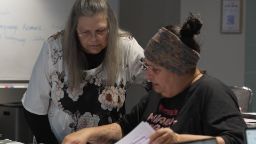
First Nations language course graduates to revitalise community languages
Aboriginal graduates from Swinburne's inaugural Learning an Australian First Nations Language course are helping strengthen language and culture in their communities.
Thursday 08 October 2026 -

- Student News
- University
Indigenous students connect through sport at Intervarsity Day
Indigenous students from across Victoria came together for a landmark intervarsity event, building connection and community through competition.
Wednesday 17 June 2026 -
- Astronomy
Indigenous students explore the cosmos through Swinburne’s astrophysics program
Indigenous students explored astrophysics at Swinburne, connecting science and culture while building pathways to future careers in STEM.
Friday 19 September 2025 -

- University
Michelle Searle paints a new path through leadership diploma
Proud Awabakal artist and Wathaurong Country resident Michelle Searle is expanding her role as a community leader through Swinburne's Indigenous-only Diploma of Leadership .
Friday 11 July 2025 -
- Business
- Design
Swinburne recognises Indigenous leaders with honorary doctorates
Swinburne has awarded honorary doctorates to Ian Hamm and Jefa Greenaway, recognising their significant contributions to Indigenous leadership and design.
Thursday 01 May 2025


Register your interest
Register your interest to join us