

Indigenous students explore the cosmos through Swinburne’s astrophysics program

Students explored culture and science at Swinburne’s Indigenous Astrophysics Work Experience Program.
In summary
Swinburne hosted Indigenous high school students for a week-long astrophysics work experience.
Students explored supercomputers, Indigenous science and cutting-edge research.
The program aims to inspire Aboriginal and Torres Strait Islander students to pursue STEM pathways.
Aboriginal and Torres Strait Islander knowledge of the skies stretches across more than 65,000 years. Yet, their voices remain rare in the academic astronomy community.
Swinburne’s Indigenous Astrophysics Work Experience Program is helping to change that by providing hands-on exposure to astrophysics research for Aboriginal and Torres Strait Islander students.
Currently only eight per cent of Aboriginal and Torres Strait Islander people aged 25-34 hold a bachelor’s degree. The program aims to encourage more students to consider university study in science and technology.
Benny Rayner, Operations Support Officer at Swinburne’s Moondani Toombadool Centre, says the program offers more than just exposure to astrophysics.
“The week is about building confidence, creating connections, and showing young students that they belong in these spaces,” he says.
“Science is stronger when it includes Aboriginal and Torres Strait Islander knowledge, and programs like this help make that future a reality.”
A week of discovery at Swinburne
From 14-18 July 2025, seven students in Years 10-12 from across Australia joined Swinburne in Naarm for an immersive week of astrophysics.
The students were welcomed by Ryan Chand from Swinburne’s Moondani Toombadool Centre, who introduced pathways into tertiary study and support programs for Aboriginal and Torres Strait Islander students.
Mentored by Wiradjuri woman Dr Kirsten Banks and Gomeroi woman Krystal De Napoli, both astrophysicists, the students explored research and Aboriginal and Torres Strait Islander science traditions.
Students toured Swinburne’s OzSTAR and Ngarrgu Tindebeek Supercomputers, the Virtual Universe and VR environments. They visited the Melbourne Museum and Bunjilaka Aboriginal Cultural Centre, and attended workshops with Indigenous academics including Dja Dja Wurrung machine learning expert Kiowa Scott-Hurley. They were supported throughout by Indigenous student ambassadors Rachel Johnson and Sienna Vallejo.
The week concluded with student-led presentations, where participants shared self-directed research on topics like quasars, black holes and the relationship between religion and the skies.
“I was absolutely blown away by the amazing final presentations on the Friday afternoon,” says Swinburne’s Professor Emma Ryan-Weber from the Centre for Astrophysics and Supercomputing.
“One of the students admitted he was initially nervous but was so glad that he joined. I could sense real growth over the course of the week.”
Looking to the future
The program was first developed by the ARC Centre of Excellence for All Sky Astrophysics in 3D (ASTRO 3D) in 2023 at Mt Stromlo Observatory. Swinburne ran its first program in 2024, with support from ASTRO 3D and the ARC Centre of Excellence for Gravitational Wave Discovery (OzGrav).
With strong demand and positive feedback, Swinburne plans to run the Indigenous Astrophysics Work Experience Program again in 2026, ensuring that the voices of the world’s first astronomers continue to shape the future of astrophysics.
-
Media Enquiries
Related articles
-
- Social Affairs
- University
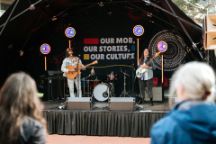
Honouring Country, culture and connection at Swinburne’s inaugural NAIDOC celebration
Swinburne's inaugural NAIDOC celebration celebrated the power of storytelling and provided a space for everyone to engage with Indigenous culture
Thursday 03 September 2026 -
- Astronomy
- Science
- University
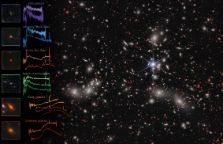
Swinburne JWST collaboration to receive prestigious 2027 Berkeley Prize from American Astronomical Society
Swinburne leads the international team who have been awarded the American Astronomical Society’s 2027 Lancelot M. Berkeley Prize for the UNCOVER project
Friday 18 September 2026 -
- Astronomy
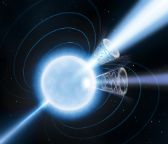
Rare ultra-magnetic star the key to solving a quantum cold case
A Swinburne astronomer may have just confirmed one of the quirkiest aspects of quantum mechanics: that seemingly empty space can alter the behaviour of light.
Thursday 06 August 2026 -
- Astronomy
- Education
- Business
- Science
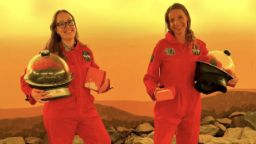
Planting the seeds for future space scientists
A Swinburne spinout LaunchLabz, is inspiring the next generation of space scientists with their Mission Kits
Monday 17 August 2026 -
- Astronomy
New measurement brings us closer to understanding the Universe’s rate of expansion
Researchers have used gravitational waves from a neutron star collision to make a new measurement of the Universe’s expansion rate, offering new insight into the long-standing Hubble tension.
Tuesday 30 June 2026


