

Swinburne researchers debunk daylight savings mental health myth

In summary
- Swinburne researchers reviewed more than a decade of international evidence on daylight saving and mental health.
- The study found no clear and consistent link between daylight saving clock changes and significant declines in mental health.
- Researchers say any short-term disruption appears minor, with the evidence not supporting claims of substantial mental health harm.
Good news for those who feel knocked around by daylight savings
Swinburne researchers have shown that changing clocks has “no clear and consistent effect” on significant declines in mental health.
As much of Australia prepares to enter daylight savings, a new international study involving Swinburne researchers Dr Ben Bullock and Professor Greg Murray, found the evidence was weak and inconsistent for increases in depression, substance use and suicide around daylight savings changes.
Dr Bullock said that while changes to sleep and waking patterns can have negative effects on health and wellbeing, there was no robust evidence to suggest that the minor shift in clock time due to daylight saving negatively affected mental health in a substantially detrimental manner.
“Our study found that the acute shift in clock time due to daylight saving was not consistently associated with significant declines in mental health,” he says.
“We reviewed over a decade of epidemiological evidence from around the world, and while some people may notice effects of the time change, similar to minor jetlag, the evidence suggests it’s not detrimental to mental health."
The study comes at a contentious time as many prominent sleep and circadian scientists are calling for the abolishment of daylight savings, while Donald Trump is renewing his support for a bill that would see America observe Daylight Saving Time year-round.
Dr Bullock says that winding clocks forward this October will extract the maximum amount of useable daylight for outdoor activities, socialising, and energy saving at this time of the year.
“Our bodies are brains respond incredibly well to spending more time outside, and the natural light increases our energy for other wellbeing boosting activities such as hanging out with friends and exercising,” he says.
“Our circadian system has been honed over thousands of generations of evolutionary adaptation to promote activity during the day and inactivity (sleep) at night.”
“Disruptions to the normal functioning of the circadian system – by working night shift hours, for example – has been shown to negatively affect health and wellbeing, including mental health. However, these are chronic effects from longer term exposure to sleep disrupting events.”
The researchers support a balanced approach, rather than advocating for maintaining or removing transitions.
“Anyone who experiences milder, yet still potentially distressing impacts on mood is not captured in the data we analysed for the study which focused more on episodes of significant mental distress”, Dr Bullock says.
“While we await more robust evidence, we recommend recognising the good and bad that comes with daylight savings and prioritising strategies to mitigate risks while maximising the benefits.”
Featured
-

Professor Greg Murray
Acting Director, Centre for Mental Health and Brain Sciences

-
Media Enquiries
Related articles
-
Swinburne researchers debunk daylight savings mental health myth
Friday 03 July 2026 -

- Technology
- Health
- Education
- Science
- University
- Engineering
Swinburne continues to rise in global subject rankings
Swinburne has achieved strong results across 26 subjects in the ShanghaiRanking’s Global Ranking of Academic Subjects 2026.
Thursday 17 September 2026 -

- Technology
- Health
- Science
- University
- Engineering
Swinburne joins global biomaterials research training program
Swinburne has joined the prestigious German Research Foundation-funded International Research Training Group (IRTG) on Multidimensional Biomaterials (MB)2 program
Monday 17 August 2026 -
- Health
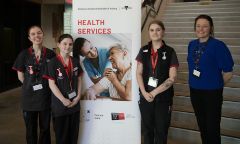
Healthcare learners put skills to the test at WorldSkills regional competition
Swinburne has hosted a WorldSkills healthcare regional competition at its Wantirna campus, spotlighting vocational healthcare student skillsFriday 28 August 2026 -

- Health
Broccoli could treat untreatable rare nerve disease, Swinburne research finds
Swinburne researchers have discovered how broccoli could help treat an incredibly rare uncurable disease that only 200 Australians have.
Monday 10 August 2026


Register your interest
Register your interest to join us