


Overview
The Diploma of Emergency Health Care is taught face-to-face across Wantirna campus and Vermont or at our Warragul site if chosen. Learn to treat and transport clients across pre-hospital and out-of-hospital care. Skills include learning to provide clinical assessments to patients in emergency and non-emergency settings. Learn advanced skills in life support and graduate qualified to work in the private and non-emergency patient transport sector.
This is a nationally approved vocational course that is recognised throughout Australia.

Intake at capacity
We've reached capacity in this course for the July and October 2026 intakes. The next available intake is March 2027. If you'd like to know more get in touch with us today.
Apply ATAR-free and secure your future
The best move you’ll make in Year 12 is not leaving your future to chance. Apply for Swinburne’s Early Entry Program now and you could secure an offer before exams – no ATAR required.
Your industry experience
Students must complete 160 hours of supervised practical clinical placement in an appropriate setting, facilitating skill development and field-relevant assessment tasks. Support is provided to assist students in securing a suitable placement host, which may include Health Select or another provider with whom the student is already affiliated in an NEPT context. This process is coordinated through a three-way agreement between the student, clinical placement host, and Swinburne.
Topics you'll cover
- Basic anatomy and physiology
- Basic and advanced first aid
- Infection control and WHS
- Communication
- Transporting patients safely
Skills you’ll learn
- Patient transport
- Advanced first aid
- Effective communication skills
Your career opportunities
- Patient transport officers (PTO)
- Event medics or first responders
Why Swinburne?
91.5% of graduates are employed or pursuing further study
87.1% of students are satisfied with their training
80.9% of students are likely to recommend Swinburne
Admissions
Applicants for this course must meet the following entry criteria:
- be 18 years at the commencement of the course
- must hold a current unrestricted Australian or international driver’s licence (probationary accepted). However, a full Victorian driver’s licence is required for employment as a patient transport officer.
Note: Learner permits will not be accepted.
Mandatory documentation
Applicants are required to hold and submit the following documentation:
- a current driver licence.
- National Police Check obtained at least 10 weeks prior to clinical placement commencement (If an applicant believes there would be a disclosable issue on their National Police Check, a confidential conversation will be required prior to enrolment to determine suitability for this course and work within the healthcare environment).
- a Working with Children Check (Volunteer or Employee) for the duration of the program.
Admission requirements
Meeting the minimum entry requirements for the course does not guarantee an offer of a place. See admission requirements for general information about the admission process.
Course pre-requisites
Language, literacy and numeracy
Applicants are required to complete a language, literacy and numeracy skills assessment as part of the application process. This will assist in determining course suitability and identifying whether additional support may be required.
The approved online skills assessment tool used to determine language, literacy and numeracy skills within the Australian Core Skills Framework (ACSF) is Basic Key Skills Builder (BKSB).
The levels required for this course are:
- language and literacy level 2
- numeracy level 2.
Other requirements
Immunisations
Immunisations are a requirement to work within health, and up-to-date evidence of immunisations are required to complete assessment requirements within the workplace. If you are not willing to provide up-to-date evidence, you will not be eligible to complete this program.
The minimum vaccination requirements as required by Ambulance Victoria include:
- COVID-19 (recommended)
- Hepatitis B ( evidence of 3 doses and serology)
- Varicella (Chickenpox)
- Diptheria/Tetanus/Pertussis (Whooping Cough)
- Measles/ Mumps/Rubella
- Highly Recommended: Meningococcal, Hepatitis A, Influenza.
Additional immunisations may be required in response to any changes in Government policy per the specific requirements of the organisation you attend for your clinical placement.
Inherent requirements
Inherent requirements are the essential tasks that define a job and must be performed for successful execution. This course involves practical and physical demands, as well as behavioural abilities, required for assessments and professional placements in nursing.
These skills are crucial for career progression in the field. The Inherent Requirements information helps applicants assess their ability to successfully participate in and complete the course.
Effective communication is essential for Patient Transport Officers to provide safe, efficient, and patient-centred care. Without clear communication, it is difficult to accurately identify patient needs, ensure comfort during transport, and support continuity of care between healthcare settings. PTOs must communicate with a wide range of people, including patients, their families, healthcare staff, and other emergency or support services.
Students are expected to develop and demonstrate the following communication skills:
- speak clearly and provide instructions in a timely and professional manner during patient interactions and transport
- recognise and appropriately use non-verbal communication, including body language, facial expressions, and tone of voice
- use effective communication to reassure patients and build trust during potentially stressful situations
- adapt communication style depending on the patient’s condition, needs, and the healthcare environment
- demonstrate respect, empathy, and professionalism in all interactions.
Patient Transport Officers require well-developed visual, hearing, and tactile abilities to provide safe, effective, and patient-centred care during transport and handover processes.
Vision
PTOs perform a range of tasks that rely on the ability to see clearly and accurately. Students must be able to:
- read patient documentation, transport forms, and identification details accurately
- check equipment such as stretchers, oxygen cylinders, and monitoring devices for correct setup and function
- observe patient condition, including changes in skin colour, alertness, and distress
- safely manoeuvre patients and equipment within different environments, including tight spaces and varied lighting conditions
- identify potential hazards during patient movement and transport.
Hearing
The ability to hear clearly is essential for safe communication and patient care. Students must be able to:
- communicate effectively with patients, particularly those who may speak quietly or have communication difficulties
- listen and respond to instructions from healthcare staff
- hear environmental sounds that may indicate risk or changes in patient condition (e.g. distress, breathing changes, equipment alarms where applicable)
- communicate effectively in busy or noisy environments such as hospitals or public settings.
Tactile ability (touch)
A well-developed sense of touch supports safe patient handling and care. Students must be able to:
- assist with patient transfers while recognising patient comfort and safety
- detect changes in skin temperature or moisture that may indicate discomfort or deterioration
- apply appropriate pressure when assisting with movement or positioning to avoid injury
- safely handle equipment and secure patients during transport.
This combination of visual, hearing, and tactile skills ensures that Patient Transport Officers can maintain patient safety, respond appropriately to changing situations, and provide high-quality care throughout the transport process.
Patient Transport Officers require well-developed motor skills to safely assist with patient handling, equipment management, and transport across a variety of healthcare and community settings.
Gross motor skills
Gross motor skills involve the use of large muscle groups to perform physical tasks such as lifting, pushing, pulling, and bending. Students will be expected to:
- bend, squat, and kneel to safely assist with moving, transferring, and positioning patients
- push and manoeuvre stretchers, wheelchairs, and equipment in confined spaces and over varied distances
- perform lifting and transferring techniques using safe manual handling practices
- load and unload patients and equipment from transport vehicles safely
- undertake cardiopulmonary resuscitation (CPR), performed on a manikin located on the floor for a minimum of two (2) minutes over five (5) cycles.
Fine moto skills
Fine motor skills involve precise and coordinated hand movements required for safe and effective patient care. Students will be expected to:
- operate and adjust equipment such as stretcher controls, safety straps, and oxygen delivery systems
- accurately complete documentation, including patient transport forms and electronic records where required
- use communication devices (e.g., radios or mobile equipment) safely and effectively
- perform basic patient observations where applicable (e.g., taking a pulse or using monitoring equipment within scope)
- secure equipment and patient restraints appropriately to ensure safety during transport.
These motor skills are essential to ensure that Patient Transport Officers can perform their duties safely, maintain patient comfort, and respond effectively to changing situations during transport.
Patient Transport Officers are required to maintain consistent physical and mental performance throughout their shift to ensure safe, efficient, and patient-centred care. Both the clinical environment and simulated training settings may require sustained effort over extended periods.
Students should be able to:
- stand, walk, and remain physically active for extended periods, often across a full shift
- maintain focus and attention to detail while managing patient transport tasks, documentation, and communication requirements
- perform repeated physical tasks, such as moving equipment and assisting with patient transfers, using safe manual handling techniques
- manage multiple responsibilities throughout the day, including patient care, time management, and coordination with healthcare staff
- remain calm, alert, and responsive in changing or potentially stressful environments.
Sustained performance and endurance are essential to ensure that Patient Transport Officers can work safely, support patient needs effectively, and maintain a high standard of care throughout the transport process.
Literacy and numeracy skills are essential for Patient Transport Officers to ensure accurate communication, safe patient care, and effective coordination with healthcare teams. These skills are required for completing documentation, understanding instructions, and working with basic numerical information during patient transport.
To ensure safe and effective practice, students must be able to:
- accurately record patient details, observations, and transport information in records
- perform basic mathematical functions and understanding time using the 24-hour clock
- record and interpret basic numerical data where required (e.g. times, simple observations, or equipment checks)
- complete clear and concise written documentation for patient handover and transport records
- contribute to patient care records or transport management systems
- read and interpret patient information, transport requests, and instructions provided by healthcare staff
- understand written communication such as workplace procedures, protocols, and documentation.
These skills ensure that Patient Transport Officers can communicate effectively, maintain accurate records, and support safe, coordinated care throughout the patient transport process.
Mental wellness is important for Patient Transport Officers to effectively manage the physical and emotional demands of the role. It involves maintaining a state of well-being that allows individuals to cope with everyday stress, remain focused, and work safely and productively. Behavioural stability refers to the ability to regulate emotions, respond appropriately in different situations, and maintain professionalism at all times.
The patient transport environment, including training simulations and clinical placements, can be physically demanding and may involve exposure to stressful, sensitive, or confronting situations. Students will be required to interact with patients, families, healthcare staff, and the wider community, and must be able to adapt their behaviour accordingly.
Students are expected to:
- maintain focus, engagement, and composure across a range of situations
- interact professionally and respectfully with patients and healthcare teams
- respond appropriately to feedback and reflect on their performance to support ongoing improvement
- manage multiple demands while maintaining safe and effective patient care
- handle sensitive or potentially distressing situations with professionalism, objectivity, and respect.
Many students who experience mental health challenges are able to complete their studies successfully with appropriate support. Maintaining mental wellness and behavioural stability is essential to ensure safe practice, effective teamwork, and high-quality patient care during transport.
Credit transfer
Credit transfer is a formal recognition process that allows students to receive credit for units of competency achieved through previous accredited study at another registered training organisation (RTO).
The number of credits granted will vary and is based on the:
- unit/s that have been successfully completed
- unit currency and status
- qualification requirements
- relevance to the qualification
- Swinburne policy
Recognition of prior learning
Recognition of Prior Learning (RPL) is the process of transferring the skills and knowledge that you have acquired over your lifetime (irrespective of how they were obtained) against the requirements of the unit.
RPL is an assessment process that requires you to provide evidence that demonstrates how you meet the requirements of the unit/s. The amount and types of evidence you will need to provide will depend on the unit requirements.
Finding your fit
At Swinburne, we recognise that not one size fits all. If this course doesn’t meet all your study criteria, check out these alternatives.
-
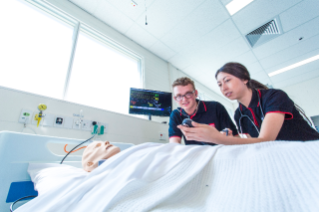
Certificate III in Health Services Assistance
-
Certificate IV in Community Services
-
Certificate III in Non-Emergency Patient Transport
Course structure
This program is comprised of a total of 17 units including 9 core units and 8 elective units chosen through industry consultation.
For those who have completed HLT31120 Certificate III in Non-Emergency Patient Transport, up to 11 units may be credited.
The remaining units are delivered as a full-time load, over six months, with 3 days face-to-face at either Wantirna Campus and the Best Practice site at Vermont or 3 days per week at Warragul. These days include theory, practical and vehicle skills, with additional work required outside of classes. Assessment methods will include direct observation, oral questioning, role play/simulation, case studies, driving assessment and clinical placement.
The Teaching Area has a third-party agreement with Best Practice Health Education Pty Ltd (RTO TOID 41383) for the delivery of specific units within the HLT51020 Diploma of Emergency Health Care. Under this arrangement, instructors from Best Practice Health Education Pty Ltd are responsible for teaching the designated units of the program.
Delivery
Delivery of this course is across the Wantirna campus and the Best Practice site at Vermont. The Warragul intake has all classes take place in Warragul.
Study requirements
Timetable
- Classes run 3 days per week between 8.30am and 3.30pm.
- All resources can be accessed through the online learning system.
- Students are expected to engage in self directed study outside of the scheduled classes.
Assessment
- Assessments occur throughout the course and include various methods such as quizzes, case studies and practical observations.
- Students must demonstrate required skills and knowledge by satisfactorily completing assessments at different points in the course.
Your units
| Units of study | Unit code |
|---|---|
| Core units | |
|
Work legally and ethically
Core unit |
CHCLEG001 |
|
Confirm physical health status
Core unit |
HLTAAP002 |
|
Assess and deliver standard clinical care
Core unit |
HLTOUT005 |
|
Work with diverse people
Core unit |
CHCDIV001 |
|
Apply basic principles and practices of infection prevention and control
Core unit |
HLTINF006 |
|
Implement safe access and egress
Core unit |
HLTOUT001 |
|
Communicate in complex situations to support health care
Core unit |
HLTOUT010 |
|
Follow safe work practices for direct client care
Core unit |
HLTWHS002 |
|
Manage personal stressors in the work environment
Core unit |
HLTWHS006 |
| Elective units | |
|
Transport emergency patients
Elective unit |
HLTOUT006 |
|
Transport non-emergency patients under operational conditions
Elective unit |
HLTOUT007 |
|
Manage a scene
Elective unit |
HLTOUT008 |
|
Manage the scene of a major incident
Elective unit |
HLTOUT009 |
|
Interpret and apply medical terminology appropriately
Elective unit |
BSBMED301 |
|
Recognise healthy body systems
Elective unit |
HLTAAP001 |
|
Provide First Aid
Elective unit |
HLTAID011 |
|
Provide advanced resuscitation and oxygen therapy
Elective unit |
HLTAID015 |
2026 fees
Free TAFE eligible students
Full fee* ($AUD)
$10,770
Skills first government-subsidised place* ($AUD)
$7,780
2026 fees
Yearly fee* ($AUD)
$0.00
Fees are estimates only
Fees published on this page are estimates only and are subject to change depending on individual circumstances at the time of enrolment. The above fees apply for units studied in 2026 only and may change for units studied in future years. There may be additional costs related to learning material and equipment.
Students undertaking clinical placement are required to purchase a Swinburne uniform for placement, including a black logo polo, black dress pants, and shoe.
Please note: If you are allocated a rural placement, Swinburne University does not cover accommodation expenses. Students are responsible for arranging and funding their own accommodation in these instances.
Fees are estimates only
The indicative course fees shown apply to international students for the relevant year, based on a standard study load per year. Fees are assessed according to actual study load each semester, with variations to study load resulting in tuition fee adjustments. These fees generally include the Student Services and Amenities Fee (SSAF) and are subject to annual review. Enrolled students will receive reasonable notice of any fee changes before payment is due.
Students undertaking clinical placement are required to purchase a Swinburne uniform for placement, including a black logo polo, black dress pants, and shoe.
Please note: If you are allocated a rural placement, Swinburne University does not cover accommodation expenses. Students are responsible for arranging and funding their own accommodation in these instances.
Skills first government-subsidised place
This training is delivered with Victorian and Commonwealth Government funding. To qualify for a government-subsidised place, you must meet various eligibility criteria. The course you’ve applied for must also be offering government-subsidised places. Swinburne will determine your eligibility by conducting a full assessment of your eligibility during the course application process.
How do I pay my fees?
You can pay your Swinburne fees in person, via credit card, BPAY, or at Australia Post. Check to see if loans and employer sponsored training are also available.
International students need to pay tuition fees up-front by the relevant due date. You can find the due dates on your Statement of Account.
To pay your fees:
- log in to My Finances
- check your Australian bank account details are correct
- check your Statement of Account to see how much you owe
- pay using your preferred payment method.
Eligibility for VET student loans (VSL)
If you apply for a VET Student Loan, Swinburne must first verify your identity. If you are eligible, we will provide your enrolment information to the government so you can complete the application within their eCAF system.
The VET Student Loan amount for this course is capped. You must start repaying this loan once you earn above the compulsory repayment threshold.
VET Student Loan amount* ($AUD)
$18,838
Concessions rates for vocational students
Concession rates for Diploma and Advanced Diploma programs are also available if you self-identify as being of Aboriginal or Torres Strait Islander descent and qualify for a government-subsidised training place under the Indigenous Completions Initiative.
The eligibility criteria are set by the Victorian Government and assessed by Swinburne in accordance with government directives, which are subject to change at any time.
Student services and amenities fee
This funding serves to improve the student experience at Swinburne. You may use many or just some of the services and amenities that the fee provides.
From 1 January 2024, all courses at the Diploma level and higher will contribute to the Student Services and Amenities fee.
Please refer to the Student Services Amenities Fee page for more information.
This funding serves to improve the student experience at Swinburne. You may use many or just some of the services and amenities that the fee provides.
This amenities fee is included within your annual tuition fee listed above. The fee shown is the capped amount for 2026.
Please refer to the Student Services Amenities Fee page for more information.
SSAF fee* ($AUD)
$373.00
SSAF fee* ($AUD)
$373.00
-

Study this course for free in 2026
You could have your tuition fees covered in 2026 thanks to the Victorian Government's Free TAFE initiative.
Free TAFE is available to any Australian citizen, permanent resident or New Zealand citizen.
There are other factors, too. The best way to find out if you’re eligible is to apply!

Scholarships
Scholarship applications for 2026 are open. Scholarships at Swinburne are about providing opportunity, promoting equity and recognising excellence and achievement. We want you to reach your potential and achieve your life and career goals.
Our handy guide will assist you to gather documents for your application.
When you apply for a Swinburne course, we automatically consider you for an international scholarship of up to 30 per cent off your course fees – no separate application required! Just apply for your Swinburne course of choice and when we review your course application, we will also assess you for an international scholarship.
Apply through an agent
Most international students use an education agent to help them through the application process. Swinburne has agents all over the world that can help you with your application to study. Search for a Swinburne representative in your country. If your country is not listed, please contact us.
Apply directly
Ready to take on a new challenge and reach your academic goals? If you already know which course you want to study and understand the entry requirements, what are you waiting for? Apply online! Remember, you cannot apply direct if you have an active VTAC application.
Intake at capacity
We've reached capacity in this course for the July and October 2026 intakes. The next available intake is March 2027. If you'd like to know more get in touch with us today.