

Award-winning engineering student solution to benefit remote village

Swinburne engineering students Jade Longmuir, Atticus Booth, Chloe Lim, and Noah Battersby developed an award-winning waste-to-resource solution that has now been adopted by a village in Timor-Leste.
In summary
A group of first-year engineering students participated in the Engineers Without Borders Challenge in 2025, taking out two awards
The students developed a solution that turns organic waste into a fuel source for cooking in a village in Timor-Leste
The village head has now chosen to implement the students’ solution
A group of first-year engineering students at Swinburne University of Technology have had their award-winning waste-to-resource solution implemented in a village in Timor-Leste.
Students Atticus Booth, Chloe Lim, Jade Longmuir and Noah Battersby participated in the Engineers Without Borders (EWB) Challenge in 2025, where students tackle challenges in communities from across the Asia-Pacific region.
The head of Loidahar village in Timor-Leste, the 2025 challenge focus area, attended the EWB showcase event in late 2025 and has since chosen to implement the students’ solution in the community.
The group also won the Community Partner Award at the showcase event, given to the team whose project most strongly considers the village’s aspirations and meets the challenge’s themes.
The team developed a briquette system using organic waste mixed with locally grown cassava starch and water, which are pressed with a specially designed press before drying.
These briquettes can then be burnt, providing a solution that manages household and agricultural organic waste while providing a fuel source for cooking.
People in Loidahar village use wood fires for cooking, but new laws restrict cutting firewood; limited waste management options mean agricultural and household waste is also burnt.
-
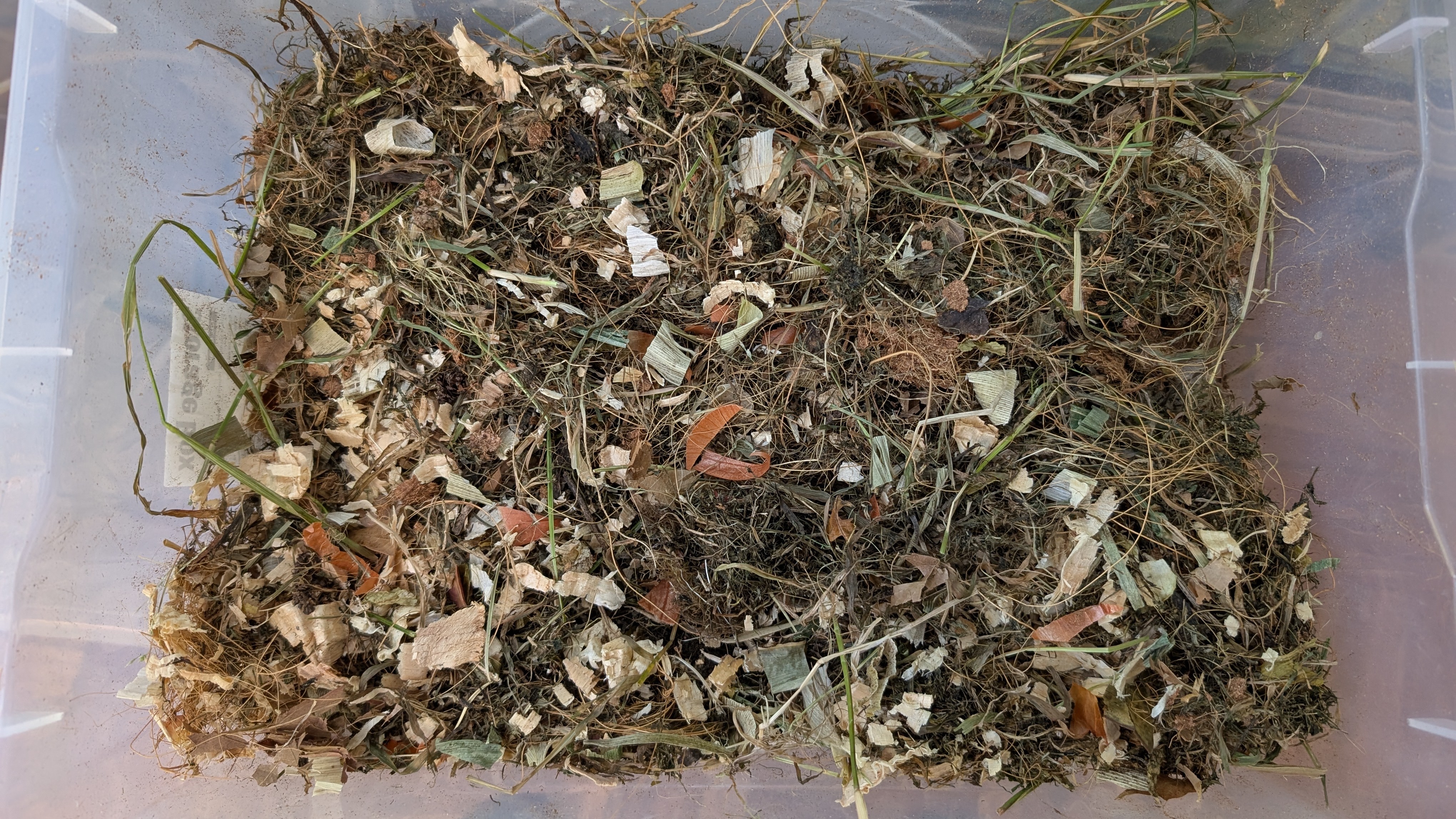 Organic material is first collected and dried before mixing with cassava starch and water.
 -
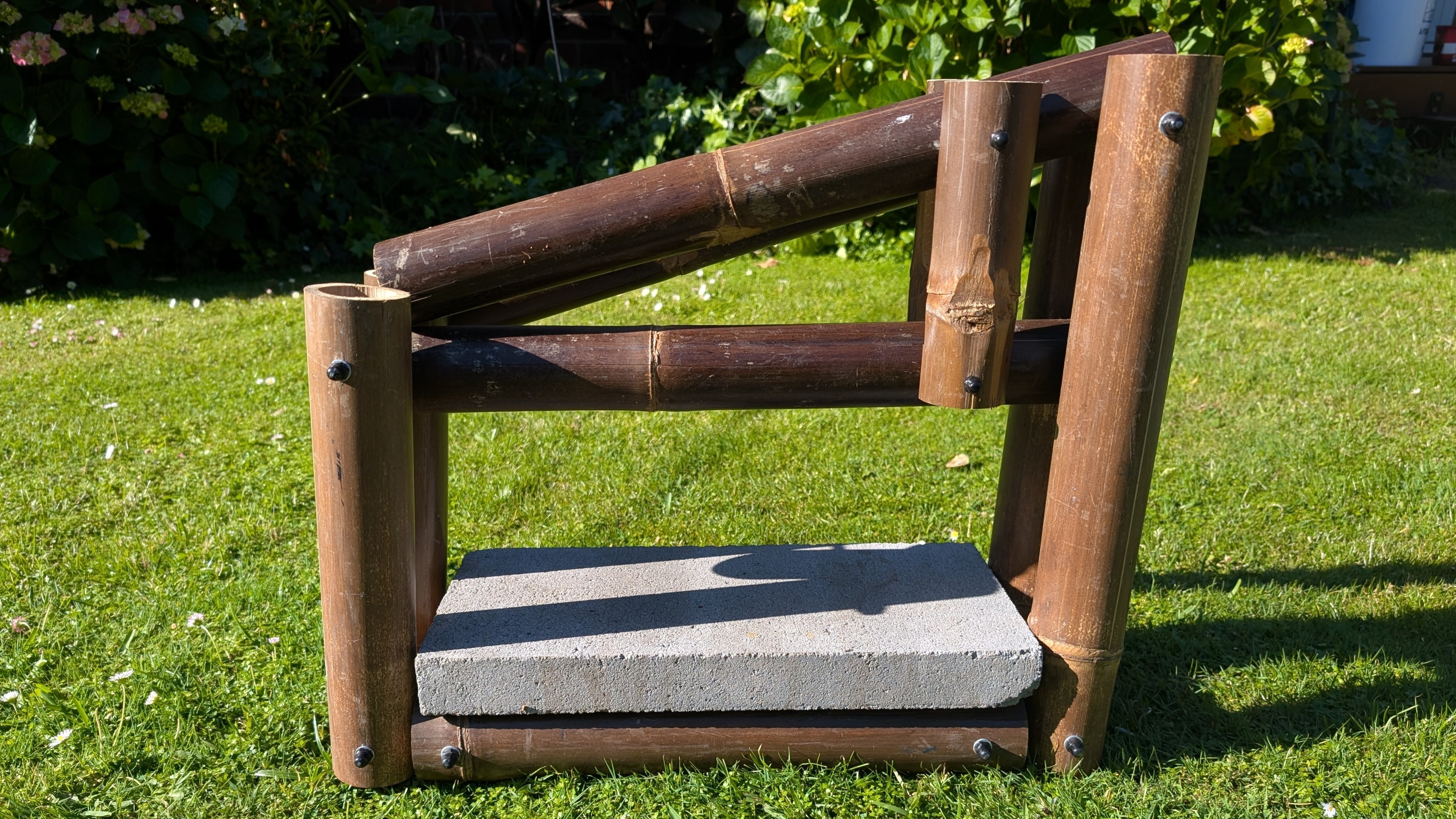 This specially-designed press, made from local materials, is used to compress the material into briquettes.
 -
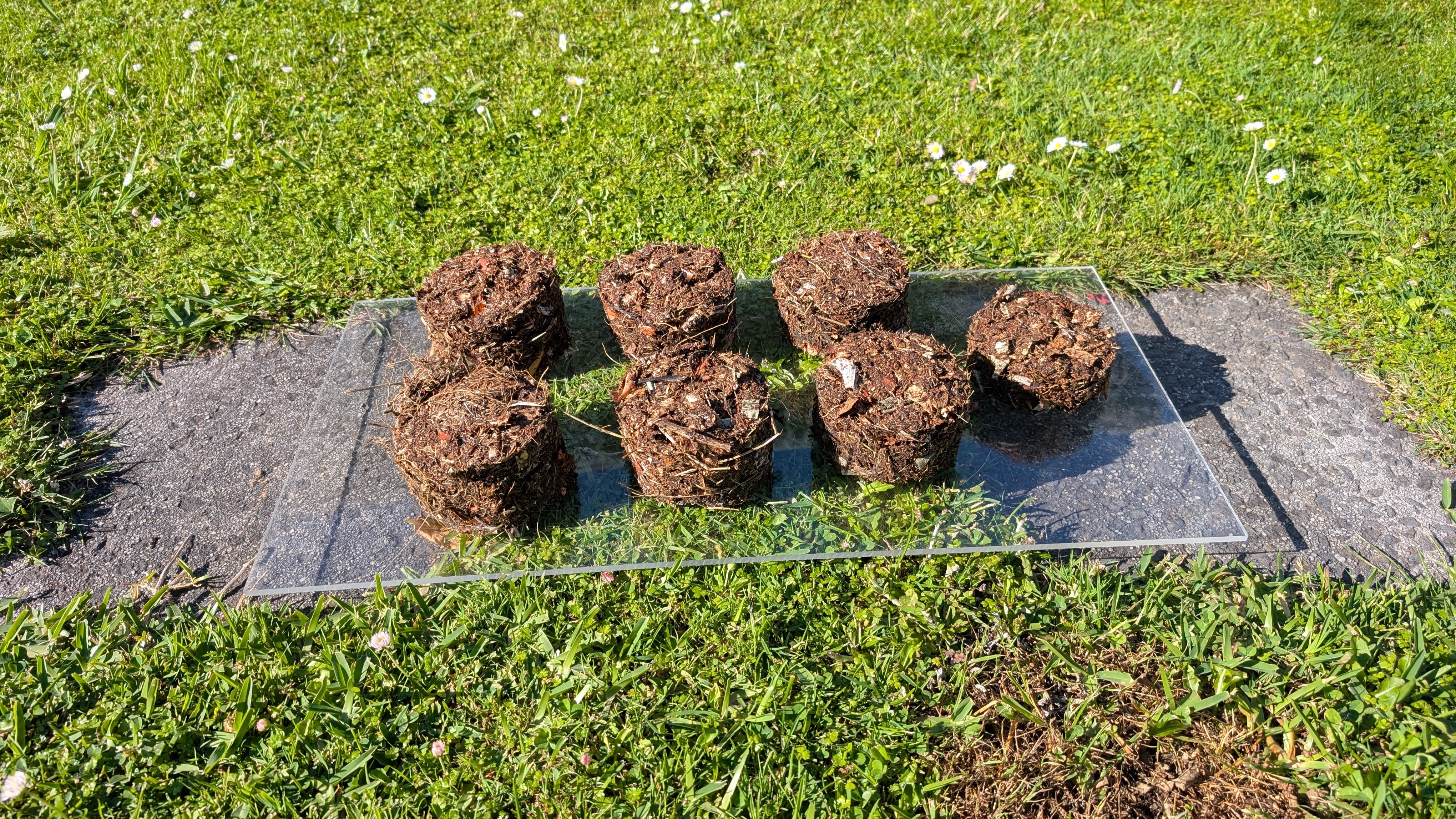 When dried, the briquettes can be burnt, providing a fuel source for cooking.
 -
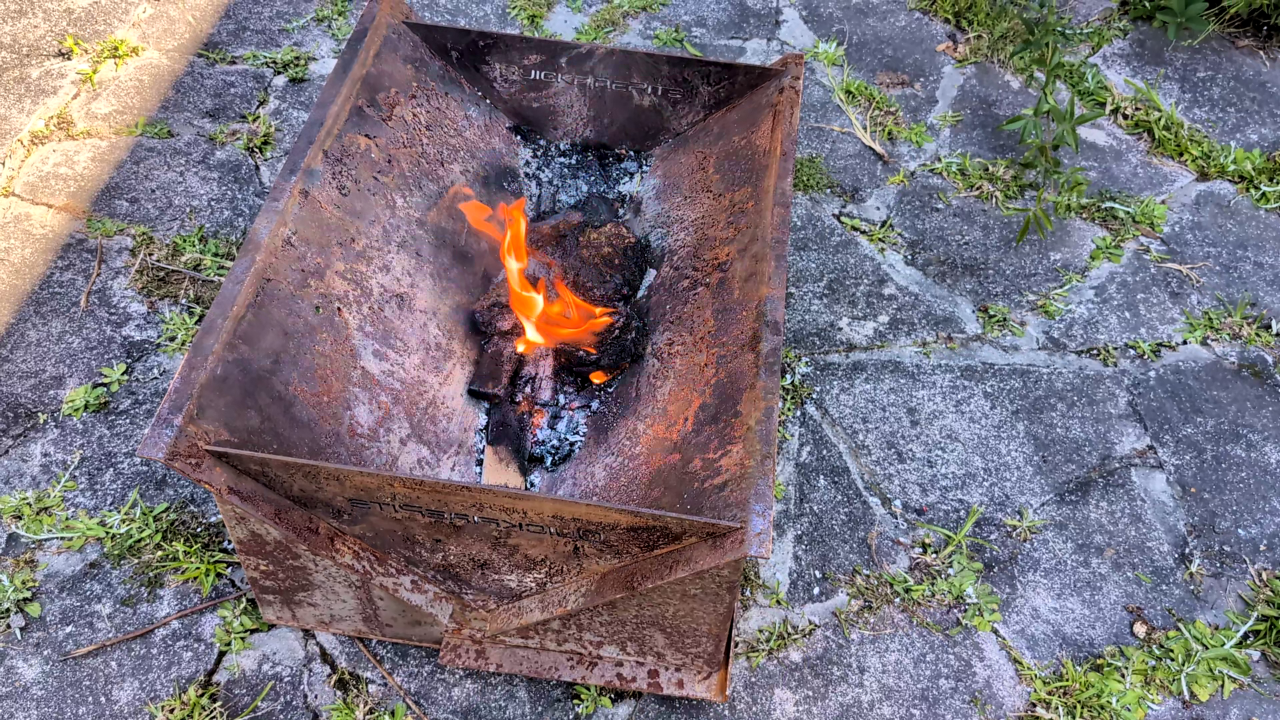 When dried, the briquettes can be burnt, providing a fuel source for cooking.

Atticus Booth, one of the participating students, says the group felt their approach addressed the village’s needs and challenges quite well.
“We were all quite surprised when we won at the conference, then we found out the village was actually implementing our idea and we didn’t expect it at all,” he says.
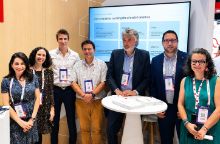
Their stall was also voted Best Stall for their working prototype, where attendees could make their own briquettes. The head of Loidahar village was even able to try the press himself at the event.
Associate Professor Scott Rayburg says the Swinburne challenge group was very successful.
“This is a fantastic achievement for the team and demonstrates that students, even in first year, can have meaningful real-world impact,” he says.
Fellow students Chloe Lim and Noah Battersby say that knowing their solution is being used is an honour.
“We can look at this achievement later on and see the impact of how our ideas are actually being used,” Chloe says.
“Sometimes there can be very fixed ideas in industry, but because we’re bringing fresh ideas, we can say ‘I want to do the impossible’ and then through our work it becomes possible,” Noah says.
-
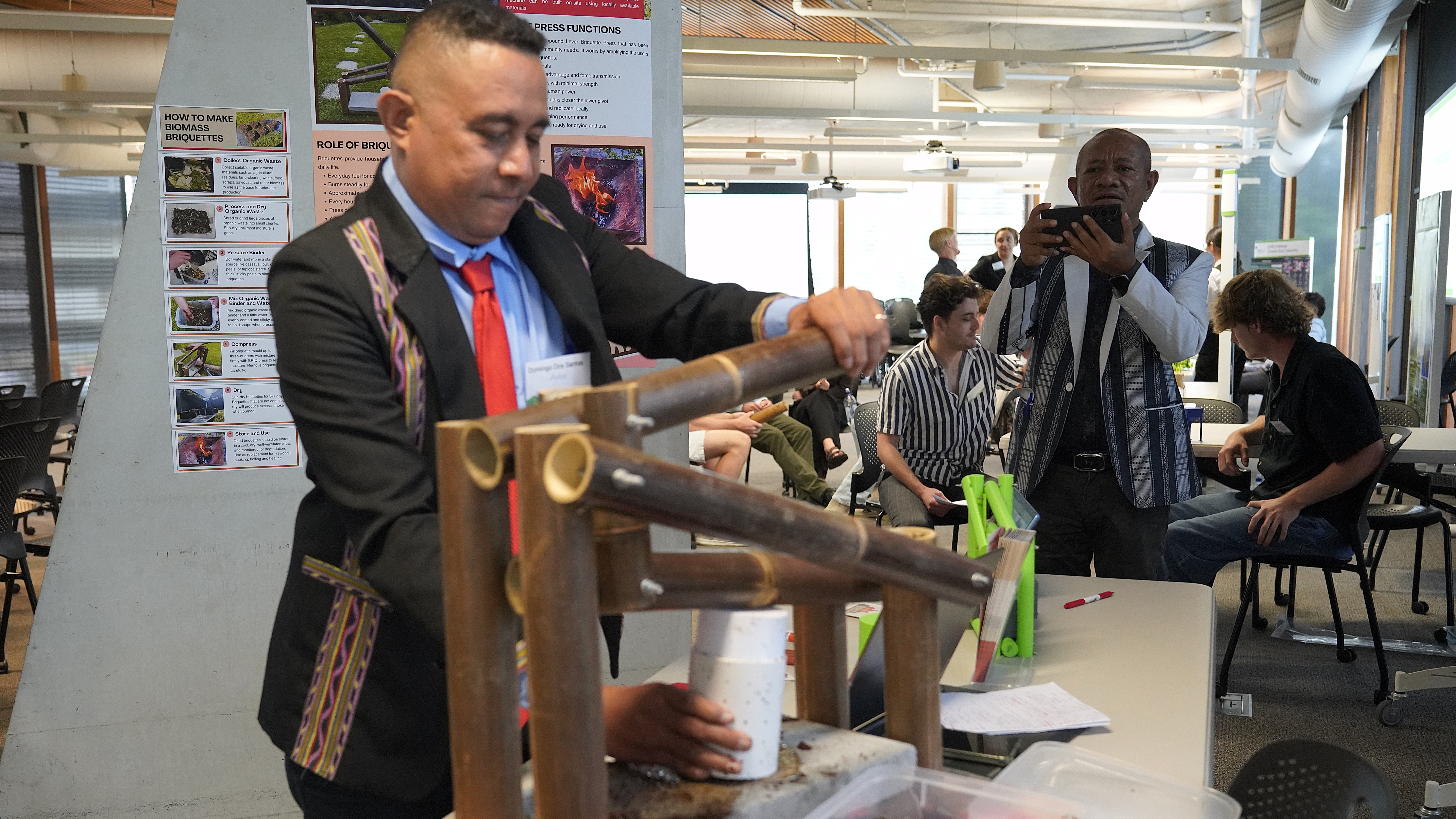 The head of Loidahar village in Timor-Leste was able to try the press himself at the 2025 event.
 -
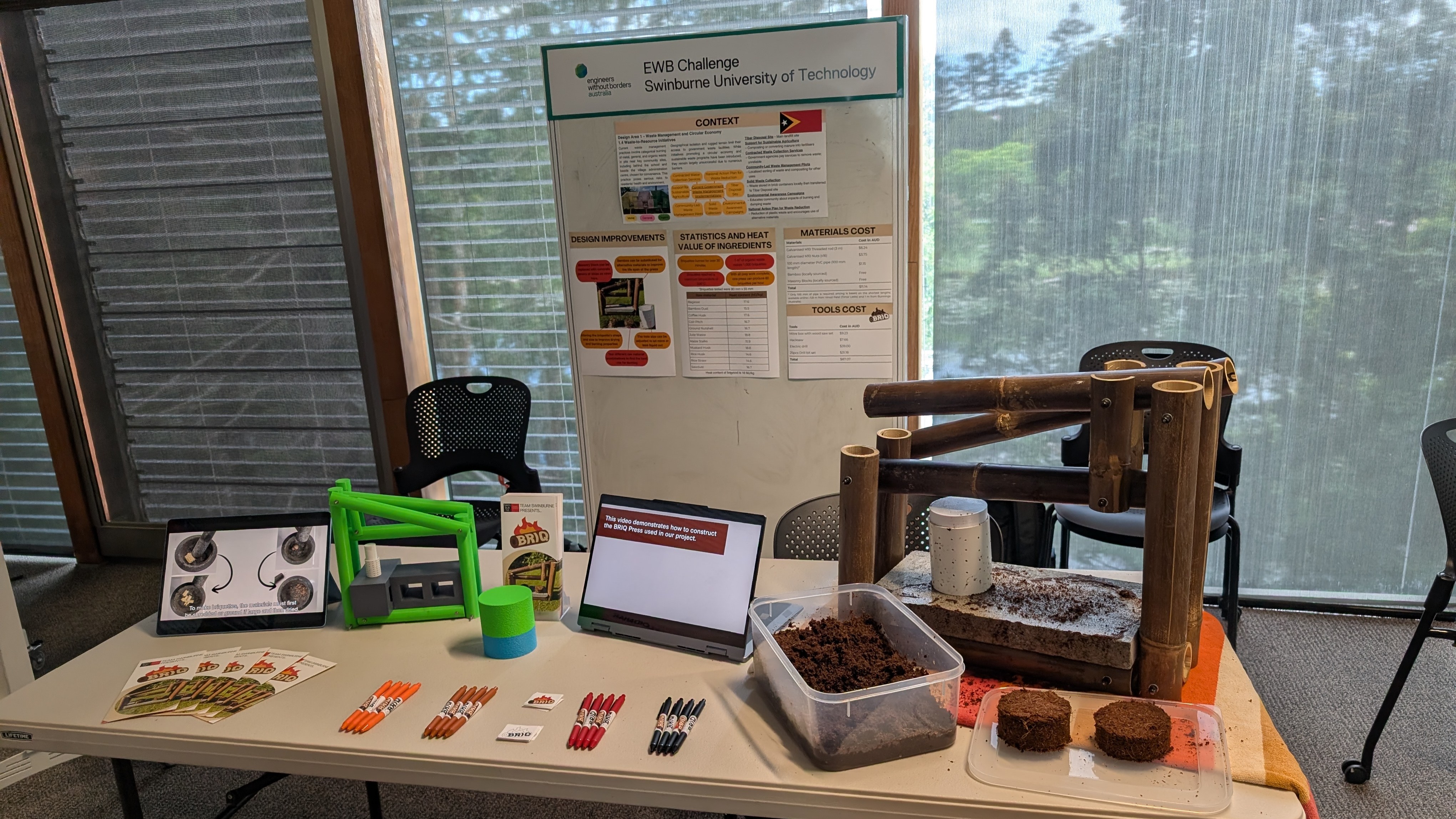 The students' award-winning stall display.
-
Media Enquiries
Related articles
-
- University
Why skills matter more than ever in technology-infused future
Swinburne leaders reflect on how practical skills, digital capability and flexible learning pathways are preparing people for a changing workforce.
Wednesday 09 September 2026 -

- Technology
- Health
- Education
- Science
- University
- Engineering
Swinburne continues to rise in global subject rankings
Swinburne has achieved strong results across 26 subjects in the ShanghaiRanking’s Global Ranking of Academic Subjects 2026.
Thursday 17 September 2026 -

- Technology
- Health
- Science
- University
- Engineering
Swinburne joins global biomaterials research training program
Swinburne has joined the prestigious German Research Foundation-funded International Research Training Group (IRTG) on Multidimensional Biomaterials (MB)2 program
Monday 17 August 2026 -
- Technology
- Health
- Education
- Business
- Science
- Sustainability
- Engineering
Celebrating Swinburne’s next generation of researchers
Swinburne’s inaugural Research Festival brought together Higher Degree by Research students and early career researchers to learn, share and connect.
Monday 27 July 2026 -
- Sustainability
- Technology
French climate-tech startups to join international Climate 4.0 Hub at Swinburne
Six French climate-tech startups to join FACET’s Climate 4.0 Hub Flagship Accelerator, hosted at Swinburne’s Hawthorn campus.
Friday 19 June 2026


Register your interest
Register your interest to join us