

New AI associate degree is an Australian-first in vocational education

Swinburne's new associate degree in applied artificial intelligence helps students learn real-world, ethical AI skills.
In summary
Swinburne has launched a new vocational qualification in applied artificial intelligence
Students learn ethical application and in-demand AI skills in a realistic environment
The course has been co-designed with industry partners and includes integrated certifications throughout the course
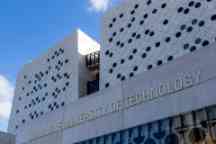
Swinburne University of Technology has launched the new Associate Degree of Applied Artificial Intelligence (AI), the first vocational level qualification in AI in Australia.
The two-year course uses practical and immersive projects to equip students with skills and knowledge in real-world, ethical AI application.
As part of the degree, students can major in cybersecurity or game development streams, which both include industry-specific specialisation units.
Students will also learn how to build, test and deploy real AI solutions by working with industry standard tools and real datasets within real constraints and performance expectations.
The curriculum delivery itself is also backed by leading industry experts, ensuring students develop practical skills and experience, rather than purely theoretical knowledge.
Olga Lavouasier, Manager of Digital Futures, said the course’s content, structure and delivery prepares students to become future-ready AI experts.
“The Associate Degree in Applied AI gives students a solid foundation in core skills, then helps them specialise in a selection of majors that sets them up for a great career,” she said.
“Graduates leave job-ready, equipped with in-demand skills, industry-standard software expertise, and globally-recognised vendor certifications. They are prepared, agile and multi-skilled to stay ahead of the curve.”
Students can graduate with the associate degree and enter the workforce straight away, or continue into the Bachelor of Computer Science, Bachelor of Information and Communication Technology, or a Bachelor of Games and Interactivity at Swinburne.
The course has been co-developed with Swinburne’s industry partners at Microsoft, AWS, Epic Games, and Checkpoint.
A core course component are industry-recognised certifications including Microsoft Certified: Azure AI Fundamentals and AWS Certified AI Practitioner, which are fully integrated into students’ studies instead of being offered as optional extras.
Some organisations have faced ongoing barriers to implementing AI, including a lack of skilled professionals, bias and governance concerns, and poor quality data.
Dr Sourabh Dani, Coordinator of the Associate Degree in Applied AI, says course graduates overcome these barriers through industry-designed training in data literacy, AI ethics and real-world business process integration experience.
“Technical skills alone aren’t enough – understanding the organisation’s context is critical,” he said.
“The key shift is that AI is no longer experimental. It’s integrated into core operational systems, with a measurable return on investment.”
Graduates’ career pathways can include machine learning engineer, security analyst and AI product manager, with specialist training to combat integration challenges.
-
Media Enquiries
Related articles
-
- Technology
- Education
- Science
- University
Swinburne’s research quality rises in global rankings
Swinburne has placed 294th globally in the 2027 Times Higher Education World University Rankings
Wednesday 30 September 2026 -

- Technology
- Health
- Education
- Science
- University
- Engineering
Swinburne continues to rise in global subject rankings
Swinburne has achieved strong results across 26 subjects in the ShanghaiRanking’s Global Ranking of Academic Subjects 2026.
Thursday 17 September 2026 -

- Technology
- Health
- Science
- University
- Engineering
Swinburne joins global biomaterials research training program
Swinburne has joined the prestigious German Research Foundation-funded International Research Training Group (IRTG) on Multidimensional Biomaterials (MB)2 program
Monday 17 August 2026 -
- Science
- University
- Technology
Swinburne celebrates the seeds of discovery for National Science Week
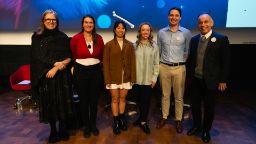
Swinburne celebrated National Science Week 2026, culminating with the Seeds of Science Festival, held on 21 August. The festival showcased the people, research and ideas shaping the future of science and innovation.
Friday 21 August 2026 -
- Design
- Technology
- Science
Swinburne students AI-powered learning platform wins Design for Change 2026
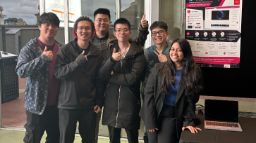
Swinburne Master of Information Technology students receive first prize in the 2026 Design for Change competition with VidVersity Transformation.
Monday 06 July 2026


