

Half of Australians living in aged care have depression – psychological therapy could help according to new research

Half of Australians living in aged care have depression – psychological therapy could help according to new research.
In summary
- Psychological therapy offers a promising alternative to the overreliance on anti-depressants in aged care.
- Swinburne-led research in a Cochrane review analysed 19 trials, seven countries and 873 older people with significant levels of depression.
- Co-authors and Professors Tanya Davison and Sunil Bhar say that there has been a lack of information about effective treatment approaches in aged care settings.
An evaluation of more than 40 years of research has found that psychological therapy offers a promising alternative to the overreliance on anti-depressants in aged care.
Older Australians are one of the population groups with the highest levels of depression, with nearly six in ten Australians who live in residential aged care prescribed an antidepressant medication.
Swinburne University of Technology-led research in a Cochrane review analysed 19 trials, seven countries and 873 older people with significant levels of depression, discovering that psychological therapy is a promising mental health approach that should be adopted by aged care facilities.
Co-authors and Swinburne University of Technology Professors Tanya Davison and Sunil Bhar say that until now, there has been a lack of essential information about effective treatment approaches in aged care settings.
“Data consistently shows that half of all Australian aged care residents experience depression, and concerningly those rates continue to rise. The good news is that our review found psychological therapy may be a suitable addition or alternative to the current approach, which is often characterised by an over-reliance on antidepressants,” says Professor Bhar.
“Psychological treatments like behavioural therapy, cognitive behavioural therapy and reminiscence therapy aim provide people with skills to help manage their symptoms and improve their daily lives. We hope these latest findings can inform positive changes to the current model of care for depressed older Australians.”
Typically, strategies for promoting mental wellbeing in older Australians include social activities and antidepressants. The team’s research found that just two psychological therapy sessions would improve an aged care resident’s quality of life and wellbeing for several months, highlighting the drastic impact this intervention can have.
Professor Davidson says the main challenge in conducting this review was that some of the studies examined were poorly conducted.
“Ideally, we’d like to see more scientific rigour applied to this kind of research. However, it was encouraging to see evidence that psychological treatments worked better than usual care in this very complex population across the studies we analysed.
“As the Royal Commission into Aged Care highlighted, much more needs to be done to ensure older Australians – regardless of where they live – have equitable access to high quality mental health care.
“It’s important for everyone to understand that depression isn’t an inevitable consequence of moving into residential care. Many older people can and do adjust well. For those who don’t, there are different approaches to improving their mental health and quality of life. Psychotherapy is one such tool that could be offered routinely to those who need it, rather than relying solely on antidepressants.”
-
Media Enquiries
Related articles
-

- Technology
- Health
- Education
- Science
- University
- Engineering
Swinburne continues to rise in global subject rankings
Swinburne has achieved strong results across 26 subjects in the ShanghaiRanking’s Global Ranking of Academic Subjects 2026.
Thursday 17 September 2026 -

- Technology
- Health
- Science
- University
- Engineering
Swinburne joins global biomaterials research training program
Swinburne has joined the prestigious German Research Foundation-funded International Research Training Group (IRTG) on Multidimensional Biomaterials (MB)2 program
Monday 17 August 2026 -
- Health
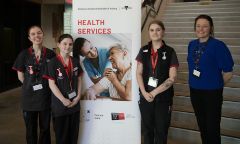
Healthcare learners put skills to the test at WorldSkills regional competition
Swinburne has hosted a WorldSkills healthcare regional competition at its Wantirna campus, spotlighting vocational healthcare student skillsFriday 28 August 2026 -

- Health
Broccoli could treat untreatable rare nerve disease, Swinburne research finds
Swinburne researchers have discovered how broccoli could help treat an incredibly rare uncurable disease that only 200 Australians have.
Monday 10 August 2026 -
- Technology
- Health
- Education
- Business
- Science
- Sustainability
- Engineering
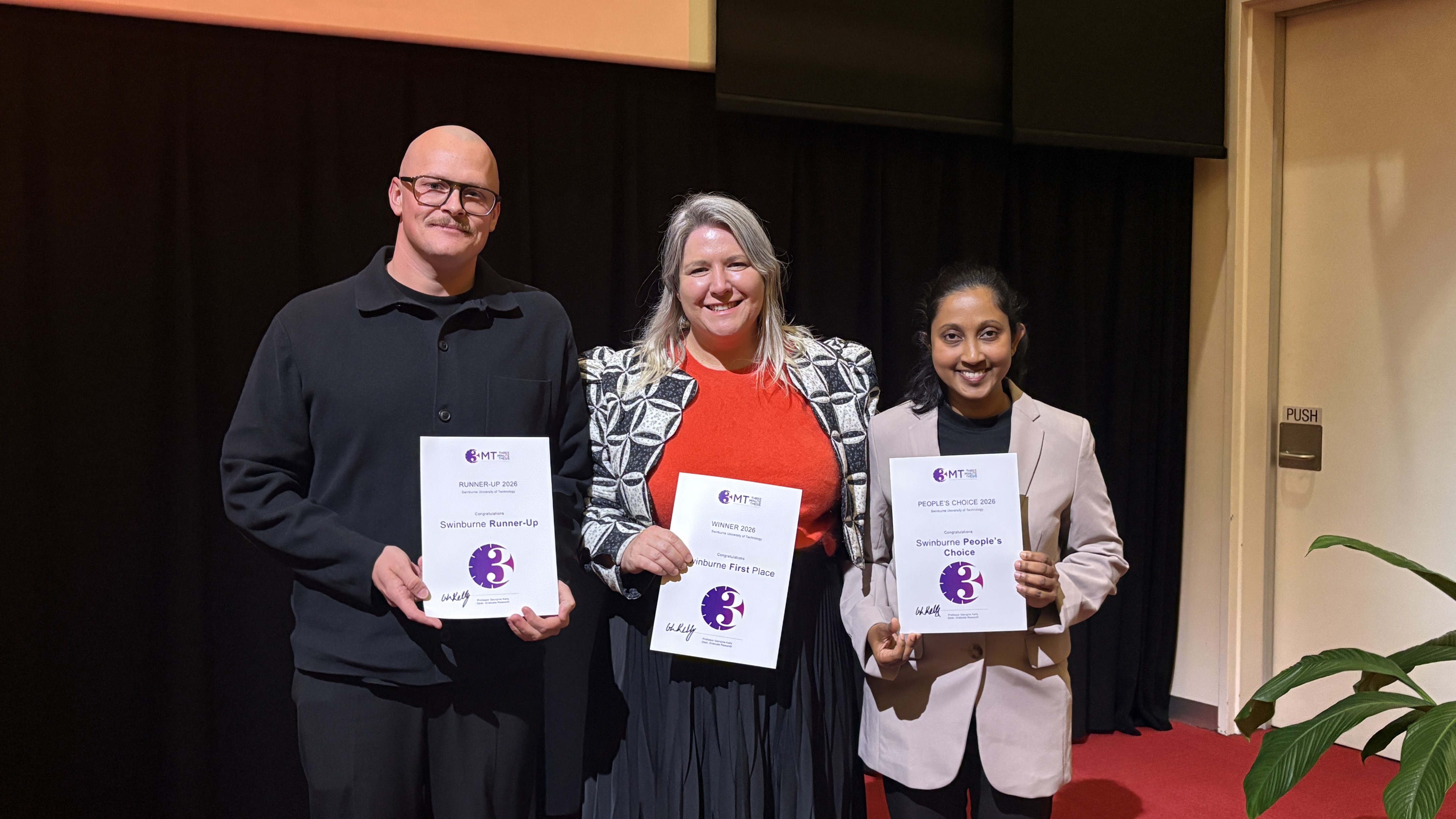
Celebrating Swinburne’s next generation of researchers
Swinburne’s inaugural Research Festival brought together Higher Degree by Research students and early career researchers to learn, share and connect.
Monday 27 July 2026


