

Innovative hydrogen research to advance sustainable steel

Victorian Hydrogen Hub (VH2) PhD candidate Gopal Pandey is leading research to decarbonise the steel industry using hydrogen.
In summary
- Steel production is a large contributor to carbon emissions
- Swinburne’s Victorian Hydrogen Hub (VH2) is researching the application of hydrogen in steelmaking to make the industry more sustainable
- Gopal Pandey’s PhD investigates the engineering aspects of oxygen blowing using hydrogen fuel
Steel, a crucial material in human civilisation, is also one of the world’s biggest sources of carbon emissions. To help decarbonise the steel industry, Swinburne’s Victorian Hydrogen Hub (VH2) is researching the application of hydrogen in steelmaking to make the industry more sustainable.
PhD candidate Gopal Pandey is at the forefront of this work, using computational fluid dynamics modelling to study the engineering aspects using hydrogen fuel in oxygen blowing – one of the most common and efficient steel production methods.
Gopal says considering the steel industry’s scale, it shapes up as one of the largest contributors to a clean hydrogen economy future.
“I'm passionate about making a better environment to live in,” Gopal says.
“Climate change is real and reducing our carbon footprint is a challenge. Having my project work on reducing something that is bad for the planet is very impactful.”
The importance of steel
Ever since the onset of the industrial revolution steel has been a dominant feature of modern civilization, with its applications ranging from basic infrastructure to more complicated mechanical equipment. Typically made through basic oxygen furnaces using virgin iron ore, steel uses a lot of fossil fuel-based sources of energy that contribute to carbon emissions.
VH2’s project aims to replace the existing fossil fuel-based sources with hydrogen. PhD supervisor and Professor in the School of Engineering, Geoffrey Brooks says the PhD is “tackling a key issue in decarbonisation using advanced mathematical tools.”
“Gopal’s project follows on from some successful work on understanding how natural gas burners behave in the extreme environment of steelmaking. Now we are re-examining the whole issue with hydrogen.”
Gopal says that while hydrogen is challenging and “bringing highly inflammable gas into the steelmaking environment is another major issue,” he is excited for the opportunity to make a difference.
“Dealing with and finding new ways to adapt hydrogen and decarbonise the steel industry is always something we look forward to.
“Working as a part of VH2 at Swinburne has provided a lot of opportunities to connect, build a network with the industry and understand the problem from the ground up, which I really do love.”
-
Media Enquiries
Related articles
-
- Technology
- Science
- Sustainability
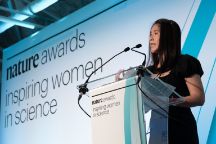
AI innovation protecting biodiversity wins global award for Swinburne researcher
Swinburne Sarawak researcher, Ts Dr Lee Sue Han has won a 2025 Inspiring Women in Science Award for her AI-driven biodiversity research, which uses artificial intelligence to identify plant species, protect ecosystems and support sustainable agriculture.
Friday 06 March 2026 -

- Technology
- Science
- Sustainability
- Engineering
Swinburne to drive innovation in critical minerals research and industry
Swinburne will contribute its expertise to the Critical Metals for Critical Industries Cooperative Research Centre (CMCI CRC)
Thursday 12 March 2026 -

- Technology
- Science
- University
- Aviation
- Sustainability
- Engineering
Swinburne secures AEA funding in aerospace, critical metals, sustainable steel production and protective helmet design
Swinburne University of Technology researchers have secured over $1.6 million in funding from Australia’s Economic Accelerator (AEA) Ignite grants.
Thursday 22 January 2026 -

- Student News
- Science
- Sustainability
Introducing tomorrow’s global science communicators
Start Talking is Swinburne’s unique video-based public speaking competition, exclusively for undergraduate students
Monday 08 December 2025 -

- Astronomy
- Technology
- Health
- Science
- University
- Sustainability
- Engineering
Swinburne highly cited researchers reach the top in 12 fields
Ten Swinburne academics have been named on the Highly Cited Researchers 2025 list, released by Clarivate
Tuesday 02 December 2025


