

Global leaders use hydrogen to reduce aviation emissions

Madeline Van Dongen is bringing VH2 and AIR Hub together by modelling the chemical aspects of hydrogen storage for aerospace.
In summary
- Swinburne is collaborating with global leaders to implement hydrogen technology in the aerospace industry.
- As one of the biggest contributors to rising CO2 emissions, aerospace has the potential to implement renewable energy sources that help to tackle climate change.
- Victorian Hydrogen Hub and Aerostructures Innovation Research Hub Research Fellow, Madeline Van Dongen, is modelling the chemical aspects of the hydrogen storage project.
Swinburne’s Victorian Hydrogen Hub (VH2) and Aerostructures Innovation Research Hub (AIR Hub) are developing enhanced hydrogen storage tanks for aerospace. Working with CSIRO and the Institut für Flugzeugbau (IFB, ‘Institute for Aircraft Design’) at the University of Stuttgart in Germany, the project could make a real impact on the carbon footprint of the aerospace industry.
Hydrogen Storage Technologies Research Fellow, Madeline Van Dongen, is bringing VH2 and AIR Hub together to “provide a chemical perspective on projects in both hubs”. Madeline’s role in this global effort is modelling the chemical aspects of hydrogen storage in new materials using density functional theory and related methods.
“Essentially, we’re creating a metal-organic framework-based hydrogen storage tank that can be used for aviation, which is really exciting,” she says.
Aircraft currently rely on jet fuel, which releases millions of tonnes of carbon dioxide and other pollutants into the atmosphere every year. Hydrogen can provide nearly three times more energy than traditional fuels for the same weight, and only produces water when using fuel cells.
Therefore, hydrogen-powered aircraft could fly the same range and speed with less fuel weight and no emissions. Refuelling hydrogen tanks is also very fast compared to recharging a battery.
Countries around the world are working on demonstrator aircraft to develop hydrogen for aerospace, with Australia and Germany leading the way. Madeline says current barriers include the inaccessible price of sustainable ‘green’ hydrogen, making it more expensive than jet fuel.
“Creating more and better hydrogen-based aircraft will only push that development more,” she says.
AIR Hub Director, Dr Adriano Di Pietro, says he is creating a team to work on “real challenges faced in translating technology”.
“Hydrogen offers huge potential for clean and sustainable long-range flights, but without critical work applying state-of-the-art research in aerospace platforms, like tanks for planes, we won't see full adoption or a competitive business case,” Dr Di Pietro says.
Using hydrogen to tackle global issues
VH2 Director, Gordon Chakaodza, is excited to be working with the University of Stuttgart on this global effort.
“Sharing experiences and learning with counterparts in international jurisdictions is vital to achieve successful outcomes,” Chakaodza says.
Madeline is keen to tackle a new area of research that contributes to an important problem like climate change.
“Working with the IFB at the University of Stuttgart is an amazing opportunity and there’s so much potential for collaboration on new research areas,” she says.
“Aviation decarbonisation is a big challenge, but hydrogen is a unique and really attractive solution – it’s very light, far denser in energy than traditional fuels and produces only water. By developing a more efficient, lower-pressure hydrogen tank for aircraft, we’re offering a way to drastically lower aviation emissions that can be easily integrated into existing aerospace applications.”
Madeline’s passion behind her involvement in the hydrogen tank project is the desire to see a more habitable planet for generations to come.
“Our planet is too precious and beautiful to squander on complacency and apathy. Hydrogen fuel is an important part of reducing emissions and founding a sustainable future, and I hope that Australian industry can get on board with its production and storage.”
-
Media Enquiries
Related articles
-
- Technology
- Science
- Sustainability
- Engineering
Swinburne’s international collaborations driving meaningful impact
Swinburne is collaborating with international researchers to tackle global challenges in clean energy, sustainable materials and energy-efficient buildings.
Monday 16 March 2026 -
- Technology
- Science
- Sustainability
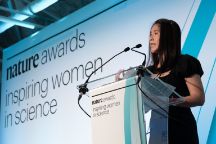
AI innovation protecting biodiversity wins global award for Swinburne researcher
Swinburne Sarawak researcher, Ts Dr Lee Sue Han has won a 2025 Inspiring Women in Science Award for her AI-driven biodiversity research, which uses artificial intelligence to identify plant species, protect ecosystems and support sustainable agriculture.
Friday 06 March 2026 -

- Science
- University
- Sustainability
Swinburne appoints Gordon Chakaodza as new Co-Director of FACET
Gordon Chakaodza has been appointed as Co-Director of the Franco-Australian Indo-Pacific Centre for Energy Transition (FACET), he brings extensive leadership experience in hydrogen and energy transition and will guide FACET’s next phase of growth
Tuesday 17 March 2026 -

- Technology
- Science
- Sustainability
- Engineering
Swinburne to drive innovation in critical minerals research and industry
Swinburne will contribute its expertise to the Critical Metals for Critical Industries Cooperative Research Centre (CMCI CRC)
Thursday 12 March 2026 -

- Technology
- Science
- University
- Aviation
- Sustainability
- Engineering
Swinburne secures AEA funding in aerospace, critical metals, sustainable steel production and protective helmet design
Swinburne University of Technology researchers have secured over $1.6 million in funding from Australia’s Economic Accelerator (AEA) Ignite grants.
Thursday 22 January 2026


