

Carbon neutrality at Swinburne
With a commitment to be carbon neutral by 2025, Swinburne is currently implementing initiatives that are materially reducing emissions across our campuses, as well as delivering sustainability-focused research and curriculums.
In 2019, Swinburne made a commitment to being carbon neutral by 2025. The commitment – championed by Vice-Chancellor Professor Pascale Quester – has stemmed a number of initiatives to materially reduce emissions across our campuses. Initiatives to leverage sustainability-focused research, partnerships and curriculums underway.
Since committing to carbon neutrality by 2025, there have been a number of sustainability initiatives rolled out across our campuses, with a focus on emission reductions.
Swinburne continues to identify new ways to reduce our impact on the environment. We are focused on securing a sustainable future across all our endeavours including organisational, global, financial and operational.
How we are reducing emissions
To ensure we meet our target, a cross-functional team was established to investigate, develop and prioritise initiatives to decarbonise our operations. These initiatives are focusing on improving the efficiency of our buildings, reducing waste, sustainable procurement, green travel and sustainable campus development.
Swinburne has reviewed its emissions boundary to be inclusive of all emissions it directly controls and can indirectly influence through supply chain purchasing and other decision making.
For Swinburne, emission reduction remains the priority in our carbon neutrality, with offsetting a secondary option when necessary. Swinburne remains focused on the Paris Agreement goal of net-zero emissions by 2050.
In the years since our commitment to carbon neutrality was made, these initiatives have delivered exciting results with real impact on Swinburne’s overall emissions.
We are creating more sustainable campuses for staff and students to work and learn. By taking significant steps in campus design and management, procurement and operations activities, we are working to reduce our environmental impact.
The creation of more sustainable campuses across Swinburne is ongoing, with a focus on adaptive reuse of existing buildings wherever possible.
Examples of how Swinburne is improving the sustainability of its campuses include the below.
Late Lab student space
The Late Lab 24-hour student space is an all-electric building, supplied with 100% purchased renewable electricity. The embodied carbon emissions from the construction of the Late Lab were reduced through the refurbishment of an existing building and material selection, with all residual emissions offset.
The Late Lab’s lighting and air-conditioning is controlled from occupancy sensors, so that heating and cooling energy use is minimised.
Energy use optimisation
Swinburne’s prioritises energy efficiency, through how the campus and services are operated, and how projects are scoped and delivered. While Swinburne purchases 100% renewable electricity, avoiding or reducing electricity use remains a priority action to reduce emissions and the overall need to purchase renewable electricity.
The Heating, Ventilation and Air-conditioning (HVAC) services at Swinburne are responsible for approximately 45% of total electricity use, and 90% of natural gas use. To reduce this energy use and associated emissions Swinburne has an extensive HVAC Optimisation program of works. This includes introducing new Building Management Systems control strategies, and better aligning the HVAC hours of operation with the highly variable hour of use, both during and outside of teaching semester.
Swinburne also has an active program to progress the conversion of lighting to LED. In 2024, a major lighting upgrade at the Wantirna and Croydon campuses resulted in an overall reduction of 210,000kWh/pa, and a significant improvement to visual amenity and function of the lighting.
Swinburne has purchased 100% renewable electricity since July 2020, which is used for our operation across our three Melbourne campuses.
Staff laptops
In the procurement of new staff laptops in 2024, our Sustainability and IT teams worked together to halve the embodied carbon emissions created in their production and packaging, including by working with suppliers to have packaging utilising engineered cardboard rather than expanded foam.
Waste handling
Since 2021, Swinburne has offered staff a three-bin waste handling system to reduce the amount of waste going into landfill. Staff and students at Swinburne are encouraged to divert waste from landfill at every given opportunity.
In 2020 we ran a print reduction campaign that introduced a print quota limit for staff.
Swinburne discourages the use of single use items, especially at its events. At the 2025 staff End of Year Celebration, the Swinburne Events Team worked with B Alternative to ensure that reusable crockery was used by every staff member at the annual celebration, rather than single use materials.
Travel
To encourage students and staff to minimise the carbon footprint we create while travelling to campus, we have installed bike storage facilities and end of trip facilities at our Hawthorn campus.
Staff travel to work is included in Swinburne’s assessed emissions boundary. Swinburne encourages staff to use environmentally friendly travel options as much as is possible, for example, cycling and walking, public transport and carpooling.
In late 2024, the Sustainability team conducted a Travel to Work survey to capture data on the emissions created by Swinburne staff’s travel to and from work. The results of this survey were used in the calculations of Swinburne’s overall carbon emissions and were, in turn, offset. This survey will be completing annual and is part of an ongoing campaign to reduce emissions created by staff travel.
Travel required for work
In October 2020, we updated our travel procedure for staff and HDR students. We now encourage travellers to attend events virtually when they can and choose greener transport and accommodation options as much as possible.
Sustainable procurement
Swinburne’s sustainable procurement policy and procedures guide Swinburne staff to make procurement decisions that achieve better environmental, social, and economic outcomes. It supports our university to generate social value above and beyond the value of the goods or services we buy. Guidance materials are provided to staff to assist them in ensuring that sustainable procurement is implemented across the university.
Sustainability research
Swinburne’s commitment to reducing our environmental footprint and building a sustainable future extends to our research activities. Our future-focused research combines science, technology and innovation to deliver collaborative and sustainable impact.
At Swinburne, we work to ensure all research undertaken at the university is approached with a sustainability mindset, in addition to research that actively seeks solutions to global sustainability challenges.
Our Innovative Planet flagship research pillar, in particular, brings together industry and researchers to work collaboratively towards a sustainable future.
Researchers across the Swinburne ecosystem strive to solve sustainability challenges facing community and industry in areas including transport and mobility, infrastructure, advanced manufacturing, aviation, space and aerospace, supply chain and logistics, energy transition and many more.
-
- Science
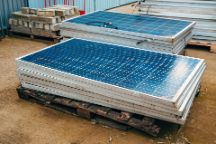
Finding new life in dead solar panels
Swinburne University of Technology will lead a $3 million effort to save dead solar panels from landfill through a zero-carbon recycling process.
Wednesday 15 October 2025 -

- Science
- University
- Sustainability
Swinburne announces Professor Joy Sumner as FACET Co-Director
Swinburne has announced Professor Joy Sumner as the new Co-Director of the Franco-Australian Centre for Energy Transition (FACET)
Monday 28 April 2025 -
- University
Swinburne partners with eco fintech Sphere For Good to drive carbon neutral digital payments
Swinburne University of Technology has partnered with Sphere For Good, a new Australian eco fintech driving climate action through digital payments.
Tuesday 25 June 2024 -
- Technology
- Science
- Sustainability
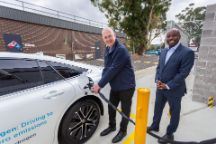
Swinburne and CSIRO launch state-of-the-art renewable hydrogen refuelling station
Swinburne University of Technology and CSIRO have launched a state-of-the-art clean hydrogen refuelling station, purpose-built for enabling hydrogen research.
Thursday 23 November 2023 -

- Sustainability
- University
Green partnership to accelerate Swinburne’s research impact
Swinburne has partnered with Twynam’s Earth Fund to drive the commercialisation of decarbonisation research, accelerating the university’s innovation ecosystem.
Tuesday 21 November 2023


Did you know?
Swinburne is home to a number of world-class research facilities helping us reach our sustainable development goals. These include the Energy Transformation Laboratory, Geotechnical Laboratory, and the Digital Construction Laboratory.
Want to study sustainability?
At Swinburne, we have a number of course options across arts, science, engineering, design and health that focus on sustainability. We also have a start-up studio for environmentally conscious entrepreneurs.
What can I do to help?
There are many things you can do as a student to help in our sustainability journey.
Firstly, you can choose a more environmentally friendly mode of transport to get to and from campus. Walking or cycling is best, but public transport and ridesharing is also recommended where safe to do so.
On campus there is virtually an endless number of things you can do to help. This includes:
- disposing of rubbish in the correct bins
- using the half flush button in you know where
- using reusable containers and cups for food and drink
- avoiding printing where possible
- using the stairs rather than a lift
- re-filling personal water bottles from the tap rather than purchasing bottled water.
Also, be a leader! Encourage your friends and classmates to improve their sustainable practices and lead by example.
If you have any ideas to further help in our commitment to reach net zero carbon emissions, we’d love to hear from you. Email your idea to the Swinburne Sustainability team sustainability@swinburne.edu.au.
There are many things you can do as a Swinburne employee to help us meet our sustainability goals.
Firstly, you can choose a more environmentally friendly mode of transport to get to and from work. Walking or cycling is best, but public transport and ridesharing is also recommended where safe to do so.
When you’re at work, we recommend the following:
- turning off lights when leaving a room
- turning your computer off overnight
- turning off taps when not using water
- avoiding printing where possible
- not using personal heaters or fans in your office
- disposing of your rubbish correctly in the appropriate bins
- using reusable containers and cups for food and drink
- using stairs rather than lifts
- buying stationery made from recycled materials.
And if your department requires new furniture first check if used, recycled furniture is available in the Facilities and Services storage units. Yes, reuse where possible!
Also, choose virtual meetings over travelling, and if you have to travel, choose greener accommodation or airline providers.
Please also familiarise yourself with the sustainability resources available to staff. These important resources and guidelines will help you to make greener choices in your everyday activities.
If you have any ideas to further help in our commitment to reach net zero carbon emissions, we’d love to hear from you. Email your idea to the Swinburne Sustainability team at sustainability@swinburne.edu.au.
Get in contact
If you’d like to know more about our commitment to be carbon neutral, or have any ideas to help us be more sustainable, please contact us at sustainability@swinburne.edu.au.