


Please note
This page discusses sexual violence and harm and related support services. If you would like support, help is available.
Sexual violence and harm can have a significant impact on a person's safety, wellbeing and experience at university.
At Swinburne, we are committed to creating a safe, respectful and inclusive community free from violence, harassment and harm. This work forms part of our broader commitment to preventing and responding to gender-based violence.
We take disclosures and reports of violence, harm and concerning behaviour seriously and respond with care, respect and sensitivity. Through education, awareness initiatives, support services and reporting pathways, we continue to strengthen our efforts to prevent and respond to sexual violence and harm and create a safer and more respectful university community.
This page provides information about support and reporting options, what Swinburne is doing to prevent sexual violence and harm, and the National Student Safety Survey (NSSS).
What is sexual violence and harm?
Sexual violence and harm is an umbrella term that includes sexual assault, sexual harassment and other unwanted behaviours of a sexual nature that cause harm, distress, fear or a loss of safety. Sexual violence and harm can occur in-person, online or through digital communication.
Sexual violence and harm is never the fault of the person who experienced it.
More information about sexual assault, sexual harassment and consent
For students
For staff
Preventing sexual violence and harm at Swinburne
Preventing sexual violence and harm requires a whole-of-university approach. At Swinburne, we are committed to creating a safe, respectful and inclusive community through prevention, education, support, response and continuous improvement.
This work forms part of our broader commitment to preventing and responding to gender-based violence and aligns with the National Higher Education Code to Prevent and Respond to Gender-based Violence.
We regularly review our policies, procedures, support services and prevention initiatives to ensure we continue to learn from evidence, emerging practice and the experiences of our community.
National Student Safety Survey (NSSS)
The National Student Safety Survey (NSSS) is a national survey of university students' experiences and perceptions of sexual violence and harm, including sexual assault and sexual harassment.
The survey helps universities better understand student experiences and identify opportunities to strengthen prevention efforts, improve support services and inform future action.
2026 survey
Swinburne has participated in this survey since 2017 and is taking part again in 2026.
Swinburne has participated in several National Student Safety Surveys aimed at better understanding student experiences and strengthening prevention and response efforts.
In 2017, Swinburne participated in Australia's first National Student Safety Survey (NSSS), conducted by the Australian Human Rights Commission. The findings informed improvements across the higher education sector and led to ongoing work to strengthen student safety and support.
In 2021, Swinburne again participated in the National Student Safety Survey (NSSS). The findings helped inform further changes to policies, procedures, support services and prevention initiatives.
Summary of 2021 survey results
Of the 1,054 Swinburne students who participated in the survey:
12.9%
have experienced sexual harassment since starting university
3.3%
have experienced sexual assault since starting university
19.2%
of students who were sexually harassed sought support or assistance
43.9% to 47.8%
of students know nothing or very little about where to seek support or assistance for sexual harassment or assault
1,054 students participated in the survey
Prevalence in a university context
Sexual harassment
- 12.9% since starting university
- 3.7% in the past 12 months
Experience of sexual harassment in the past 12 months:
Sexual assault
- 3.3% since starting university
- ** in the past 12 months
Experiences of sexual assault in the past 12 months:
Context of most impactful incident
Sexual harassment
Asked of students who experienced sexual harassment in an Australian university context.
Location:
- General campus areas 47.3%
- University lecture theatres, computer labs 23.6%
- Clubs and societies, events and spaces 16.1%
Perpetrator:
- 61.1% knew some or all of the perpetrators involved
Reporting and support seeking
Asked of students who experienced sexual harassment in an Australian university context.
Formal complaints made to the university:
- ** of students who were sexually harassed made a formal complaint
Seeking support from the university:
- 19.2% of students who were sexually harassed sought support or assistance
Knowledge of university support and reporting channels:
Asked of all students.
- 52.3% know nothing or very little about where to go to make a complaint about sexual harassment
- 47.8% know nothing or very little about where to seek support or assistance for harassment
- 54.5% know nothing or very little about where to go to make a complaint about sexual assault
- 43.9% know nothing or very little about where to seek support or assistance for assault
Student feedback, survey findings and emerging evidence continue to inform Swinburne's work to prevent and respond to sexual violence and harm.
Swinburne undertakes independent reviews to better understand student experiences and strengthen responses to sexual violence and harm.
This informs changes to policies, support services, reporting pathways, prevention initiatives, staff capability and student education programs.
Swinburne continues to place a strong focus on the safety and wellbeing of our students through:
- 24/7 safety supports including on-campus security at our three campuses, immediate counselling via the Student Wellbeing Support Line (phone and text) and an online peer-support platform TalkCampus
- expanding the online consent module to all on-campus Higher Education students, achieving an over 80% completion rate
- on-campus counselling at our three campuses through our Health Service, with online booking at Hawthorn
- general support and advice (including 24/7 urgent support) for international students via the International Student Advisors
- the Swinburne app which is accessible to all students, making it easier to access support services in one place
- strengthening staff and student awareness of the Safer Community team through regular face to face workshops and in-person activations, including leading a whole-of-university Respect Week campaign
- peer-to-peer primary prevention initiatives run by Swinburne’s student health ambassadors H.Squad.
Today, this work continues through Swinburne's broader commitment to preventing and responding to gender-based violence.
Previous action plans and reports
Access help and support
Need urgent assistance?
In an emergency, call 000. For 24/7 on-campus security assistance: +61 3 9214 3333. For additional assistance outside business hours, refer to our 24/7 supports page.
- Access student counselling via the Swinburne Health service: +61 3 9214 8483
- 24/7 Student Wellbeing Support Line provides crisis counselling 24 hours, 7 days a week, all year round: Call 1300 854 144 or text +61 0488 884 145
- Seek advice, access support or report concerning behaviour (including sexual violence, sexual harm and gender-based violence) to Safer Community. Anonymous reporting is available.
- Access 24/7 health, safety and wellbeing support (including counselling) through Sonder (for eligible staff; staff login required).
- Make a disclosure or report an incident through the University’s health and safety incident system, SwinRisk.
- Seek advice or report concerning behaviour involving students to Safer Community.
1800RESPECT
Available 24/7
1800RESPECT is the national domestic, family and sexual violence counselling, information and support services.
Lifeline
Available 24/7
National charity providing crisis support and suicide prevention services.
- Call 13 11 14
- Lifeline website
13YARN
Available 24/7
Crisis support for Aboriginal and Torres Strait Islander people who are feeling overwhelmed or having difficulty coping.
- Call 13 92 76
- 13YARN website
Safe Steps
Available 24/7
Safe Steps is a confidential and supportive family violence response line for Victoria.
Victoria Sexual Assault Crisis Line
Available after-hours
Eastern Centre Against Sexual Assault (ECASA)
Available during business hours and 24/7 for recent incidents
- Call +61 3 9870 7310
- Email: ecasa@easternhealth.org.au
- ECASA website
Men’s Referral Service
Advice for men who use violence.
Available 24/7
Kids Helpline
Counselling service for Australian children and young people aged between five and 25 years.
Available 24/7
InTouch Multicultural Centre Against Family Violence
InTouch is a specialist family violence service that works with multicultural women, their families, and their communities.
Available during business hours
Rainbow Door
Rainbow Door is a free specialist LGBTIQ+ helpline providing information, support, and referral to all LGBTIQ+ Victorians, their friends and family.
Available during business hours
Safety and security on campus
-

Share a concern or make a report
If you experience or witness inappropriate, concerning or threatening behaviour, you can share a concern or make a report to Safer Community. You can do this anonymously.
-
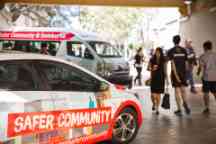
Your safety at Swinburne
We’ve worked hard to create a safe, accepting and vibrant community to ensure Swinburne remains a place where everyone can feel confident and respected – and we aim to keep it that way.
-

Health and wellbeing
We offer comprehensive professional health, medical and wellbeing services to support the learning, financial, mental, physical, community and cultural wellbeing of the Swinburne community.


