

/ozgrav-virtual-universe_47A4853.jpg/jcr:content/renditions/cq5dam.web.3840.2160.jpeg)
Here you will find our key highlights from our 2025 Annual Report. Read about our major achievements for the year and discover key facts about our university.
For more information, including financial and governance reporting, download the full documents.
Messages from the Chancellor and Vice-Chancellor
-
Message from the Chancellor
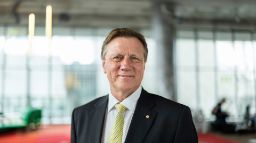
Professor John Pollaers OAM
As we mark the close of 2025, I am both proud and energised by Swinburne’s remarkable evolution and inspired by the transformative new chapter we are now beginning.
-
Message from the Vice-Chancellor

Professor Pascale Quester AO
2025 marked the culmination of our bold Horizon 2025 strategy and the beginning of an extraordinary new chapter through the launch of Ad Astra_2030: our commitment to reaching beyond the horizon to the stars.


2025 at a glance
39,000+ students (EFTSL)
66% undergraduate*
11% postgraduate*
23% vocational education
Student demographics
17%
from regional or remote areas**
2.2%
Aboriginal and Torres Strait Islander**
39%
international (onshore & offshore)
100+
student nationalities
9.4%
students with a disability**
* Scope is higher education students
** Scope is domestic students – HE & VE
These tables include student numbers by overall headcount, by funding sources, level of course, campus, gender and attendance type.
| Higher education (HE) | Vocational education (VE)1 | |||||
|---|---|---|---|---|---|---|
| Category | 2023 | 2024 | 20252 | 2023 | 2024 | 2025 |
| Total student headcount8 | 45,320 | 45,354 | 43,906 | 20,180 | 22,787 | 25,303 |
| Commencing headcount | 19,099 | 16,809 | 14,937 | 11,316 | 11,923 | 12,724 |
| Total student contact hours (SCH) | - | - | - | 5,552,414 | 5,952,397 | 6,373,346 |
| Total student load (EFTSL)3 | 29,115 | 30,676 | 30,193 | 7,711 | 8,267 | 8,852 |
| Higher education (HE) | Vocational education (VE)1 | |||||
|---|---|---|---|---|---|---|
| By funding source (EFTSL) | 2023 | 2024 | 20252 | 2023 | 2024 | 2025 |
| Government funded | 16,305 | 16,297 | 16,771 | 5,642 | 6,127 | 6,488 |
| Full fee-paying (domestic) | 1,478 | 1,398 | 1,341 | 1,160 | 1,397 | 1,828 |
| International (offshore, excluding Sarawak) | 2,707 | 2,949 | 3,036 | 566 | 435 | 325 |
| International (onshore) | 6,528 | 7,420 | 5,926 | 343 | 308 | 211 |
| Sarawak (approximate) | 2,097 | 2,612 | 3,119 | - | - | - |
| Higher education (HE) | Vocational education (VE)1 | |||||
|---|---|---|---|---|---|---|
| By level of course (EFTSL) | 2023 | 2024 | 20252 | 2023 | 2024 | 2025 |
| Postgraduate research | 998 | 897 | 875 | - | - | - |
| Postgraduate coursework | 3,842 | 4,237 | 3,303 | 77 | 57 | 88 |
| Undergraduate4 | 24,157 | 25,442 | 25,843 | - | - | - |
| Associate degree/degree | - | - | - | - | - | - |
| Advanced diploma/diploma | - | - | - | 2,858 | 2,909 | 3,078 |
| Certificate | - | - | - | 3,692 | 4,201 | 4,701 |
| Other5 | 118 | 100 | 171 | 1.084 | 1,100 | 985 |
| Higher education (HE) | Vocational education (VE)1 | |||||
|---|---|---|---|---|---|---|
| By campus (EFTSL) | 2023 | 2024 | 20252 | 2023 | 2024 | 2025 |
| Croydon | - | - | - | 866 | 886 | 912 |
| Hawthorn | 15,195 | 15,696 | 14,477 | 2,288 | 2,330 | 2,396 |
| Prahran | 57 | 36 | - | - | - | - |
| Wantirna | - | - | - | 1,481 | 1,514 | 1,719 |
| Sarawak, Malaysia | 2,097 | 2,612 | 3,119 | - | - | - |
| Offshore (excluding Sarawak) | 2,568 | 2,949 | 3,036 | 565 | 435 | 325 |
| Online and other6 | 9,198 | 9,383 | 9,560 | 2,511 | 3,102 | 3,500 |
| Higher education (HE) | Vocational education (VE)1 | |||||
|---|---|---|---|---|---|---|
| By gender (EFTSL) | 2023 | 2024 | 20252 | 2023 | 2024 | 2025 |
| Female | 15,481 | 16,412 | 16,441 | 4,073 | 4,503 | 4,949 |
| Male | 13,559 | 14,157 | 13,635 | 3,598 | 3,713 | 3,838 |
| Other | 75 | 107 | 116 | 40 | 51 | 65 |
| Higher education (HE) | Vocational education (VE)1 | |||||
|---|---|---|---|---|---|---|
| By attendance type (headcount) | 2023 | 2024 | 20252 | 2023 | 2024 | 2025 |
| Full-time7 | 29,040 | 30,465 | 29,620 | 3,210 | 3,287 | 3,423 |
| Part-time | 16,280 | 14,889 | 14,286 | 16,970 | 19,500 | 21,880 |
- Includes Pathways, Vocational Education, Industry Solutions, Swinburne Online (SOL) and National Institute of Circus Arts.
- 2025 preliminary data; final official data available later in 2026.
- EFTSL stands for ‘equivalent full-time student load’. VE equals student contact hours divided by 720. HE equals annual total load of 100 credit points expressed in EFTSL.
- Includes sub-degrees, bachelor, honours, undergraduate short course and UniLink diplomas.
- includes non-award, enabling and start up support.
- Inclusive of SOL, Hawthorn Online and CSP-funded Open Universities Australia and multimodal delivery.
- Full-time means an annual study load of six standard units or more, or a study load of three standard units or more over half a year.
- Headcount excludes Cross-Institutional program enrolments; EFTSL includes all programs.
Note: excludes full-fee Open Universities Australia.
Alumni
265,000+
Alumni in 165 countries
991
Total number of gifts
90
Students recieving donor funded scholarships
48
Ethel Swinburne Society members
Horizon 2025: A vision realised - our strategic plan and performance
This year, Swinburne marked the successful conclusion of Horizon 2025 – a transformative, future-focused strategy that reimagined what a university could achieve through four bold moon shots. Across the university, Horizon 2025 inspired deep cultural and operational change, advancing our position as a national leader in technology, industry engagement, research and student success.
-
Moon shot 1 in review

Every Swinburne learner gets a work experience
Swinburne delivered on our bold moon shot 1 in just a few years. Through our award-winning Work Integrated Learning (WIL) program, thousands have built skills, networks and careers.
-
Moon shot 2 in review
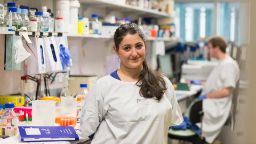
Every Swinburne graduate gets a job
Our focus on real-world learning, industry connection and career support delivered outstanding results. In 2025, we saw the proof: Swinburne led Victoria in graduate salaries and full-time employment rate for undergraduates.
-
Moon shot 3 in review
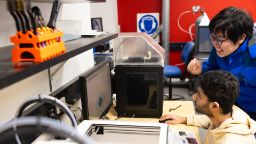
Every Swinburne partner gets a tech solution
Through Horizon 2025, we have proven the power of collaboration – bringing people and technology together to deliver real-world solutions.
-
Moon shot 4 in review
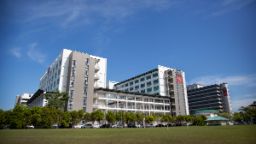
Swinburne is the prototype of global best practice
In 2025, we strengthened our international footprint, diversified global student experiences and achieved new heights in global university rankings, driving our reputation as a leading university of technology, innovation and entrepreneurship.


-
Introducing Ad Astra_2030: to the stars

Building on the momentum of Horizon 2025, we are delivering an even more ambitious agenda to bring people and technology together to build a better world.

2025 highlights
1st Victorian University to join More Than Our Rank initiative
Top 1% globally in the QS World University Rankings 2024
Top 300 in the 2025 Times Higher Education World University Ranking
Top 150 in the US News Best Global Universities Rankings
Quarterly highlights
January
Australian-first Centre for Inclusive Employment at Swinburne
Swinburne was announced as the host of an Australian-first Centre for Inclusive Employment, supported by a $22.1 million investment from the federal government. The centre of excellence brings together people with lived experience, researchers, service providers and employers to drive improved employment outcomes for people with disability.
Empowering our academics to drive innovation
Throughout the year, Swinburne created time and space for innovation by allocating 10 per cent of academic workload to innovation and engagement activities, supporting entrepreneurship, industry collaboration and real-world impact across research and teaching. This reflects our commitment to being a university where innovation and entrepreneurship are at the heart of everything we do.
Swinburne alumni honoured in 2025 Australia Day list
Our alumni were recognised in the 2025 Australia Day Honours for outstanding contributions across winemaking, tourism, emergency services and community development.
Bolstering innovation leadership at Swinburne Design Factory Melbourne
Maureen Thurston, a global leader in innovating by design, was appointed Acting Director of Swinburne Design Factory Melbourne and Innovation Fellow. Under Thurston’s leadership, the centre continues to bridge academia and industry, enabling students and researchers to solve real-world problems.
February
WorldSkills Regional Competition Awards
Swinburne hosted the WorldSkills 2024 Regional Competition Awards Night, celebrating vocational excellence across Melbourne’s east. Over 30 Swinburne competitors were acknowledged, with 14 receiving medals in their skills categories.

Enhancing study spaces with inspiring Indigenous artwork
Swinburne enriched the Australian Graduate School of Entrepreneurship with two original artworks by Yorta Yorta, Barappa Barappa, and Wemba Wemba artist and designer Mandi Barton. Completed in collaboration with the Moondani Toombadool Centre, the works – Emu Dreaming: Keeper of the Journey and Emu Spirit: Tracks Through Time – reflect themes of resilience, growth and connection to Country.

MedTechVic showcasing innovation in collaboration
Swinburne’s MedTechVic hub hosted its annual showcase, themed ‘Innovation in Collaboration’, showcasing Swinburne’s leadership in co-designed, inclusive innovation. The event included PhD presentations on VR-based mobility aids, senior-focused tech and rehabilitation devices, alongside a keynote from a lived-experience speaker.
March
Swinburne and Indian Institute of Technology Hyderabad launched global joint research institute
Swinburne and the Indian Institute of Technology Hyderabad launched the SIMMECT Joint Research Institute to drive global collaboration in manufacturing, materials, energy and quantum communication technologies. Focused on high-impact challenges, the partnership advances shared innovation between Australia and India and enhances Swinburne’s global presence.
Swinburne awarded funding for AI innovation projects
Swinburne secured funding through Australia’s Economic Accelerator Program to advance two artificial intelligence projects. One focuses on robotic systems for remote cardiac care; the other develops AI-based asbestos detection tools to improve safety and efficiency in site inspections. These initiatives highlight the real-world impact of university research and Swinburne’s expertise in commercialising innovations.
Swinburne became a founding member of the global Green Steel Alliance
Swinburne joined the newly formed Green Steel Alliance, a global coalition of research and industry partners working toward a carbon-neutral steel industry. Membership reinforces our leadership in sustainable manufacturing and our drive to advancing climate-responsive innovation through international collaboration.
Excellence in QS World University Rankings by Subject 2025
The university achieved strong results in the 2025 QS World University Rankings by Subject, with 17 subjects ranked globally. Art and Design remained in the top 150, Architecture entered the top 200, and Media and Communications, along with Physics and Astronomy, placed in the top 250. Engineering and Technology rose 22 places globally.
Launched national Digital Manufacturing Hub
Swinburne launched the ARC Industrial Transformation Research Hub in Future Digital Manufacturing, backed by $5 million in Australian Research Council funding. The hub uses AI and digital twins to improve manufacturing productivity and resilience, positioning Swinburne at the forefront of Industry 4.0 transformation and advanced manufacturing innovation in Australia.

Financial Crime Lab launched in collaboration with KordaMentha
Swinburne partnered with KordaMentha to launch a state-of-the-art Financial Crime Lab. Located at the Hawthorn campus, the facility combines academic insight with real-world application, enhancing student employability and addressing rising threats in fraud, cybercrime and anti-money laundering compliance.

Showcasing aerospace innovation at Avalon Airshow 2025
Swinburne showcased our cutting-edge work in aerospace, manufacturing and space technology at the 2025 Avalon Airshow. The event featured Swinburne’s AIR Hub, Industry 4.0 Testlab, and Space Technology and Industry Institute, as well as the launch of EntroMat, a new advanced materials intellectual property spinout, and a key partnership supporting Australia’s lunar rover mission.
April
The university launched a new 24-hour Latelab and student hub
Swinburne officially opened our reimagined Latelab and student hub at the Hawthorn campus, providing a 24-hour modern learning environment co-designed with students. Developed over two years, the space features sustainable design, flexible furniture and areas for quiet study or collaboration. It reflects our dedication to student experience, wellbeing and academic success.
World-first IV psychedelic trial for binge eating disorders commenced
Swinburne announced a landmark clinical trial for the world’s first intravenous psychedelic treatment targeting binge eating disorders. The study explores the effects of psilocin – derived from psychedelic mushrooms – administered via IV infusion. The trial aims to uncover new therapeutic pathways for under-researched eating disorders, advancing mental health treatment through novel, science-based approaches.
Professor Joy Sumner appointed Co-Director of Franco-Australian Indo-Pacific Centre for Energy Transition
The university appointed Professor Joy Sumner as Co-Director of the Franco-Australian Indo-Pacific Centre for Energy Transition (FACET), joining Co-Director Prune Bokobza. A global leader in materials science, Professor Sumner will advance energy systems research and expand training opportunities for students and professionals.
Swinburne drives innovation through national Additive Manufacturing Cooperative Research Centre
Swinburne became a founding partner in the new $270.5 million Additive Manufacturing Cooperative Research Centre (AMCRC), uniting over 100 research, government and industry partners. Swinburne brings deep expertise in advanced materials and production processes, further reinforcing our leadership in next-generation manufacturing technologies and national industry transformation.

May
Filmmakers shine at national and international festivals
Alum Lucy McKendrick’s co-produced film The Plague was accepted into the prestigious Cannes International Film Festival, while three films by Swinburne Film and Television students were accepted into the 2025 St Kilda Film Festival. The student films – White Lines by Ollie Ivin-Poole, Fish Fight by Alyssa Wong, and In Human Skin by Rayner Lim and Jun Kai Tan – were selected for Australia’s longest-running short film festival, celebrating outstanding emerging talent in screen storytelling.
Swinburne astrophysicist named in Forbes 30 Under 30 Asia list
Dr Sara Webb was named in the 2025 Forbes 30 Under 30 Asia list in the healthcare and science category, recognising global leadership in space science, education and public engagement. Dr Webb leads Australia’s longest-running International Space Station research program and has been widely published in top-tier journals.

Startups drive change in technology and sustainability
Eleven Swinburne startups showcased their innovations at the 2025 Luminate Showcase, marking the culmination of the university’s entrepreneurial development program. Startups presented solutions ranging from sustainable cleaning technologies to brain health and environmental monitoring. Upgrid, founded by current Swinburne students, won both the major prize and People’s Choice Award for its high-access industrial cleaning solution.
Space showcase at Parliament House
Swinburne hosted a three-day Space Showcase at Queen’s Hall in Victoria’s Parliament House, featuring immersive experiences such as a virtual lunar rover and VR explorations. The event highlighted Swinburne’s research excellence, industry partnerships and role in developing the future space workforce across astronomy, supercomputing and advanced space technologies.

June
LINGER brings Indigenous stories to the big screen
Indigenous Swinburne students led LINGER, a powerful film project capturing Indigenous identity, trauma and resilience through two documentaries and a short fiction piece. The team travelled to the Tiwi Islands and Darwin to collaborate with local communities, highlighting the power of Indigenous-led media in advancing cultural understanding and connection.
Swinburne community acknowledged in 2025 King’s Birthday Honours List
Members of our community were acknowledged in the 2025 King’s Birthday Honours for outstanding contributions to reconciliation, community health and research.
National Reconciliation Week marked across Swinburne campuses
The Swinburne community marked National Sorry Day and National Reconciliation Week 2025 across our three Melbourne campuses, embracing the theme Bridging Now to Next. The week included a Sorry Day service, Indigenous art workshops and planting activities at the Aunty Dot Peters AM Flowering Grasslands.
Swinburne VET students crowned Australia’s best at WorldSkills 2025
Three Swinburne VET students won gold medals at the 2025 WorldSkills National Championships in Brisbane, competing in Mechatronics and Industry 4.0 categories. Ten students competed across six skill areas, with strong support from Swinburne mentors.
Swinburne became first Australian university to offer degrees in Qatar
The university partnered with Barzan University College to become the first Australian university to deliver qualifications in Qatar. The collaboration introduces degrees in computer science, engineering, cybersecurity, business and foundation studies, reflecting our bold international outlook and vision to provide globally connected, future-ready education.

Cemented top 300 position in QS World University Rankings
Swinburne ranked 294 in the 2026 QS World University Rankings, maintaining our place among the world’s top 300 universities. The result reinforces our global reputation for delivering high-impact research and industry-connected learning that addresses real-world challenges and emerging global needs.
Annual Reconciliation Lecture inspired reflection and action
The 2025 Swinburne Annual Reconciliation Lecture encouraged reflection on Australia’s reconciliation journey. Delivered by Melinda Cilento, Chief Executive of the Committee for Economic Development of Australia, and hosted by the Moondani Toombadool Centre, the event explored truth-telling, equity and the role of leadership in empowering First Nations voices.
July
Advancing battery life and EV cybersecurity with ARC grants
Swinburne secured two Australian Research Council Linkage Project grants to advance research in battery performance and electric vehicle cybersecurity. One project focuses on extending battery lifespan by slowing internal degradation, while the other addresses vulnerabilities in EV charging infrastructure.
Community united for NAIDOC Week 2025
Swinburne marked NAIDOC Week 2025 with a series of community events across our Melbourne campuses, embracing the theme The Next Generation: Strength, Vision & Legacy. Staff and students took part in local celebrations, workshops and cultural activities that honoured Aboriginal and Torres Strait Islander histories and futures.

Commercial Radio & Audio partnership put students on air across Victoria
Swinburne partnered with Commercial Radio & Audio to provide students with real-world experience at regional radio stations. Through a dedicated travel grant program, selected students completed two-week placements at ACE Radio Network stations across Victoria, enhancing career readiness and supporting students in gaining practical experience in media production.
STEMeez platform expanded to inspire the next generation of STEM stars
Swinburne’s STEMeez learning platform received $1.6 million in additional funding to broaden its reach and inspire more young Australians to explore STEM pathways. Designed for early learning to VCE, the platform features interactive modules developed with partner universities and educators. The expansion aims to increase engagement among underrepresented groups, particularly girls.

Top law graduate awarded Supreme Court Prize
Bachelor of Laws/Bachelor of Arts graduate Zachary Plant was awarded the 2025 Supreme Court Prize for academic excellence, recognising outstanding achievement in legal studies. The prize is awarded to the top-performing law student at each Victorian university and reflects high academic performance and commitment to service.
Partnered with EdTech innovator Vidversity
Swinburne launched a year-long collaboration with leading EdTech company Vidversity to co-design next-generation digital learning tools. Backed by Swinburne Ventures, the initiative supports the university’s mission to deliver accessible, engaging and industry-relevant online learning.
Powering breakthroughs in sustainable mining and materials technology
Swinburne secured $4 million through the Australia’s Economic Accelerator Innovate Program to lead two major research commercialisation projects in advanced materials and astrophysics. The first will commercialise locally produced, high-performance materials for use in mining and renewable energy, while the second applies space-based particle detection to improve discovery of critical minerals.
August
Distinguished Professor Hao Wang joins Swinburne through STaRS
Distinguished Professor Hao Wang, a global leader in composite materials, joined Swinburne’s School of Engineering as part of the new Swinburne Talented Researcher Scheme (STaRS). With over 30 years of experience in composites, plastics recycling, low-carbon concrete and CO2 conversion, Professor Wang will drive sustainable, industry-focused materials innovation at Swinburne.
Swinburne celebrated Pride Week 2025
The university honoured Swinburne Pride Week 2025 under the theme Visibility Supported by Active Allyship. Events across all campuses included Pride fairs, allyship workshops and student-led celebrations. The celebrations coincided with National Skills Week, offering opportunities for shared learning and demonstrating the university’s values of equity, diversity and belonging in both academic and vocational spaces.

Swinburne hosted the 2025 National Youth STEM Summit
The university hosted the National Youth STEM Summit at our Hawthorn campus, welcoming over 160 students from around Australia. Presented in partnership with the National Youth Science Forum, the event included keynotes, panels, workshops and a career expo, inspiring the next generation of STEM professionals and innovators.

Placing among the world’s top 300 universities in ARWU rankings
Swinburne retained our position in the 201–300 band of the 2025 Academic Ranking of World Universities (ARWU), reaffirming our global standing for research excellence. Our continued strong performance reflects the impact of our research output, international collaboration and drive to solve real-world challenges.
Achieving global recognition as an Adobe Creative Campus Innovator
Swinburne was one of only nine universities globally to receive Adobe’s Creative Campus Innovator status in 2025. The award recognises our leadership in embedding creativity, digital literacy and technology across our teaching and learning.
September
Award for new Vocational Taster Experiences
Swinburne received $1.2 million through the Victorian Government’s Vocational Taster Experiences Pilot to give Year 9 and 10 students hands-on exposure to vocational and applied learning. The initiative, running until December 2026, supports early career exploration and reflects Swinburne’s leadership in vocational education that responds to future workforce needs.
Delivering digital skills training for manufacturing and construction
Swinburne was selected to deliver short courses as part of the Victorian Government’s Digital Jobs Program, targeting workers in advanced manufacturing and construction. Running through to mid-2027, the program will teach in-demand skills such as artificial intelligence, digital twins and data-driven production, addressing critical digital capability gaps.
Swinburne topped Victoria for graduate employment outcomes
The university ranked first in Victoria for full-time employment and graduate median salaries among domestic undergraduate students, according to the 2024 Graduate Outcomes Survey. Swinburne also ranked among the top three in overall and medium-term employment outcomes, reflecting our strong focus on employability, industry engagement and preparing students for long-term career success.
World-first disease progression model offers new hope for muscular dystrophy patients
Swinburne researchers developed a world-first AI-powered model to track progression of facioscapulohumeral muscular dystrophy (FSHD), using MRI and full-body muscle health scans. The model enables better diagnosis and personalised treatment planning by detecting muscle changes earlier and more accurately.
October
Swinburne’s new learning hub boosts hands-on health education
The Integrated Health and Technology Learning Hub was opened at our Wantirna campus to meet growing demand in the care economy. The facility includes mock home environments for immersive, real-world training in aged care and health support, playing an important role in preparing a highly skilled workforce for essential health and community services.

Maintaining our place among the world’s top 300 in THE World University Rankings
Swinburne retained our position among the world’s top 300 universities in the 2026 Times Higher Education (THE) World University Rankings. The university earned a strong Research Quality score of 91.4, reflecting excellence in academic output, teaching and international outlook.
Celebrating 2025 School Teaching Excellence Award winners
Twenty-seven educators across our academic schools were acknowledged in our 2025 School Teaching Excellence Awards. The awards celebrate teaching innovation, assessment design and industry-engaged curricula that enhance student employability.

FACET Symposium deepens Australia–France collaboration on clean energy
The 2025 Franco-Australian Indo-Pacific Centre for Energy Transition (FACET) Symposium, held in Grenoble, France, brought together Australian and French researchers, industry partners and energy leaders to advance clean energy solutions. The event marked the launch of the Climate 4.0 Hub, supporting climate-focused tech startups across both nations.

Future Aspirations Camp inspires Aboriginal and Torres Strait Islander students
Swinburne and the Moondani Vocational Centre of Excellence hosted the first Future Aspirations Camp for Aboriginal and Torres Strait Islander high school students from eastern Victoria. The four-day experience combined cultural learning with hands-on vocational workshops and campus visits, promoting confidence, belonging and educational pathways.
Venture Cup 2025 celebrated next-gen startups
Swinburne Innovation Studio hosted the 2025 Venture Cup, its longest-running startup pitch competition, celebrating the achievements of early-stage ventures in the Elevate program. Six startups competed for cash prizes and mentoring support. AI-powered platform AutoAE won first prize, with Encevia Systems named runner-up and AeroSync winning People’s Choice.
November
Swinburne launches bold new Ad Astra_2030 strategy
The university unveiled our new strategic plan, Ad Astra_2030, setting an ambitious course for the future of education, engagement, research and innovation. Anchored by four bold quantum leaps, the strategy builds on the momentum of Horizon 2025 and focuses on creating transformative impact.

Swinburne Vietnam launches MBA program
Swinburne Vietnam launched its MBA program under the Swinburne Vietnam Alliance Program (SVAP), marking a key milestone in Vietnam–Australia education collaboration. The launch was officiated by The Hon. Danny Pearson, Victorian Minister for Economic Growth and Jobs, during his visit to the SVAP campus in Ho Chi Minh City. Set to welcome its first intake in 2026, the program is designed to develop future-ready leaders equipped to navigate the demands of the digital age.
Mobile Innovation Lab brings cutting-edge tech to communities
Swinburne launched our Mobile Innovation Lab, a high-tech facility on wheels designed to deliver hands-on demonstrations and support STEM education, industry collaboration and community outreach. Equipped with drones, driving simulators, autonomous systems and medical robots, the lab brings advanced technologies directly to schools, businesses and events.

Swinburne awarded ARC Discovery Project funding
The university secured more than $1.9 million in Australian Research Council Discovery Project funding to support research in software engineering, neuroscience and media policy. The funded projects will improve software testing methods, study risky decision-making and explore access to free-to-air television in Australia.
Acknowledged for research excellence and sustainability impact
Swinburne was named Australia’s top research institution in four fields – Automation & Control Theory, Computer Hardware Design, Film, and Optics & Photonics – by The Australian 2026 Research magazine. The university also ranked among the top five nationally for research aligned with the UN Sustainable Development Goal of Affordable and Clean Energy.
Ranked among world’s best in 2025 Global Ranking of Academic Subjects
The university achieved strong results in the 2025 Shanghai Ranking Global Ranking of Academic Subjects. Automation and Control ranked 9th globally and 1st in Australia, with Business Administration and Computer Science also placing in the global top 50. Electrical Engineering and Hospitality ranked in the top 100 and new entries included Metallurgical Engineering and Artificial Intelligence.
Continuing global recognition in QS Sustainability Rankings 2026
Swinburne maintained our position in the top 300 globally in the QS Sustainability Rankings 2026, reflecting leadership in education, equity and environmental responsibility. The university ranked 66th globally for impact of education and 100th for equality, recognising our commitment to inclusion and social transformation.
Achieved official carbon neutral certification
Swinburne was officially certified as carbon neutral under the Climate Active Carbon Neutral Standard for Organisations, fulfilling our 2019 pledge to achieve neutrality by 2025. The certification reflects a university-wide approach to emissions management, including both operational and supply chain emissions.
Bionics Institute and Swinburne announce a new strategic collaboration agreement
Swinburne partnered with the Bionics Institute to accelerate the development of innovative medical devices. By combining applied research expertise and cutting-edge facilities, the collaboration aims to deliver real-world health solutions. This novel arrangement will create an end-to-end medical device applied research and commercialisation value chain, accelerating discoveries through to application.
December
Our researchers recognised among the world’s most influential
Ten Swinburne researchers were named in the 2025 Clarivate Highly Cited Researchers list, appearing across 12 fields. These individuals rank in the top one per cent of researchers globally by citation over the past decade, reflecting significant academic impact and leadership.
ARC funding to expand x-ray spectroscopy infrastructure
Swinburne received over $1.2 million in Australian Research Council Linkage Infrastructure, Equipment and Facilities funding to establish new laboratory-based X-ray Absorption Spectroscopy facilities in Victoria and Queensland. Delivered through a national research consortium, the labs will enable faster access to instrumentation and long-term experimental studies in materials science and nanotechnology.
Celebrating excellence in media and external communication
The 2025 Media and External Communications Recognition Awards (MECRAs) celebrated Swinburne researchers who actively engaged with media and shared their expertise with the public. Over 40 academics were honoured across eight categories for their communication impact.

2025 MECRA award winners and stakeholders
Clean energy innovations shine at 2025 Pulse Showcase
Swinburne’s Innovation Studio hosted the 2025 Pulse Innovate Showcase. Six startups presented their innovations aimed at accelerating the energy transition, with top recognition going to Gridsoft, Reswitch and Repose Analytics. Capricorn Power received the People’s Choice Award for its groundbreaking approach to renewable electricity generation.

Swinburne launches Australian-first certificate
The university launched an Australian-first qualification for students who complete tertiary study without finishing a degree. The Undergraduate Certificate of Higher Education Studies recognises the completion of four units and provides formal credentials.
More highlights
Sustainability and environment
At Swinburne, sustainability is more than just a core value—it is a guiding principle woven into the fabric of our university. Our commitment goes beyond words, driving meaningful action through our groundbreaking research and daily operations. We are dedicated to accelerating our efforts and achieving our goals to create a sustainable future for all.
In 2025, our efforts focused on creating real, lasting impact, not only by reducing our environmental footprint, but by empowering our people to lead change. We take a holistic approach that connects climate action with social responsibility and long-term resilience.
A shared purpose – built on curiosity, courage and care – drives us to tackle the complex challenges of our time. From reimagining our built environment to embedding sustainability into education and advancing clean technologies, we are working towards solutions that benefit both people and planet.
At the heart of our work is a deep respect for the Traditional Custodians of the lands on which we live, learn and work. Their enduring connection to Country, knowledge systems and cultural heritage continues to guide our sustainability practices and enrich our understanding of what it means to care for place and people.
2025 information
This information relates to Swinburne’s achievements in sustainability for 2025. For current information, visit sustainability and environment.
This year, Swinburne reached a defining moment in our sustainability journey, achieving certification as a Climate Active Carbon Neutral Organisation. This milestone fulfils the bold commitment we made in 2019, when we declared a climate emergency and pledged to reach carbon neutrality by 2025.
Swinburne is now one of the first universities in Victoria to be certified carbon neutral. It reflects years of determined action — rigorously measuring our footprint, reducing emissions across our campuses and operations and carefully offsetting the remainder through high-quality, socially responsible projects.
This certification stands as a statement of Swinburne’s leadership, integrity and long-term commitment to meaningful climate action.
To meet the requirements of the Climate Active Carbon Neutral Standard for Organisations, Swinburne undertook a comprehensive review of our carbon emissions boundary. This meant not only measuring what we control directly but also what we influence through the way we operate, design, procure and engage.
This review resulted in a significant expansion of our emissions boundary. In addition to Scope 1 and 2 emissions, which come directly from our operations or the energy we consume, we now report on a much broader range of Scope 3 emissions. These include the embodied carbon in construction materials and IT infrastructure, as well as emissions from data centre operations, event catering and building maintenance. We also now account for staff commuting, remote working and Scope 1 and 2 emissions from our Sarawak campus. This expanded approach ensures our carbon reporting reflects the full scope of our environmental impact.
Our approach to this broader and more inclusive boundary aligns with Climate Active’s principles and ensures transparency and accountability in how we define and manage our climate impact. It reflects our belief that genuine leadership in climate action means taking responsibility not only for what we emit, but for what we can influence, including complex supply chains and operational networks.
While this expanded scope significantly increased our reporting and offset obligations, it also opened new opportunities to drive systemic decarbonisation. We continue to prioritise emissions reduction, using offsets only where necessary.
All offsets are carefully selected and surrendered via public registries to ensure integrity and transparency. This includes support for the Kuamut Rainforest Conservation Project in Malaysian Borneo, reinforcing Swinburne’s global outlook and deep connection to the region through our Sarawak campus.
Full details of Swinburne’s emissions boundary, reduction targets and strategies, including renewable electricity purchases and offset plans, are outlined in our certified Climate Active Public Disclosure Statement.
Swinburne’s certification under the Climate Active Carbon Neutral Standard comes with rigorous requirements for transparency, integrity and consistency over time.
Each year, we will submit a Public Disclosure Statement (PDS) detailing our emissions profile, reduction activities and offset purchases. The 2025 certification was based on projected data from 2024 and early 2025. A full-year True-Up report, using actual emissions data from the 2025 calendar year, will be submitted to Climate Active in early 2026 to confirm our performance.
To support sustained carbon neutrality, Swinburne entered into two long-term agreements in 2025: a five-year renewable electricity agreement, which secures certified Large Generation Certificates (LGCs), and a three-year carbon offset purchasing agreement, providing price certainty and access to high-quality, verified offsets.
These measures form part of our broader climate governance framework, which is designed not just to meet compliance requirements, but to support meaningful climate action over the long term. By embedding these practices into our operational planning and procurement strategies, we are building a resilient, transparent and accountable foundation for continued environmental leadership.
Swinburne’s priority remains clear: to focus on reducing emissions at their source, while addressing residual impacts through high-quality, carefully selected offsets. Throughout the year, we took important steps to embed low-carbon principles into the day-to-day operations of our campuses through targeted infrastructure upgrades and smarter energy management.
These efforts form part of Swinburne’s Emission Reduction Plan, which outlines a clear pathway to 2050, supported by practical actions across campus infrastructure, asset and facility management, information technology, utility systems and corporate operations.
In line with this strategy, Swinburne implemented a university-wide Heating, Ventilation and Air-Conditioning (HVAC) optimisation program in 2025. Improved scheduling and smarter control systems aligned energy use with teaching periods and holiday shutdowns, significantly reducing emissions without compromising building performance. During the summer of 2024–25, these measures helped avoid 58 tonnes of carbon emissions from gas and 147 tonnes from electricity use. Over a rolling 12-month period, total gas use fell by 13.8 per cent, avoiding more than 429 tonnes of carbon emissions.
While overall electricity consumption rose slightly by 0.8 per cent compared to 2024, summer usage decreased by 1.9 per cent over the same period, reflecting improved efficiency during peak demand months.
A standout example of this work was the SPW Building upgrade, completed in April 2025. The project delivered substantial improvements in performance, comfort and energy use. Forecasts indicate annual savings of 101 megawatt-hours of electricity and 2,000 gigajoules of gas, which together avoid nearly 190 tonnes of carbon emissions each year.
Further progress was made in electrifying Swinburne’s buildings. In the EN Building, the first phase of transition commenced with the replacement of a gas chiller with a high-efficiency heat pump system capable of providing both heating and cooling. A new HVAC Master Plan will guide the staged replacement of gas-based systems throughout the building, supporting long-term decarbonisation.
Swinburne’s commitment to sustainable design was also demonstrated in the delivery of the Latelab — a new, all-electric 24 hour, seven days a week student facility, powered entirely by renewable energy. Built through the adaptive reuse of an existing structure, the project reduced embodied emissions by using lower-carbon materials, while all remaining embodied carbon, totaling 819 tonnes, was fully offset. The building features networked occupancy sensors that control lighting and air-conditioning floor by floor, ensuring minimal energy use during periods of low activity.
These targeted actions reinforce the university’s long-term emissions reduction commitments, first established in 2023 as part of Swinburne’s Emission Reduction Plan. From this 2023 baseline, Swinburne is working to reduce Scope 1 emissions by two per cent each year, aiming for a 54 per cent reduction by 2050. Scope 2 emissions, already net zero under our renewable electricity procurement strategy, are also being reduced through lower on-campus consumption and improved building efficiency. For Scope 3 emissions, including water, waste and supply chain impacts, Swinburne is pursuing annual reductions of between one and three per cent, depending on the source.
Together, these efforts form a cohesive and measurable approach to emissions reduction that reflects Swinburne’s commitment to practical climate action, sector leadership and sustainable operations.
Swinburne’s Responsible Investment Charter sets out the university’s overall philosophy, commitment and methodology for addressing environmental, social and governance (ESG) factors through our investment practices. Swinburne has committed to:
- The integration of ESG factors throughout the investment process
- Recognising climate change as an area which requires explicit consideration in the investment process, given the systemic nature of the risks associated with it
- Active ownership of our investments and using our investor voice to influence and create positive change at the companies in which we invest. Areas of focus where we aim to influence include:
- climate change
- human rights and modern slavery
- sustainable development
- Supporting innovation and sustainability within our investment portfolios where consistent with our risk and return objectives
- Excluding companies that are inconsistent with a sustainable future (specifically tobacco companies, gambling companies, weapons manufacturers and carbon intensive fossil fuels)
- Transparency and disclosure, including annual reporting on progress implementing the Responsible Investment Charter as set out in our responsible investment implementation plan.
Through investments in public and private companies, we have an indirect impact on the environment and communities worldwide. We have an opportunity to influence those companies to create positive change.
Sustainability education remains central to Swinburne’s mission, equipping students and staff with the knowledge and capabilities needed to lead in a low-carbon future. In 2025, the School of Business, Law and Entrepreneurship (SoBLE) continued to expand the reach and impact of Swinburne’s nationally-respected Carbon Literacy Training (CLT) program.
As the administrative hub for the CLT working group, supported by the Australian Business Deans Council (ABDC) and the UN Principles for Responsible Management Education ANZ Chapter, Swinburne has played a pivotal role in scaling the program across the higher education sector. The working group has now been acknowledged with an ABDC Network Award for two consecutive years, reflecting the program’s growing influence and national reach.
In 2025, Swinburne became one of the first institutions in Australia accredited as a carbon literacy educator by the UK-based Carbon Literacy Project, further elevating our leadership in climate-focused education.
Our sector-wide collaboration continued through Australasian Campuses Towards Sustainability (ACTS), with Swinburne contributing funding and expertise to the Navigating Climate Change – Scenarios for Australia’s Tertiary Education Sector report, a shared resource to support scenario planning and institutional adaptation. The university also began preparing three wet laboratories for ACTS Green Impact Lab Accreditation in 2026, embedding sustainability principles into research practice and facility management.
At Swinburne, sustainability is embedded in the way we conduct research and deliver innovation. We recognise that for science and technology to create lasting impact, they must contribute to a future that is environmentally responsible, economically viable and socially equitable.
Our sustainable research ecosystem is built on interdisciplinary collaboration, deep industry partnerships and a shared commitment to solving complex global challenges such as climate change, resource scarcity and energy transition.
We invest in green technologies, circular design and future-focused infrastructure, championing research that prioritises responsible consumption and production.
By integrating sustainability principles across our research priorities, Swinburne is shaping knowledge that not only drives progress but supports a more resilient and inclusive world for generations to come.
Sustainability research highlights for 2025
- Swinburne was ranked 290 globally in the QS Sustainability Rankings 2026, with additional rankings of 185 for Social Impact, 66 for Impact of Education, and 100 for Equality.
- Swinburne became a founding member of the Green Steel Alliance, a global initiative to lead the decarbonisation of iron and steel production.
- Swinburne researchers, including Associate Professors Rosalie Hocking and Andrew Ang, contributed to the development of new electrolyser technologies to support Australia’s clean energy transition and build national manufacturing capability for renewable technologies.
- Dr Yat Wong invented a sustainable brick made from coffee waste, which was licensed to Green Brick for commercialisation, offering a low-carbon alternative for the construction industry.
- Professor Joy Sumner was appointed Co-Director of the Franco-Australian Indo-Pacific Centre for Energy Transition (FACET), enhancing research in energy systems and training for the next generation of sustainability professionals. Swinburne also hosted the FACET Indo-Pacific Symposium, convening researchers, policymakers and industry leaders to collaborate on climate and clean energy innovation.
- Associate Professor Rosalie Hocking was appointed Sustainability Theme Leader within the Innovative Planet Research Institute (IPRI), working in collaboration with Swinburne’s health, social innovation and space research institutes.
Swinburne is committed to advancing social sustainability by promoting ethical, fair and inclusive practices across our operations, partnerships and procurement. We recognise that achieving a truly sustainable future means ensuring that all people are treated with dignity, fairness and respect.
As a sector leader in modern slavery prevention, Swinburne has continued to strengthen our approach to ethical procurement. Robust due diligence measures are embedded within our procurement processes to identify and mitigate risks of modern slavery. This includes reviewing supplier policies, assessing fair wage practices and ensuring contractual obligations support safe, ethical working conditions.
We also avoid procurement practices that may lead to unrealistic delivery timeframes or unsustainable cost pressures, which can increase risks of exploitation. Environmental and social factors are carefully considered alongside cost and quality in every major procurement decision.
Swinburne continued our involvement in the university sector pilot of the Cleaning Accountability Framework (CAF) certification program. This includes work to certify the Hawthorn campus and extend ethical labour practices across key service areas such as cleaning and security. The program embeds transparency, fair work standards and worker empowerment into procurement and contract delivery.
Training for staff involved in procurement and contract management remains a key focus, helping to raise awareness and support continuous improvement in ethical sourcing. Swinburne’s Modern Slavery Statement remains publicly available, outlining the university’s ongoing commitment to transparency and social impact through responsible supply chain practices.
Swinburne is also a signatory to the United Nations Sustainable Development Goals (SDGs) and is committed to embedding their principles across our teaching, research and operations. Our efforts in social sustainability and ethical procurement directly support global goals, particularly those focused on decent work, reducing inequalities, responsible consumption and strong institutions.
Embedding social impact into everyday campus life
Swinburne deepened our partnership with Social Engine, a Social Traders–certified social enterprise that provides meaningful employment, training and paid work experience for vulnerable young people.
As the primary operator of café services at the Croydon and Wantirna campuses, Social Engine ensures reliable and affordable food and beverage options that support student wellbeing and enhance the daily campus experience. Their services also extend across the university through the management of a sustainable milk delivery system at the Hawthorn campus and vending machine operations in partnership with Clockwork Vending.
By prioritising partnerships with certified social enterprises, Swinburne actively contributes to the creation of youth employment pathways, aligning with the university’s Social Procurement Strategy and reinforcing our role as a values-driven institution.
| Resource usage | 2021 | 2022 | 2023 | 2024 | 2025 |
|---|---|---|---|---|---|
| Annual energy consumption - electricity (MWh) | 25,891 | 27,064 | 26,815 | 27,067 | 27,101 |
| Annual energy consumption - gas (GJ) | 65,058 | 73,449 | 62,351 | 61,861 | 54,489 |
| Annual water consumption (KL) | 87,490 | 122,152 | 113,507 | 98,625 | 97,849 |
| Operational waste to landfill (tonnes) | 308 | 282 | 277 | 248 | 285 |
| Operational recycling - waste diverted (tonnes) | 73 | 158 | 101 | 110 | 145 |
| Staff travel - by air ('000,000km) | 0.4 | 7.5 | 18.8 | 23.2 | 23.1 |
| Paper use (reams) | 2,011 | 3,796 | 4,343 | 4,451 | 4,403 |
| Paper use (reams/FTE) | 1 | 2 | 2 | 2 | 1.9 |
| Carbon Emissions (tCO2e) - 2025 Carbon Neutrality | 21,775 | ||||
| Carbon Offsets (tCO2e) - 2025 Carbon Neutrality | -21,775 | ||||
| Net Carbon emissions (tCO2e ) | 3,966 | 4,344 | 3,478 | 3,663 | - |
Our staff
At Swinburne, we are committed to creating an environment where our people can thrive and lead into the future. Our strategic priorities shape how we attract, develop and empower talent across our dynamic multi-sector university.
We are dedicated to building an agile, high-performing workforce, supported by a strategic approach to talent – aligning people, skills and capabilities with organisational priorities to ensure we are equipped for both present needs and future possibilities.
2025 information
This information relates to Swinburne’s staff achievements for 2025. For current information, visit About Swinburne.
Swinburne is investing in leadership and capability development. By cultivating digital fluency and innovation readiness across all levels of the organisation, we are preparing our people to lead transformation, embrace complexity and drive sustained progress.
Our One Swinburne culture continues to be shaped by principles of trust, mutual respect, inclusion and shared accountability. This creates the conditions for innovation to flourish, supporting collaboration, adaptability and continuous improvement.
In parallel, we are advancing a digitally-enabled employee experience. By integrating personalised systems, seamless processes and a compelling Employee Value Proposition, we are deepening engagement and connection across the Swinburne community.
Together, these priorities reinforce Swinburne’s position as an employer of choice. We are a place where people are empowered to contribute meaningfully, evolve their practice and realise our shared vision of people and technology working together to build a better world.
To support the launch of our Ad Astra_2030 strategy and build the capabilities, confidence and cohesion needed for the future of work, Swinburne delivered a wide-ranging program of workforce development initiatives. These efforts focused on leadership development, professional learning, cultural growth and targeted talent management, enabling our people to lead transformation and respond to emerging challenges.
Leadership development
The university continued to expand our portfolio of tailored leadership programs to support leaders across all levels of the university. These immersive and practical initiatives combined workshops, peer learning, coaching and real-world project work to cultivate practical skills and leadership.
Programs such as the Emerging Leaders Program, which builds leadership fundamentals and cross-university networks, and the People Leader Essentials Program, which equips managers with tools for effective management of people, finance, safety and systems, continued to gain momentum. The Next Level Leaders Program supported mid-senior leaders navigating greater organisational complexity, while the People Leaders Network provided an ongoing platform for connection and peer-led development.
New and transitioning leaders also benefited from refreshed Manager Induction and Manager Obligations modules, embedding consistent and confident leadership practices across the university.
Learning and development
The university expanded our learning and development programs, empowering staff at all levels to enhance their professional capabilities and succeed in an evolving, future-focused workplace.
Staff engaged with a broad range of technical and professional development programs, including instructor-led training in areas such as AI, Excel, project management and conflict resolution. These sessions enhanced practical skills and supported self-directed improvement and adaptability.
LinkedIn Learning usage remained strong, providing staff with flexible access to thousands of on-demand courses. The platform continues to boost digital capability and encourage a culture of continuous professional development across the university.
As part of our ongoing commitment to reconciliation, cultural capability training remained a priority. A further 205 staff completed Indigenous cultural competency training delivered by the Koorie Heritage Trust, supporting cultural understanding.
To complement these initiatives, Swinburne also refreshed our formal induction program, with improved resources and clearer guidance to help new employees connect with the university’s vision, purpose and ways of working from day one.
Employee engagement and talent management
Swinburne made strong progress in enhancing employee engagement and building a more connected, responsive workplace culture. Our annual Employee Engagement Survey recorded an all-time high participation rate of 80 per cent and an overall engagement score of 70 per cent – a 10-percentage point increase from 2023.
These results reflect sustained efforts to listen and act. The University-Wide Action Plan, supported by the Listening and Acting communication campaign, helped drive improvement and keep employees informed. Complementing this, team-level action plans focused on local priorities, reinforcing ownership and accountability across the organisation.
To support longer-term talent development and workforce planning, Swinburne progressed a suite of proactive talent management initiatives. These included the simplification of the Your Performance and Development system to better support career conversations, and the rollout of structured talent mapping and succession planning processes. These efforts are helping to identify future leaders, retain critical capability and support professional growth pathways.
Diversity, equity and inclusion remain at the heart of Swinburne’s culture. We continued to foster a workplace where every individual feels respected, valued and empowered to thrive.
Results from the latest Employee Engagement and Gender Equity surveys highlighted strong support for Swinburne’s inclusive culture. 84 per cent of staff affirmed the university’s dedication to gender equity and 81 per cent endorsed our focus on inclusion. Notably, there were positive shifts in staff sentiment, with an eight per cent increase in reported sense of belonging and a four per cent rise in feeling safe to speak up compared to 2023.
Gender Equality Action Plan
We submitted the final progress report for the 2022–2025 Gender Equality Action Plan (GEAP), with the majority of initiatives successfully delivered. These efforts helped sustain gender diversity across the workforce and contributed to a modest reduction in the gender pay gap (down 0.2 per cent from 2023). Planning for the next GEAP will begin in 2026, building on the strong progress achieved to date.
Disability inclusion
Swinburne launched our first Disabled Equity Action Plan, establishing a clear roadmap for advancing disability inclusion across the university. We also achieved Disability Confident Recruiter accreditation through the Australian Disability Network, reflecting our commitment to equitable recruitment.
Pride and LGBTQIA+ inclusion
The university’s annual Pride Week celebrated queer excellence across campuses, with high-profile events and year-round engagement through staff and student networks, reaffirming Swinburne’s commitment to belonging and visibility for LGBTQIA+ communities.
Health, safety and wellbeing remain core to Swinburne’s values, deeply embedded in our One Swinburne culture and day-to-day operations. We are dedicated to fostering safe, inclusive and supportive environments where staff and students can thrive. With strengthened systems, visible leadership and proactive risk management, we are reducing physical and psychological harm across all settings.
Amplifying safety culture
Throughout 2025, we advanced our safety culture through purposeful engagement and consistent leadership visibility. Executive-led safety walks across high-risk laboratory environments reinforced our commitment to safety excellence and provided valuable insights into operational risks and areas for improvement. These initiatives fostered open dialogue, strengthened collaboration with local teams and reinforced safety as a shared responsibility. This approach continues to drive a more mature and proactive safety culture across our campuses.
Advancing policies to promote respect and safety
We made significant progress towards a modern, responsive safety management system, aligned with contemporary regulatory standards and emerging best practices in health, safety and wellbeing. This work was anchored by two key documents: the newly-implemented Health, Safety and Wellbeing Framework, which sets the strategic direction, and the Health, Safety and Wellbeing Roadmap, which outlines clear priorities and actions.
Enhancing wellbeing initiatives
Swinburne prioritised the development of a structured and evidence-informed approach to psychosocial risk management. We implemented a university-wide pilot of psychosocial risk assessments aimed at identifying key hazards, evaluating workplace conditions and gathering insights to guide future action.
This foundational initiative laid the groundwork for a comprehensive, organisation-wide strategy, equipping leaders with what they need, ensuring psychosocial risk management is fully integrated into Swinburne’s broader health, safety and wellbeing systems.
Swinburne Health Service
The Swinburne Health Service continued to play a vital role in supporting the physical and mental wellbeing of students, delivering high-quality medical care and counselling services tailored to a broad range of health needs. The service addressed critical issues such as general health, sexual assault, domestic and family violence, substance use, trauma, anxiety, depression and suicidality, providing a compassionate and safe space for students to seek help.
By helping students manage complex health challenges, the service enabled continued participation in education and improved academic outcomes.
The Health Service also provided specialised appointments for students in VET and continued its role in education by facilitating clinical placements for nursing and mental health students. These placements not only enhance the professional readiness of future healthcare workers but also support the broader healthcare ecosystem. In addition, the service administered required immunisations for students preparing for health-related placements, ensuring compliance and safety standards.
The H. Squad peer support group was reinstated this year, with trained student Health Champions delivering wellbeing activities and promoting a more connected and health-aware campus culture.
This year, the Health Service undertook a comprehensive review to ensure ongoing alignment with Swinburne’s long-term strategic priorities. The review focused on designing a future-state model that supports both the Ad Astra_2030 vision and the newly-developed Student Learner Wellbeing Action Plan. The emerging model is learner-centred, technology-enabled and integrated, ensuring all students have access to timely, high-quality and equitable medical and mental health care.
Throughout 2025, Swinburne’s Safer Community team continued to support a respectful and inclusive university environment through its early intervention, education and response efforts. Increased engagement with the service reflected growing awareness of available support and confidence in the team’s trauma-informed approach to addressing complex and sensitive matters when they arise.
Key initiatives and developments throughout 2025 included:
- Delivering Swinburne’s largest Respect Week to date, featuring campus-wide activations co-designed with specialist organisations and Swinburne graphic design students. The initiative strengthened partnerships and created ongoing opportunities for student-led engagement.
- Completing a comprehensive, externally led gender-based violence gap analysis, providing insights to inform Swinburne’s preparedness for the forthcoming National Higher Education Code to Prevent and Respond to Gender-Based Violence. This included updated work instructions, strengthened risk assessment and triage processes, tailored guidance for business units, and the commencement of a trauma-informed service redesign led by external experts.
- The university developed and published our Gender-Based Violence policy, marking a significant step toward fostering a safer and more inclusive environment. The policy outlines our commitment to preventing GBV, supporting affected individuals and promoting accountability across all levels of our organisation.
- Rolling out the Talking About Consent module as a compliance requirement for all onshore, on-campus Higher Education students. Planning also commenced to extend delivery across all student cohorts, including VET, online and international/transnational education partners.
- Expanding prevention education and building capability across the university, including tailored face-to-face sessions for priority groups such as trades and apprenticeship students, student leaders and staff. Some programs were delivered in collaboration with specialist organisations, including Free from Family Violence. These efforts were supported by new e-learning modules, a digital Respect Toolkit, and the early design of a tiered prevention and capability framework for staff and students.
- Supporting the Sexual Harm and Gender-Based Violence Taskforce, including coordination of progress reporting against the 2024–2025 action plan and contributing to the development of Swinburne’s new Gender-Based Violence Action Plan.
- Contributing to strengthened child safety governance, including input into the development of a university-wide child safety risk assessment framework to enhance oversight and support ongoing compliance with the Child Safe Standards.
- Deepening partnerships with specialist organisations, including Our Watch, and expanding internal capability with the introduction of a Senior Safer Community Advisor role to support complex case management and strategic prevention activities.
Looking ahead, the Safer Community team remains focused on enhancing prevention, support and education to ensure Swinburne continues to provide a safe, respectful and inclusive environment for all.
Responding to Industrial Relations Reform: Closing the Loopholes – Fair Work Act Amendments
In 2025, Swinburne implemented a comprehensive suite of employment governance reforms in response to the Federal Government’s Closing the Loopholes amendments to the Fair Work Act 2009 (Cth). These amendments represent the most significant industrial relations reforms since the inception of the Act, with wide-ranging implications.
In accordance with legislative changes that took effect on 1 November 2025 for the higher education sector, Swinburne undertook a structured response to ensure compliance and align internal practices with national employment standards.
In response to the 2025 Fair Work Act reforms, Swinburne implemented a university-wide program of employment governance changes, including contract reviews, system enhancements, leader education and compliance tools, to ensure alignment with new industrial relations legislation.
Through these actions, Swinburne strengthened employment governance, reduced administrative complexity and enhanced our ability to offer secure and sustainable employment pathways.
In parallel with reforms affecting fixed-term contracts, the revised legislation also introduced a formal right for eligible casual employees to request conversion to continuing employment.
Swinburne responded with the introduction of an employee-initiated casual conversion framework, enabling casual employees to apply for conversion through a structured and transparent process. Comprehensive guidance for managers and supervisors is embedded in the People and Culture Manual, ensuring consistent decision-making aligned with the Act. This is Swinburne University of Technology | Annual Report 2025 supported by clear guidelines and compliance measures — including digital workflow integration, documentation improvements and workforce data accuracy.
Swinburne also maintains ongoing consultation with the National Tertiary Education Union (NTEU), ensuring that workforce reforms are implemented in a transparent, consultative and fair manner.
These coordinated initiatives reflect Swinburne’s commitment to supporting our people through good governance, fair employment practices and alignment with Australia’s evolving industrial relations landscape, while supporting a sustainable and future-ready workforce.
Swinburne’s commitment to a fair, respectful and values-aligned workplace is supported by a robust governance framework.
This framework includes the Swinburne University of Technology Academic and Professional Employees Enterprise Agreement 2024, the Vocational Education and Training Enterprise Agreement 2022, the People and Culture Manual, and the People, Culture and Integrity Policy.
These documents provide guidance on the employee lifecycle, clarify behavioural expectations, and support the consistent application of best-practice and legally compliant employment standards. Together, they underpin a high-performing workplace culture grounded in inclusion, transparency and accountability.
| OH&S items | 2023 | 2024 | 2025 |
|---|---|---|---|
| Incident/hazard reports received | 226 | 251 | 309 |
| Incident/hazard reports (per 100 FTE) | 8.9 | 10.5 | 12.4 |
| Notifiable incidents | 7 | 13 | 17 |
| Notifiable incidents (per 100 FTE) | 0.27 | 0.55 | 0.68 |
| Lost time standard claims1,2 | 8 | 4 | 1 |
| Lost time standard claims (per 100 FTE)1,2 | 0.31 | 0.17 | 0.04 |
| Average cost per standard claim1,2,3 | $60,738 | $58,169 | $42,803 |
| Fatalities | 0 | 0 | 0 |
- Excludes National Institute of Circus Arts, Swinburne Student Association, and Swinburne College data.
- The total FTE for year 2025 is 2505.
- Workers Compensation Insurer, Xchanging supplied data for standardised claims, time lost claims and average costs per claim is at 30 June 2024 with data from 1 July – 30 June for each period. Standardised claims are those that have exceeded the employer excess or are registered as a standard claim and are open with no payments at the time of extraction. A lost time standard claim is one with one or more days compensated by the Victorian Work Authority (VWA) after employer excess at the time of extraction. They are a subset of standardised claims.
- Claim costs include payments to date plus an estimate of outstanding claims costs (further costs as calculated by the VWA’s statistical case estimate model).
Swinburne's commitment to Indigenous matters and reconciliation
Swinburne is committed to advancing reconciliation through strong partnerships, truth telling and Indigenous leadership. Guided by the Moondani Toombadool Centre, the university continues to strengthen cultural governance, expand opportunities for Indigenous students and staff, embed Indigenous knowledge across teaching and research, and foster meaningful engagement with communities and Traditional Owners.
2025 information
This information relates to Swinburne’s work on its commitment to Indigenous matters and reconciliation in 2025. For current information, visit Moondani Toombadool Centre.
Swinburne’s long-standing commitment to reconciliation continued to evolve in 2025, grounded in more than a decade of sustained action and close partnership with Aboriginal and Torres Strait Islander communities. Over this period, the university has delivered three Reconciliation Action Plans, including two at Reconciliation Australia’s highest Elevate level, an achievement that reflects Swinburne’s dedication to Indigenous empowerment, cultural recognition and structural transformation.
These commitments have delivered significant impact. Indigenous student enrolments have increased more than four-fold, Indigenous Learning Circles now operate across all three campuses and Swinburne introduced Australia’s first Indigenous Student Charter. Through its Aboriginal and Torres Strait Islander Procurement Strategy, the university has directed millions of dollars to Indigenous-owned businesses, boosting economic participation and building long-term capability across the sector.
Collectively, these outcomes demonstrate a systemic and enduring commitment to equity, cultural safety and Indigenous self-determination.
Leading reconciliation, cultural recognition and Treaty
The Moondani Toombadool Centre (MTC) continues to guide the university’s reconciliation agenda and cultural transformation. Building on its leadership of Swinburne’s Reconciliation Action Plans, the MTC is now steering the development of a Reconciliation and Truth Telling Plan and the pursuit of a formal Treaty – the first of its kind between a Victorian university and a Traditional Owner group.
This next phase marks a significant evolution in Swinburne’s approach. Truth telling, Indigenous sovereignty and local relationships will sit at the heart of the university’s commitments, with a particular emphasis on deepening partnership with the Wurundjeri Woi Wurrung Cultural Heritage Aboriginal Corporation. Co-designed initiatives will focus on fortifying cultural governance, supporting economic participation, and embedding Indigenous knowledge and authority across Swinburne’s identity and operations.
Cultural engagement and community building
Throughout 2025, the MTC delivered a rich and impactful program of engagement activities that refined cultural capability and deepened community partnerships across the university, including:
- Opening of the AD108 Indigenous Hub – A fully refurbished, culturally grounded gathering space designed to support student belonging, cultural practice and community-led activity.
- 2025 Annual Reconciliation Lecture – Delivered by Ms Melinda Cilento, Chief Executive of CEDA, exploring the role of Indigenous participation in shaping Australia’s economic and social future.
- Barak Wonga Oration – Presented by Ms Nerita Waight, CEO of the Victorian Aboriginal Legal Service and member of the First Peoples’ Assembly of Victoria, offering powerful insights into justice, sovereignty and Treaty-making.
- Indigenous Business Action Plans (IBAPs) – Developed across every division and School in partnership with the MTC. These plans embed reconciliation through tailored, context-specific actions, enabling staff to lead change in ways meaningful to their local environments.
Advancing cultural safety, capability and Indigenous student success
Work to enhance Indigenous teaching and learning progressed significantly in 2025, guided by the development of the Swinburne Indigenous Education Strategy 2026–2028. This new strategy sets out a three-year roadmap for Indigenous student engagement and Indigenous teaching and learning, grounded in the university’s foundational commitments to self-determination, cultural safety and Indigenous excellence.
Central to this framework is the Swinburne Indigenous Student Charter, which articulates the rights, expectations and cultural values that underpin Indigenous student experiences. Together, these documents provide a coherent architecture for enhancing Indigenous student success and embedding Indigenous knowledge across teaching practice.
Through Swinburne Online, we have expanded support for digital platforms and learning materials that reflect Indigenous perspectives, knowledges and expertise.
Swinburne also undertook important work to strengthen staff and student capability:
- Staff learning modules were updated, shifting from a narrow cultural competency lens to the broader principles of Swinburne’s Indigenous Engagement Plan, including an introduction to the IBAPs.
- Student competency modules were refreshed, including the introduction of a digital Welcome to Country to ensure culturally grounded engagement for all students.
Together, these actions enhance whole-of-university capability and ensure that Indigenous knowledges and engagement are embedded authentically in teaching and learning.
Swinburne continued to advance Indigenous-led and Indigenous-focused research through a series of strategic projects that reinforce cultural authority, data sovereignty and collaborative research excellence.
Indigenous Cultural and Intellectual Property (ICIP) Protocols Project
The MTC and Swinburne Research are working with the Terri Janke Company to develop a set of Indigenous Cultural and Intellectual Property protocols. These protocols aim to safeguard Indigenous data sovereignty, particularly as AI transforms research, design and teaching practices. This work will establish a clear, culturally-governed framework for ethical research engagement with Indigenous communities and for all Indigenous research at Swinburne.
Higher Degree by Research (HDR) and researcher development initiatives
Professor Suzi Hutchings received a Swinburne Research Ecosystem Seed Grant to support collaborative work with RMIT and the Eastern Maar Aboriginal Corporation to develop a pilot HDR course enabling on-country learning for Indigenous candidates.
The Yoonggama Ma Nga project, led by Professor Hutchings and Dr Vicki Couzens (RMIT), is establishing a First Nations Incubator to support cross-institutional research collaboration, building a foundation for Indigenous research excellence among Indigenous HDR students and early-career researchers at Swinburne and RMIT.
Enhanced Indigenous research resources
The MTC’s Indigenous Research webpage was upgraded to improve accessibility and support. It now provides:
- links to current and past Indigenous research projects
- tailored guidance for Indigenous HDR students
- resources for researchers undertaking projects with Indigenous communities
- access to the Swinburne MTC ICIP and Data Sovereignty Guidelines.
These initiatives strengthen the visibility, quality and cultural governance of Indigenous research across the university.
This year, Indigenous Student Services delivered a highly impactful program of support, cultural engagement and capability-building that supports Indigenous student belonging, wellbeing and academic success. This work – undertaken in close partnership with the MTC – continued to expand pathways, deepen cultural connection and enhance the quality of student experience across the university.
A major milestone this year was the launch of the Indigenous Student Charter, a foundational document that articulates the rights, expectations and cultural values that underpin the Indigenous student experience at Swinburne. The Charter is informed by four key principles:
- Being and Becoming: Swinburne staff value the knowledge and viewpoints that Indigenous students bring to the university. They appreciate the cultural diversity among Indigenous students and are dedicated to supporting them throughout their education in a way that respects and embraces their cultural identities.
- Being and Belonging: Swinburne understands the importance of fostering a sense of belonging for Indigenous students. We are committed to supporting and celebrating their unique contributions to the Swinburne community by focusing on creating an environment that creates connection, inclusivity and a strong sense of belonging.
- Cultural Responsiveness: The Swinburne community is committed to promoting Indigenous cultural awareness, understanding, and respect among all its members, with an emphasis on cultural responsiveness and encouraging active participation from both students and staff.
- Indigenous Perspectives and Standpoints: Swinburne is committed to decolonising education by incorporating Indigenous knowledge and perspectives. The university understands the need to challenge and remove colonial practices to create a fair and inclusive learning environment for Indigenous students.
Supporting Indigenous career pathways and industry partnerships
Swinburne formalised a Memorandum of Understanding with CareerTrackers, creating 15 new internship pathways for Indigenous students across 2026. This partnership deepens industry connections and supports students in developing their careers through long-term, structured opportunities.
Advancing wellbeing and cultural identity
Student wellbeing and cultural connection were advanced through the inaugural MTC Men’s Wellness Retreat, held in Tasmania. The retreat received outstanding feedback, demonstrating its value in strengthening peer networks, enhancing wellbeing and deepening cultural identity.
Expanding outreach and engagement with future students
Recruitment and outreach programs expanded significantly, with on-campus engagement for more than 100 Indigenous high school students through the VIEWS programs and Department of Education taster days. These experiences provided hands-on learning and increased visibility of future pathways into university.
Global learning and cultural exchange
A major cultural highlight for the year was the first MTC Student Cultural Study Tour to Aotearoa New Zealand, which included attendance at the 2025 World Indigenous Peoples’ Conference on Education in Auckland. The study tour offered students a rich immersion in global Indigenous perspectives and provided a significant opportunity for cultural exchange and international learning.
Alumni and supporters
Our alumni and supporters play an important role in shaping the university’s future through meaningful philanthropy and enduring engagement. Their contributions create opportunities, enrich the student experience and strengthen the Swinburne community.
In 2025, 9,736 graduates joined Swinburne’s global alumni community, which now spans over 265,000 members across 168 countries. Our alumni continue to generously contribute their time, expertise and resources to support students and fellow graduates around the world. From mentoring and speaking at events, to leading alumni networks and contributing to university publications, their engagement strengthens Swinburne’s community and enriches our collective impact. We sincerely thank our alumni for their continued dedication and support.
2025 information
This information relates to Swinburne’s work with alumni and supporters in 2025. For current information, visit Alumni.
Global alumni shaping Swinburne’s future
More than 1,000 alumni from around the world helped shape Swinburne’s next strategic plan, Ad Astra_2030, by contributing to Swinburne Unlimited 2.0. Through a series of targeted workshops – including two held in Malaysia – alumni provided valuable insights on Swinburne’s future direction, research priorities and global impact. Their involvement highlights the strength of our global alumni network and its vital role in shaping the university’s future.
Alumni recognised for global impact
We proudly celebrated the achievements of four exceptional individuals through the 2025 Alumni Impact Awards.
- Selba-Gondoza Luka OAM was honoured for her work supporting mental health and wellbeing in African and multicultural communities through Afri-Aus Care Inc.
- Heidi Sick was acknowledged for her leadership in clean energy transition projects as Energy and Environment Business Director at AECOM.
- Chris Peters was celebrated for co-founding Quad Lock, a globally successful smartphone mounting solution.
- Trinity Ross received the Emerging Leader Impact Award for her work at Superthink, a creative agency developing purpose-driven campaigns aligned with the UN Sustainable Development Goals.
Eight other finalists were also acknowledged for their inspiring work across sustainability, technology, social impact and leadership.
Celebrating global alumni connections
Swinburne celebrated our vibrant alumni community across Southeast Asia. In Sarawak, the 25th Anniversary Gala Dinner brought together more than 1,000 guests to honour the campus’s remarkable journey and its impact in the region. In Vietnam, the Alumni Homecoming Gala in Hanoi welcomed graduates from all four Swinburne Vietnam cohorts, marking the official launch of the Swinburne Alumni Network in Vietnam.
Honouring Indigenous leadership
The university proudly conferred Honorary Doctorates on two distinguished Indigenous leaders for their outstanding contributions to reconciliation and design. Long-time Swinburne advisor Ian Hamm received an Honorary Doctorate in Business for his leadership in Indigenous governance and public policy.
Jefa Greenaway was awarded an Honorary Doctorate in Design for his nationally respected work in Indigenous-led design. His practice, Greenaway Architects, led the design of Swinburne’s Indigenous Learning Circles, exemplifying Swinburne’s commitment to celebrating Aboriginal and Torres Strait Islander knowledge, leadership and culture.
Our growing network of donors are transforming lives across the Swinburne community through one-off gifts, regular giving and bequests. Their generosity empowers students to succeed, drives research innovation and strengthens our engagement with the communities we serve.
Celebrating philanthropy and shared purpose
Our annual Winter Evening at the National Gallery of Victoria continued its tradition of connection and celebration this year. This cherished event brought together alumni, donors, partners and friends for an evening of inspiration and gratitude. Guests enjoyed exclusive access to the French Impressionism exhibition and heard from guest speaker Jennifer Doubell OAM, who spoke passionately about the transformative role of philanthropy in education and research. The evening offered a meaningful opportunity to thank our supporters and welcome new members to our philanthropic community.
Peter and Vaclav Havlicek Trust
Established through a generous bequest, the Peter and Vaclav Havlicek Trust honours the legacy of the late Peter Havlicek, a pioneer in sustainable chemistry and long-serving member of Swinburne’s Department of Chemistry. The Trust supports the Chemistry Futures Fund, which provides scholarships, cutting- edge research equipment and opportunities for aspiring chemists. Peter’s groundbreaking work in environmentally responsible chemical processes, along with his dedication to mentorship, continues to inspire innovation and scientific excellence.
Doreen Bryant Bequest
A long-standing Swinburne supporter and member of the Ethel Swinburne Society, Doreen Bryant dedicated her life to education and advocacy. As a volunteer educator at Adult Multicultural Education Services (AMES Australia), she supported migrants and refugees and championed educational opportunities for Indigenous Australians. Through her generous $1 million bequest, two in-perpetuity scholarships have been established in her name: the Doreen Bryant Memorial Indigenous Scholarship and the Doreen Bryant Memorial Welcome Scholarship. These scholarships reflect Doreen’s enduring values of inclusion, opportunity and equity.
Expanding STEM opportunities for girls
A $1.67 million gift from The Invergowrie Foundation is helping change the future of STEM education for girls through STEMeez — an innovative, research-informed learning platform co-developed by Swinburne, Deakin University and the University of Melbourne. Designed for girls aged 0–8, STEMeez uses games, animations and interactive resources to spark curiosity and build confidence. By engaging families, educators and communities, the platform encourages early interest in STEM and promotes future career pathways in science and technology. This transformational gift underscores Invergowrie’s mission to advance education for girls and women in Victoria.
Safer Futures Fund launch
Swinburne launched the Safer Futures Fund to support the next generation of forensic behavioural science professionals. The Fund was established through the Centre for Forensic Behavioural Science (CFBS), a national leader in research and education across justice and mental health systems.
The founding gift was made by Swinburne alum and clinical psychologist Dr Julia Hosie, who also serves as the Fund’s ambassador. Dr Hosie’s support reflects a deep commitment to forensic mental health and to developing future leaders in the field. The launch event featured Emeritus Professor Clive Ruggles as guest orator and brought together donors, alumni and partners to advance safer, more inclusive communities.
Supporting Indigenous school readiness through STEM
Thanks to generous funding from the Collier Charitable Fund, Swinburne is expanding a play-based STEM and robotics program that supports school readiness for Indigenous children in remote communities. The initiative was developed in collaboration with the Moondani Toombadool Centre, Associate Professor Wendy Goff, educators and families. Building on the success of its pilot in eight Victorian kindergartens, it is now being extended to the Northern Territory, helping children gain skills, confidence and stronger foundations for primary school.
Advancing brain science and mental health
The Barbara Dicker Brain Sciences Foundation (BDBSF), founded in 2011 by Dr Ian Dicker AM and his family in memory of Barbara Dicker, continues to fund groundbreaking research at Swinburne. Contributing more than $100,000 annually, the Foundation supports research projects focused on mental health, dementia and sleep disorders. It also plays a pivotal role in launching the careers of early-stage researchers. Professor Sunil Bhar is one such example, having progressed from BDBSF-supported pilot studies to major research programs.
Empowering future engineers through SNXG Scholarships
The SNXG Scholarships, founded by Professor James Murray-Parkes and Technotia Laboratories, are equipping engineering students with hands-on industry experience, scholarships and mentoring. The program develops skills across structural, mechanical and electrical engineering, helping students transition from the classroom to real-world careers. Recipients Ethan Suffern and Madeleine O’Brien credit the scholarship with enabling them to relocate, achieve academic success and support fellow students.
Supporting deep space discovery
Through the generous support of the Eric Ormond Baker Charitable Trust, Swinburne is contributing to the development of the Wide-Field Imager (WFI) for the W. M. Keck Observatory on Maunakea, Hawaii. Designed by Swinburne astrophysicists, this groundbreaking instrument will enable unprecedented exploration of the cosmos. The project perfectly aligns with Eric Ormond Baker’s philanthropic wishes to support education and science.
Contact us
To learn more about our strategies and initiatives, please call our general enquiries number.