


About Professor Virginia Kilborn
Professor Virginia Kilborn was appointed as Swinburne’s inaugural Chief Scientist in May 2021. She is a renowned radio astronomer who has led a highly successful career delivering research with impact within the local scientific community and on an international scale.
In what is believed to be the first appointment in an Australian university, Swinburne’s Chief Scientist provides leadership in science within and outside the University, driving scientific relationships and policy with government, industry and schools.
Aligned with Swinburne’s Horizon 2025 Strategic Plan where people and technology work together for a better world, Professor Kilborn is dedicated to fostering transformative science that creates genuine social and economic impact.
Key focus areas
Science research
Science education
Science policy and development
Science equity and diversity
-

“There has never been a more important time to be involved in science. As we step into the critical challenges of our nation and the world, the scientific voice must be more present.
I am proud to represent that voice and continue to spearhead the great work that fellow scientists are performing at Swinburne and more broadly.”
Professor Virginia Kilborn , Swinburne's Chief Scientist

Representing the scientific voice
After joining Swinburne’s Centre for Astrophysics and Supercomputing in 2003, Professor Kilborn has taught undergraduate and postgraduate astronomy and held multiple leadership roles as Chair of the Department of Physics and Astronomy, Dean of Science, and now as Swinburne’s inaugural Chief Scientist.
Leveraging her extensive astrophysics knowledge and proven leadership experience, Virginia has strategically worked to further education, research, policy and equity at Swinburne and throughout the scientific research community.
Professor Kilborn is an active member of the Australian Astronomical community, a past President of the Astronomical Society of Australia, and current Chair of the National Committee for Astronomy (NCA) with the Academy of Science.
She is also playing a leading role in advancing Swinburne’s science and technology focus and helping guide our learners, educators, and industry partners on the path to a digital, tech-rich future.
Swinburne's space technology capabilities
Learn more about space technology at Swinburne and how we are paving the way by combining our globally renowned capabilities in astrophysics, aerospace, aviation, engineering, advanced manufacturing, and digital technologies.
Science news
-
- Astronomy
- Science
- University
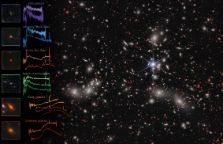
Swinburne JWST collaboration to receive prestigious 2027 Berkeley Prize from American Astronomical Society
Swinburne leads the international team who have been awarded the American Astronomical Society’s 2027 Lancelot M. Berkeley Prize for the UNCOVER project
Friday 18 September 2026 -

- Technology
- Health
- Education
- Science
- University
- Engineering
Swinburne continues to rise in global subject rankings
Swinburne has achieved strong results across 26 subjects in the ShanghaiRanking’s Global Ranking of Academic Subjects 2026.
Thursday 17 September 2026 -
- Science
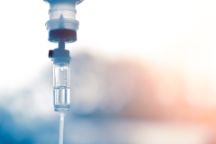
World-first psilocin binge eating disorder trial reveals improvement in all patients
Swinburne University of Technology and Entropy Neurodynamics’ world-first IV-infused psilocin binge eating disorder trial has led to improvement in all participants.
Tuesday 15 September 2026 -
- Science
- University
- Technology
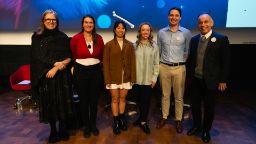
Swinburne celebrates the seeds of discovery for National Science Week
Swinburne celebrated National Science Week 2026, culminating with the Seeds of Science Festival, held on 21 August. The festival showcased the people, research and ideas shaping the future of science and innovation.
Friday 21 August 2026 -

- Science
We must seed discoveries for a strong nation
This National Science Week, Swinburne’s Chief Scientist is calling on the federal government to rethink our investment in science as a matter of global importance.
Wednesday 19 August 2026 -

- Technology
- Health
- Science
- University
- Engineering
Swinburne joins global biomaterials research training program
Swinburne has joined the prestigious German Research Foundation-funded International Research Training Group (IRTG) on Multidimensional Biomaterials (MB)2 program
Monday 17 August 2026


Explore science with Swinburne's Chief Scientist
For any strategic science-related advice, expert commentary or public engagement requests, please contact Professor Virginia Kilborn at vkilborn@swinburne.edu.au.