

Driving meaningful progress in assisted living tech

This year's MedTechVic hub's showcase was themed ‘Real innovation, real lives’, and was attended by Member for Hawthorn, John Pesutto
In summary
Swinburne’s MedTechVic hub annual showcase brings together people, design, digitisation and manufacturing to reshape assisted living through inclusive innovation
This year’s theme was ‘Real innovation, real lives’ and included a keynote address by cultural equity consultant and advisor, Caroline Bowditch
PhD students in the hub also presented their research in a fast-paced, 3-Minute Thesis competition
Swinburne University of Technology’s MedTechVic hub annual showcase brings together research, lived experience and practical innovation in assisted living technologies.
This year, the theme was ‘Real innovation, real lives’, highlighting the hub’s ongoing commitment to driving inclusive innovation and impact for people using assisted living technology. The event was also attended by Member for Hawthorn, John Pesutto.
"This showcase is a meeting ground for researchers, industry leaders, and those with lived experience to discuss and shape emerging advances in assisted living technology. Bringing together diverse perspectives and expertise helps us create solutions that respond to real-world needs and drive meaningful progress ," says Professor Rachael McDonald, Director of the MedTechVic hub.
From beige to beauty
This year's keynote address was delivered by Caroline Bowditch, cultural equity consultant and supervisor. Caroline is a proudly disabled queer woman and a distinguished leader celebrated for her work in inclusive arts practices and dance advocacy. For more than 15 years, she has combined her artistic vision with a commitment to accessibility and diversity.
Drawing on her lived experience as a permanent wheelchair user, Caroline challenged the audience to rethink how assistive equipment is designed and presented.
“Innovation emerges out of need,” she said. Examples such as The Alternative Limb Project, which creates bespoke prosthetics that empower wearers and spark positive conversations, she urged designers to move from beige to beauty - and prove that access does not have to be dull or clinical.
Caroline emphasised that meaningful innovation must be created in collaboration with disabled people, recognising that mobility aids and access equipment can either build confidence and disability pride or diminish it. She challenged attendees to consider the broader systems at play.
“I can be more or less disabled depending on where I am in the world,” she said. “How are you building worlds that make people more or less independent?” Through art and creativity, she said, we can design accessible solutions that are practical, expressive and unapologetically visible.

This year's keynote address was delivered by cultural and equity consultant and advisor, Caroline Bowditch
Commercialising change
The showcase featured an expert panel discussion unpacking the challenges and opportunities of commercialising assisted living technologies. Panel members included Julian Sallabank, Chief Executive Officer and Non-Executive Director of Sallabank & Co, Cameron van den Dungen, Chief Executive Officer of Sleeptite, and Jess Kemp and Sophie Rhys, Co-founders of Fabb.
Panellists highlighted that successful commercialisation requires constant iteration, strong partnerships and meaningful co-design. Julian Sallabank emphasised the value of university partnerships and PhD-led research in strengthening innovation pipelines. Cameron van den Dungen reflected on designing Sleeptite’s first bed with his mother in mind, highlighting the role of lived experience and educating sector ‘gatekeepers’ as well as end users. Meanwhile, Jess Kemp and Sophie Rhys spoke about the importance of creating assistive products that are desirable, inclusive and accessible beyond NDIS funding.
Innovative ideas on display
The showcase also included a fast-paced 3-Minute Thesis (3MT) competition where Swinburne PhD students working in the hub presented research and ideas.
The winning presentation featured PhD candidate Mark Hanson and his thesis on improving wheelchair accessibility in air travel. His research explores barriers faced by wheelchair users and highlights the importance of more equitable access to travel.
Other presentations included PhD candidate Liz Doyle and MD Julker Nayan. Liz's thesis explores how technology improvements could improve the lives of people with deafblindness. Meanwhile MD Julker Nayan’s thesis examines innovative approaches to manual wheelchair design in Bangladesh.
-
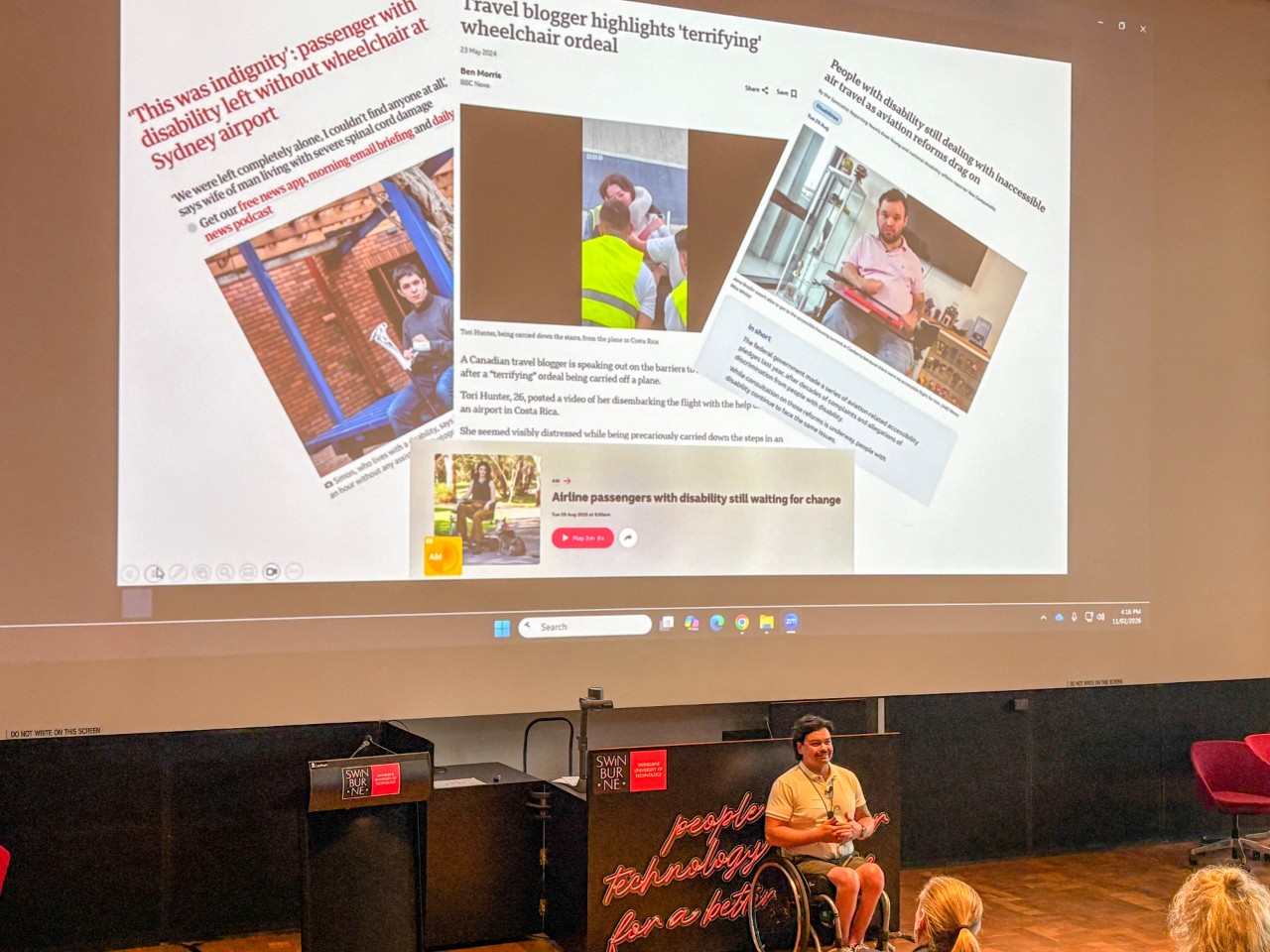 Swinburne PhD students working in the hub presented their research and ideas
 -
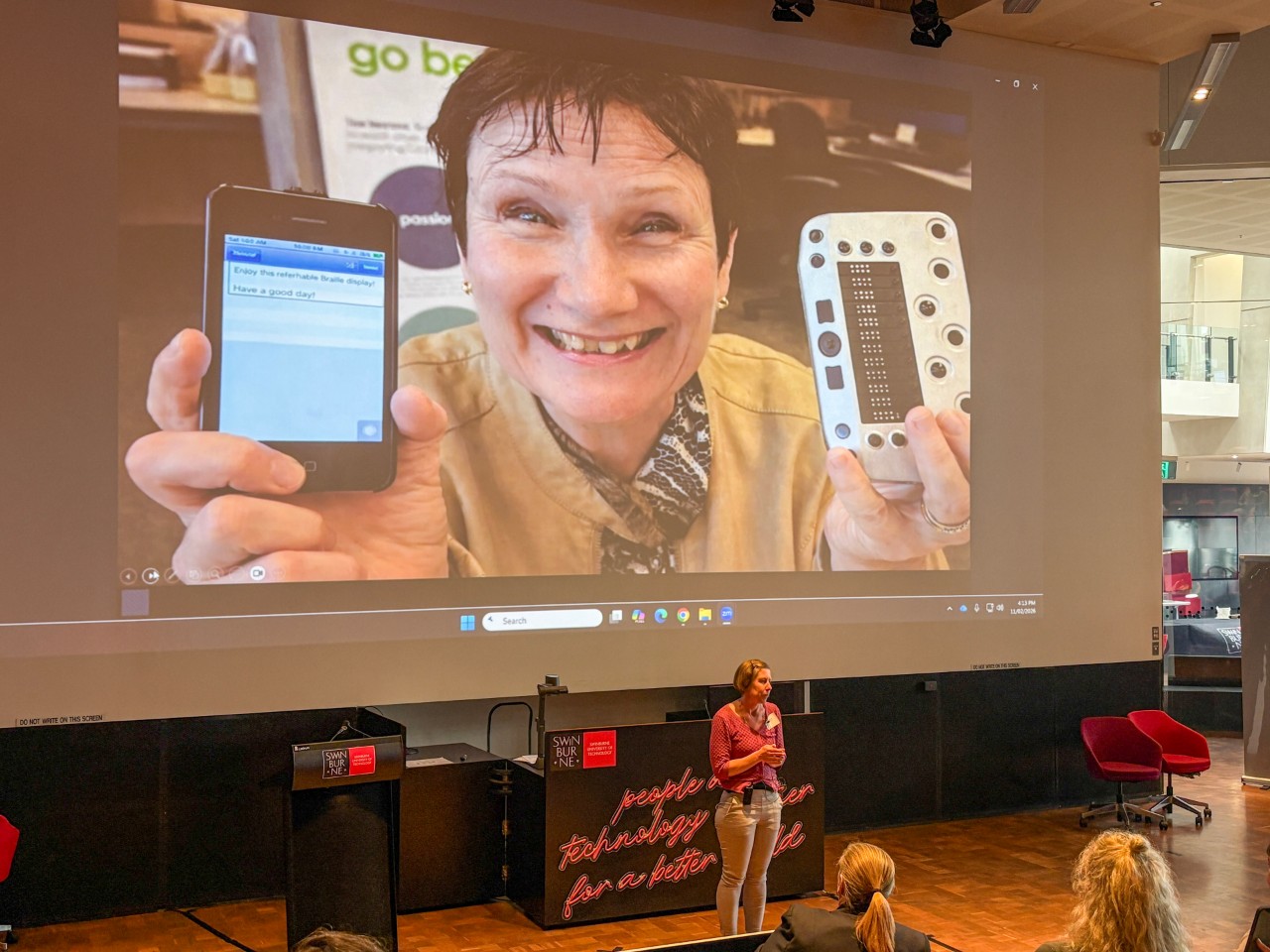 Swinburne PhD students working in the hub presented their research and ideas
 -
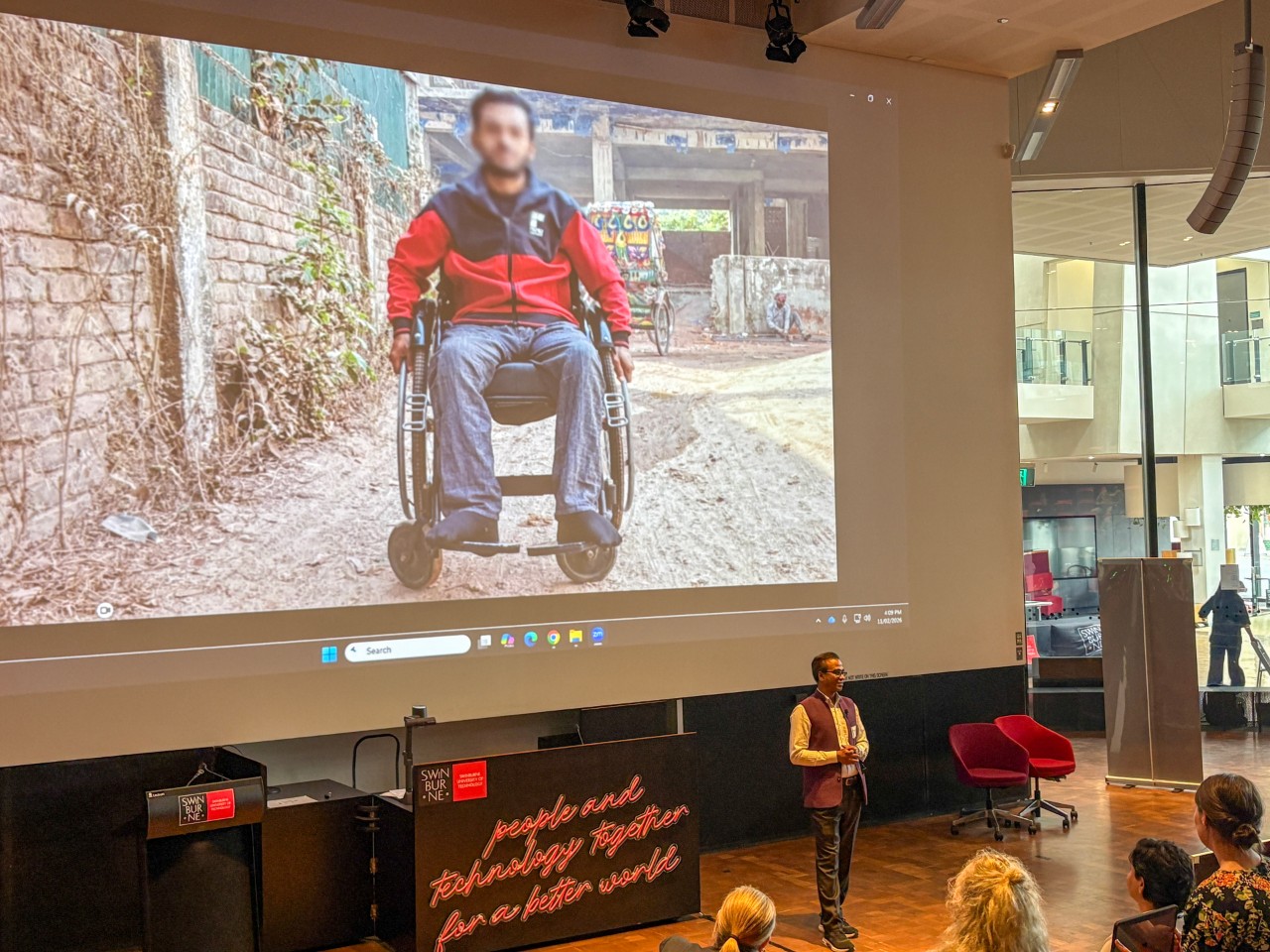 Swinburne PhD students working in the hub presented their research and ideas


“MedTechVic hub is redefining assisted living technologies through inclusive innovation. My hope is that this showcase inspires bold ideas and real collaboration that transforms lives and advances accessibility for all,” Professor McDonald adds.
The Adam Bilney Award
Professor Virginia Kilborn, Swinburne’s Chief Scientist closed the event with the announcement of the inaugural Adam Bilney Award in memorandum Adam Bilney, a highly respected mechanical engineer and medical device designer. Adam led complex design and commercialisation projects at Invetech and Outerspace Design, contributed to award-winning and ASX-listed technologies, and through his work at Swinburne, MedTechVic and as an independent consultant, was deeply committed to mentorship and advancing medical and assistive technologies that improve lives.
The Adam Bilney Award honours his legacy by recognising Swinburne PhD students who demonstrate excellence in medical and assistive living technology innovation, particularly those developing solutions to improve the lives of people living with cancer, chronic disease or disability.
Support the next generation of innovators by donating to the Adam Bilney Award. Donate via Swinburne University of Technology: Donation – Other Projects. Please include “Adam Bilney Award” in the text box when making your donation.
-
Media Enquiries
Related articles
-

- Technology
- Health
- Education
- Science
- University
- Engineering
Swinburne continues to rise in global subject rankings
Swinburne has achieved strong results across 26 subjects in the ShanghaiRanking’s Global Ranking of Academic Subjects 2026.
Thursday 17 September 2026 -

- Technology
- Health
- Science
- University
- Engineering
Swinburne joins global biomaterials research training program
Swinburne has joined the prestigious German Research Foundation-funded International Research Training Group (IRTG) on Multidimensional Biomaterials (MB)2 program
Monday 17 August 2026 -
- Science
- University
- Technology
Swinburne celebrates the seeds of discovery for National Science Week
Swinburne celebrated National Science Week 2026, culminating with the Seeds of Science Festival, held on 21 August. The festival showcased the people, research and ideas shaping the future of science and innovation.
Friday 21 August 2026 -
- Health
Healthcare learners put skills to the test at WorldSkills regional competition
Swinburne has hosted a WorldSkills healthcare regional competition at its Wantirna campus, spotlighting vocational healthcare student skillsFriday 28 August 2026 -

- Health
Broccoli could treat untreatable rare nerve disease, Swinburne research finds
Swinburne researchers have discovered how broccoli could help treat an incredibly rare uncurable disease that only 200 Australians have.
Monday 10 August 2026


