

Future Services Studio imagines the next chapter of Australian design

The Future Services Studio workshops held during Melbourne Design Week 2026 brought together industry, research and the public to explore progressive design methods and the practical integration of generative AI
In summary
As part of Melbourne Design Week 2026, Swinburne’s Future Services Studio brought together designers, researchers, industry and the public to explore the future of Australian design
Through exhibitions, workshops and case studies, participants used the Future Services Radar to project forward and design new products and services
Participants demonstrated how generative AI can be effectively integrated into design practice
Swinburne University of Technology’s School of Design and Architecture transformed Melbourne Design Week 2026 into a working environment for testing what Australian design could become.
The Future Services Studio brought together practitioners, researchers and the public to explore emerging service and product ideas and to experiment with how generative AI can be practically integrated into design processes.
Led by Dr Linus Tan from the Centre for Design Innovation and Swinburne Futures Catalyst research group, alongside Professor Charlie Ranscombe and Associate Professor Jo Kuys, the studio combined a public exhibition, interactive workshops and an advanced AI masterclass.
Industry partner CraigWalker, represented by founder and director Jeremy Walker, worked closely with the team to develop the GenAI in Design processes and workshop program. This partnership helped frame critical questions around the types of services and experiences Australians may need in the years ahead.
Exploring Australia’s next design services and products
The public exhibition presented two complementary components. The first presented five project examples created by ten Master of Design students. Each team used the Future Services Radar, a future design method that helps designers imagine future needs and services. The teams moved from identifying emerging changes to developing future-focused service and product concepts.
Despite using the same foundation, the projects produced diverse outcomes from speculative service systems to new product ecosystems, highlighting the flexibility of the approach.
The second component focused on the radar itself, explaining each stage of the process and presenting three practical case studies. It demonstrated how organisations have applied the process to address live challenges, such as redesigning service experiences, exploring new market opportunities and testing emerging technologies.
Learning a future-focused design process
Across three workshops, designers and public participants were guided through both the Future Services Radar and GenAI design tools. Participants learnt how to identify trends, frame future-orientated questions and generate ideas for services and products that respond to emerging challenges.
Rather than positioning AI as a separate tool, the workshops demonstrated how AI tools can be embedded throughout the design process. Participants used AI to visualise scenarios, explore variations in service touchpoints and rapidly prototype alternative futures. Participants learnt how to position GenAI as one tool within a broader, critical design workflow.
“It was a good introduction to an AI tool I’ve heard lots about but never used. I feel like I’ve walked away being able to use the AI tool on my own now,” said one of the Future Service Studio participants.
Partnering with industry
Jeremy Walker played a key role in shaping the focus on real-world services and experiences. Working closely with Dr Tan, Jeremy ensured that speculative projects and workshop activities were grounded in current industry needs.
“The future isn’t something that happens to industry, it’s something they design, whether they’re conscious of it or not,” says Jeremy Walker.
“Every service organisation is already making decisions that shape the next ten years. The question is whether you want to be the author or the subject. AI can change that equation allowing us to research, prototype and stress-test decisions against a much wider range of futures, designing with much greater foresight than we have ever had access to before.”
For industry participants, the workshops offered a low‑risk environment to test ideas, engage with alternative futures and build capability in AI‑enabled design methods.
Advanced AI workflows with international collaborators
The program concluded with a masterclass on advanced generative AI workflows, co‑run with Research Associates Jin Hyeok Park and Hyeong Jun Won from Hongik University in Seoul. Participants were introduced to Flux and ComfyUI, open‑source tools for AI image generation. Unlike traditional prompt‑based systems, these tools allow designers to build visual pipelines that reveal how images are created, offering greater control and opportunities for iteration.
-
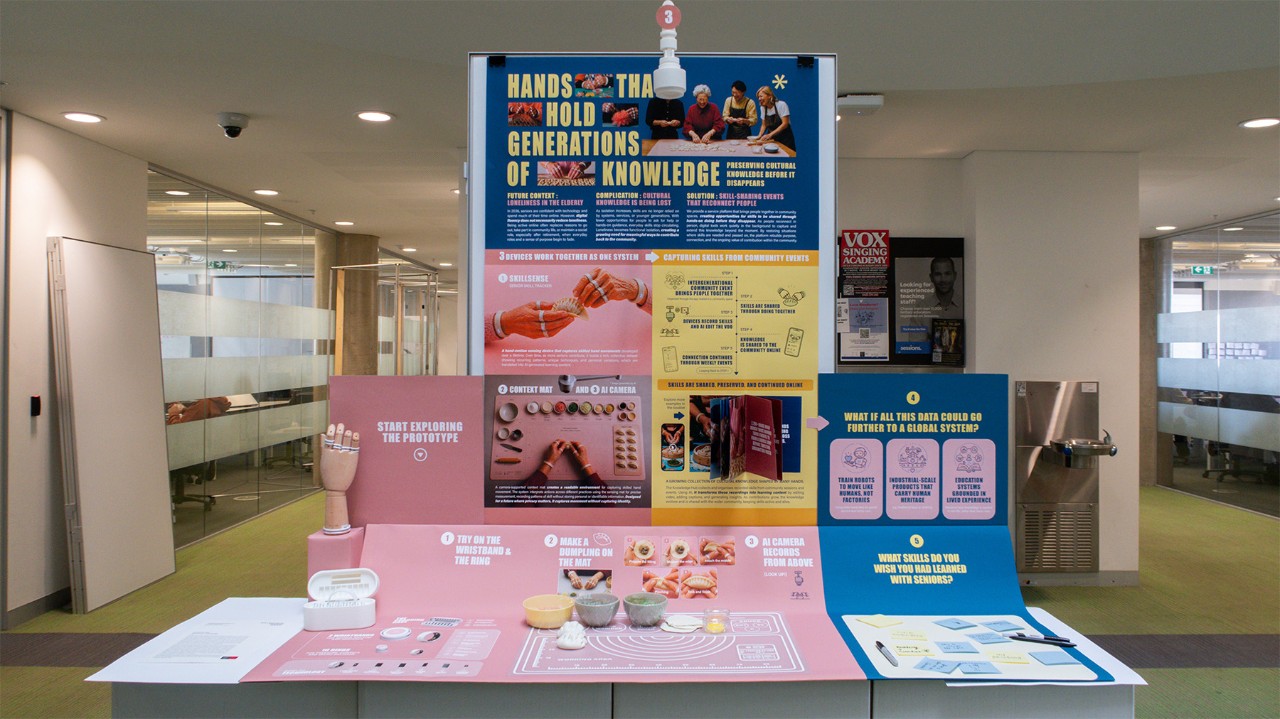 Workshop participants engage with emerging design concepts, collaborating on future service ideas and experimenting with new tools and approaches
 -
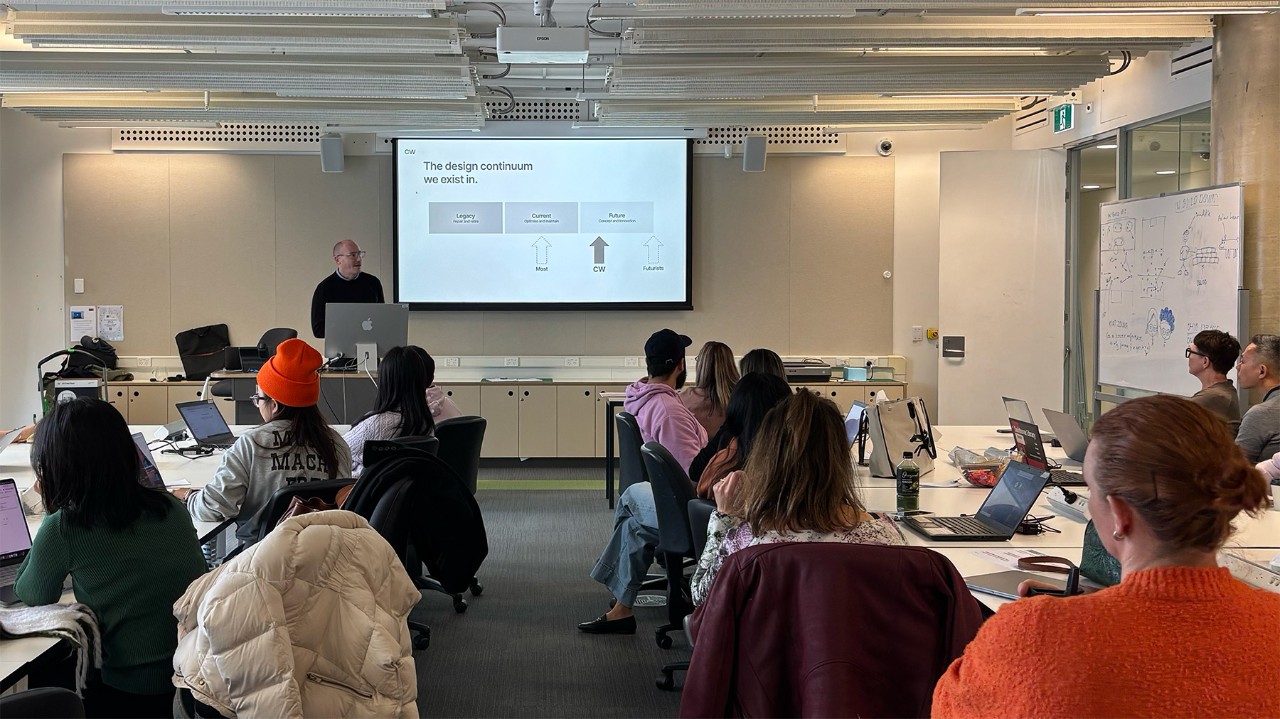 Workshop participants engage with emerging design concepts, collaborating on future service ideas and experimenting with new tools and approaches
 -
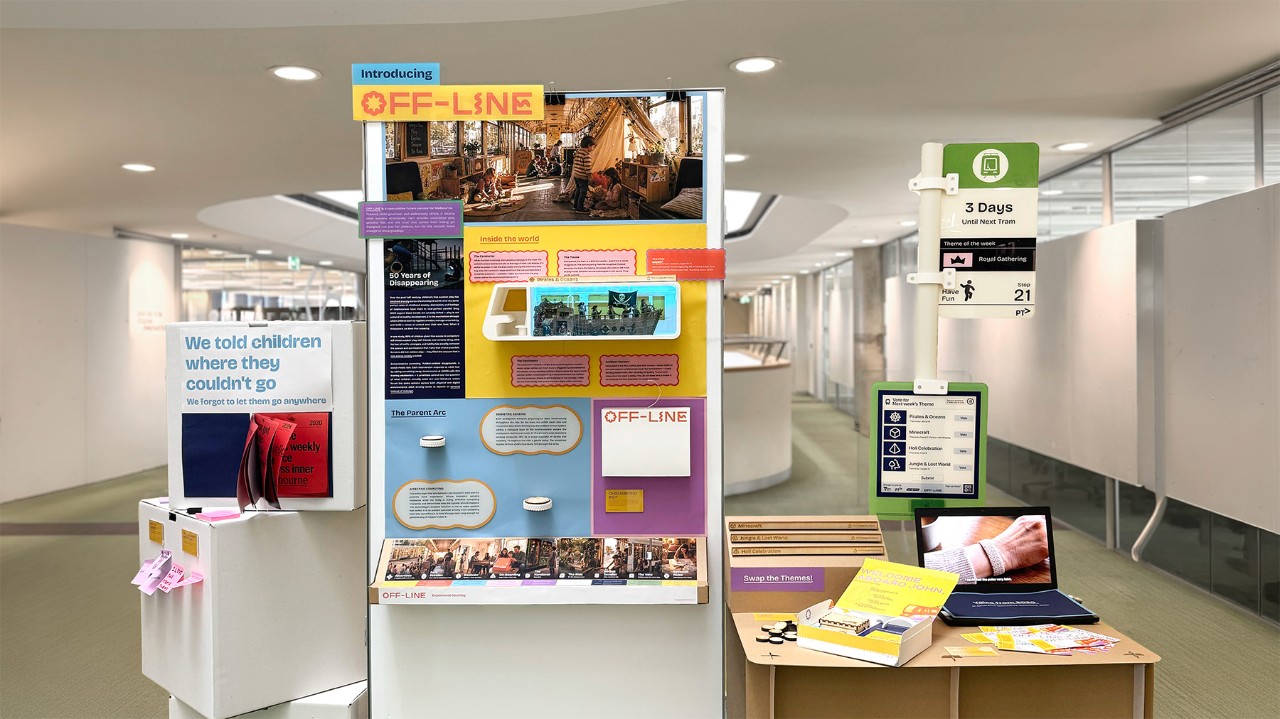 Workshop participants engage with emerging design concepts, collaborating on future service ideas and experimenting with new tools and approaches
 -
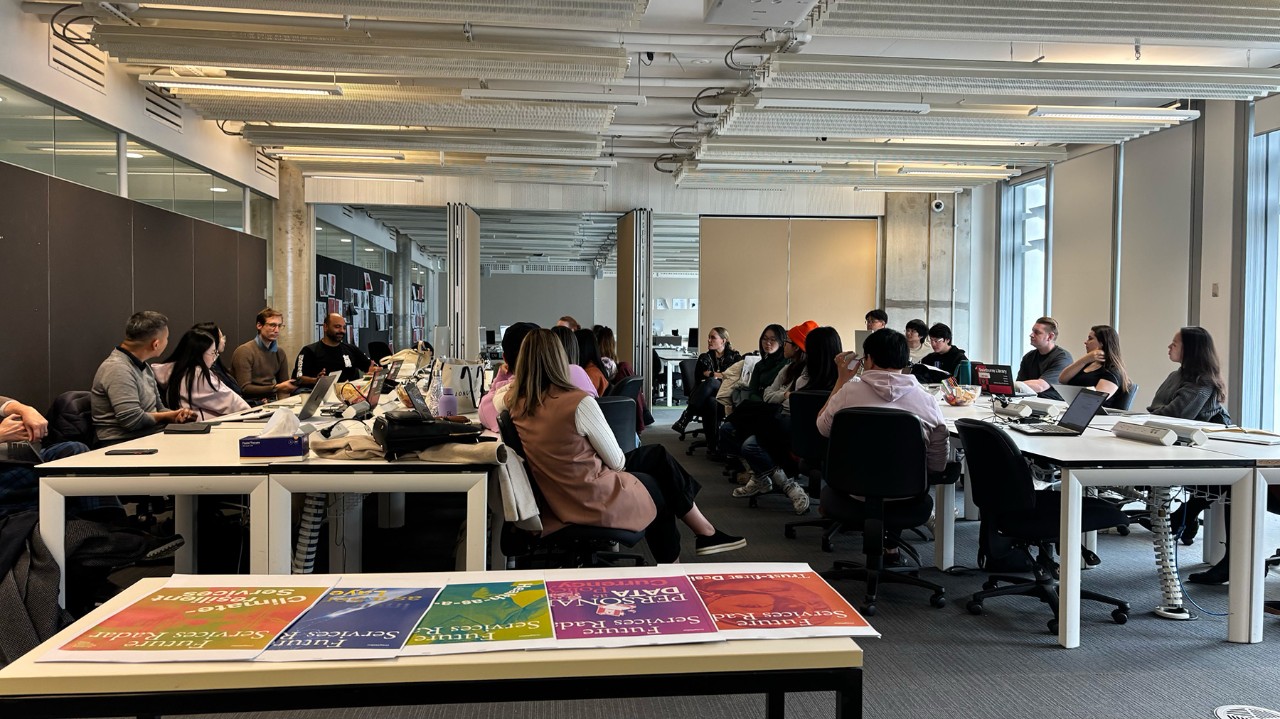 Workshop participants engage with emerging design concepts, collaborating on future service ideas and experimenting with new tools and approaches
 -
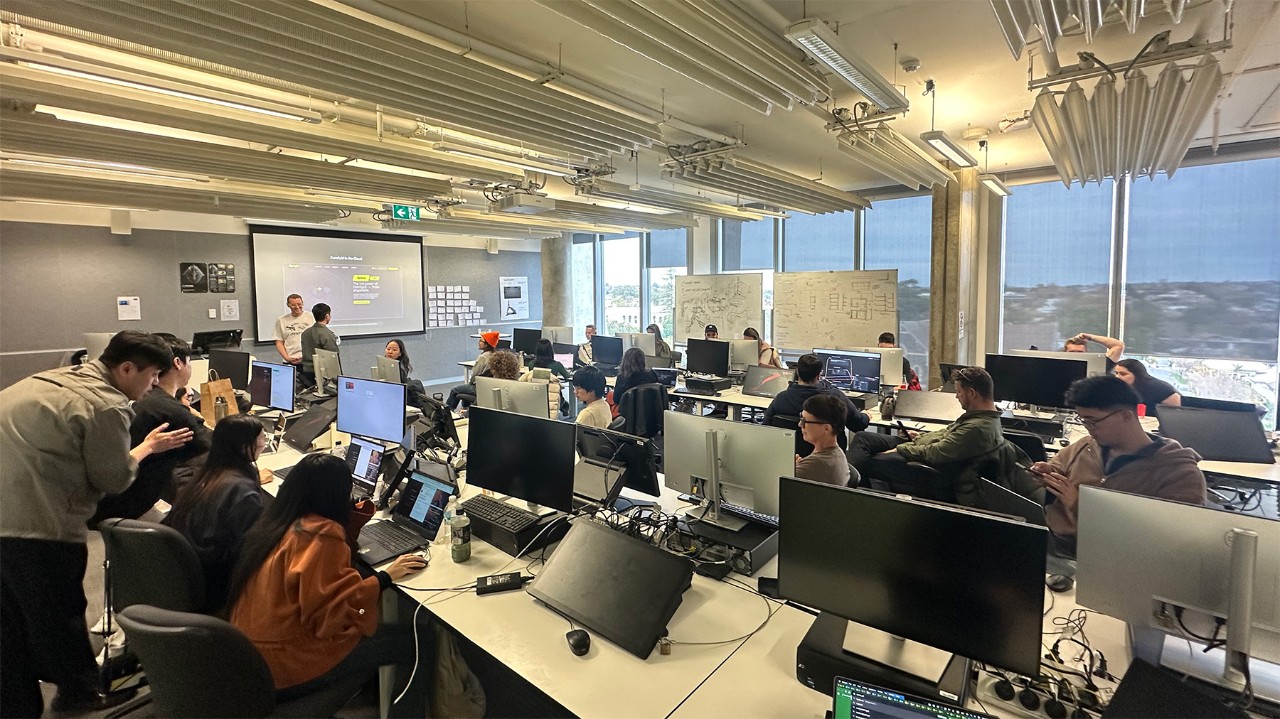 Workshop participants engage with emerging design concepts, collaborating on future service ideas and experimenting with new tools and approaches


-
Media Enquiries
Media Enquiries
Related articles
-
Melbourne tech company advances portable chemical threat detection for global markets

- Technology
Swinburne University of Technology and Innovation Victoria have joined forces to co-invest in Forward Deployed.
Tuesday 27 October 2026 -
First Nations language course graduates to revitalise community languages
- Education
- University
Aboriginal graduates from Swinburne's inaugural Learning an Australian First Nations Language course are helping strengthen language and culture in their communities.
Thursday 08 October 2026 -
Swinburne researchers contribute to nearly $20 million in ARC-funded projects

- Design
- Technology
- Science
- University
- Sustainability
- Engineering
Swinburne researchers are contributing to four successful projects in the latest Australian Research Council (ARC) Industrial Transformation Research Program, representing nearly $20 million in combined project funding.
Tuesday 20 October 2026 -
Swinburne’s research quality rises in global rankings
- Technology
- Education
- Science
- University
Swinburne has placed 294th globally in the 2027 Times Higher Education World University Rankings
Wednesday 30 September 2026 -
Swinburne tops Victoria for overall educational experience among postgraduate students
- Student News
- Education
- University
Swinburne has been ranked number one in Victorian higher education institutions by domestic postgraduate students for overall educational experience, in the 2025 Quality Indicators for Learning and Teaching Student Experience Survey.
Monday 07 September 2026


