

Government systems being weaponised to financially abuse single mothers and their children

New Swinburne research has found that single mothers are being left with debts to the government based on their ex-partner’s malicious behaviour.
In summary
- New Swinburne research has revealled that single mothers and their children are being financially abused via weaponisation of government systems
- Australia’s tax, child support and Family Tax Benefit (FTB) systems are leaving single mothers with debts based on their ex-partner’s malicious behaviour
- Researchers are calling on the government to delink child support from the Family Tax Benefit and completely redesign the system
New Swinburne research has uncovered the depth and impact of a troubling new form of financial abuse - Fembot Debt.
The report found single mothers and their children are having Australia’s tax, child support and Family Tax Benefit (FTB) systems weaponised against them, leaving them with debts to the government based on their ex-partner’s malicious behaviour.
A quarter of women surveyed ended up with debts owed to the government, causing 86% to cut back on food, 58% to be unable to buy necessary medicine, 56% to not afford school fees and 53% to not seek health care.
Lead author, Swinburne’s Professor Kay Cook is calling on the government to delink child support from the Family Tax Benefit and completely redesign the system to prioritise safety, transparency, accessibility, fairness and accountability.
“Our current systems are enabling abusive ex-partners to evade their responsibilities and cause harm,” Professor Cook says.
“The way that the taxation, child support and FTB systems intersect produce outcomes that are fundamentally misaligned with efforts to reduce family violence and protect children.
“There are too many victim-survivors who are compelled to engage with this harmful system that shifts responsibility from perpetrators to victims.”
The first of its kind evidence, found in partnership with Single Mother Families Australia and Southern Cross University, reveals how the intersections between child support and FTB create pathways for systems abuse, not only from abusive ex-partners but, in some cases, from the system itself.
Some of the staggering statistics include:
75% of single mothers experience family violence, even with 77% having a child support agreement in place. Only 10% successfully seek exemption.
Two thirds of women were owed outstanding child support liabilities by their ex-partner. 33% of women accumulated FTB debt because ex-partners didn’t lodge tax returns on time.
22% of women obtained FTB debts due to retrospective child support recalculations.
Only 25% of women were aware they could accumulate FTB debt from factors such as changes to childcare agreements and lack of tax returns.
Professor Cook says women have little knowledge of or control over debt creation or repayment.
“While women knew that the system could be weaponised, the complexity and opacity of the system provide the conditions that enable financial abuse,” Dr Cook says.
“Tax assessments are central to the calculation of accurate child support liabilities. Child support reduces mothers’ entitlement to FTB by 50 cents for every dollar received above a modest threshold. If tax returns are not lodged, child support is inaccurate.
“When they’re lodged later, single mothers can find out that they’ve been overpaid FTB through no fault of their own. While child support often remains unpaid to women, FTB overpayments are automatically recouped.”
Terese Edwards from Single Mother Families Australia says, “Fembot Debts are a fundamental policy failure that causes harm to low-income women and children.”
“It is only by redesigning the intersections between the taxation, child support and FTB systems that the government can uphold its obligations to children.”
“Now is the time for reform.”
-
Media Enquiries
Related articles
-
- Social Affairs
- University
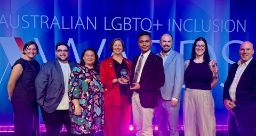
Swinburne achieves gold tier recognition for LGBTQIA+ inclusion
Swinburne has reached a major milestone in its diversity, equity and inclusion journey, receiving gold tier recognition from the Australian Workplace Equality Index (AWEI).
Monday 01 June 2026 -

- Social Affairs
- Science
- Sustainability
- Engineering
Swinburne secures ARC Linkage funding for industry-focused research
Swinburne is the lead organisation for two ARC Linkage Projects while also contributing to four externally led projects
Thursday 28 May 2026 -

- Social Affairs
- Health
- University
Australian-first pilot targets ‘fixated grievance’ linked to family violence homicide and terrorism
The Fixated Grievance Perpetrator Intervention Pilot will bring together leading experts in forensic psychology and psychiatry, criminology, policing, courts, victim support and perpetrator intervention.
Monday 25 May 2026 -

- Design
- Film and television
- University
Connection, creativity and culture at Swinburne’s MVCE Future Aspirations camp
The Moondani Vocational Centre of Excellence (MVCE) Future Aspirations camp provides students with a vibrant introduction to vocational education and training at Swinburne.
Monday 18 May 2026 -

- Social Affairs
Government systems being weaponised to financially abuse single mothers and their children
New Swinburne research has uncovered the depth and impact of a troubling new form of financial abuse - Fembot Debt.
Monday 20 April 2026


