

School costs unaffordable for Australia’s most vulnerable, new Swinburne research reveals

Families are often confronted with a choice to either limit their children’s ability to participate fully in school life or go without in other ways.
In summary
- Victorian government schools are unaffordable for families battling homelessness, new Swinburne researchs reveals.
- Families are often confronted with a choice to either limit their children’s ability to participate fully in school life or go without in other ways.
- It suggests concerns for many more families who are marginally housed or at risk of losing their housing.
Back to school means new books, stationary, uniform, tech – but for families battling homelessness, it can be one of the most stressful times of the year.
New Swinburne research has found ‘free’ Victorian government schools are unaffordable for families battling homelessness.
For a child born in 2023, it will cost approximately $108,870 to attend a metropolitan government-funded school in Victoria for 13 years.
When these costs become difficult to manage, families are often confronted with a choice to either limit their children’s ability to participate fully in school life or go without in other ways.
“Our research found that parents often prioritised school costs, even when doing so meant compromising other basic needs such as food or household bills,” says lead author, Swinburne’s Suzannah Willis.
“Education is an important path out of poverty, and this research illustrates the importance families place on their children’s education, despite facing significant financial hardship.”
While the research focused specifically o n the experiences of families accessing specialist homelessness services in Victoria, it also suggests concerns for many more families who are marginally housed or at risk of losing their housing.
“This is an issue that extends well beyond families accessing homelessness services,” says Willis.
“Given the current cost of living crisis, this issue is likely to become of greater concern into the future.”
While government schooling in Australia is intended to be free, families in the study said ongoing costs for uniforms, learning materials, technology, and school activities were often difficult to afford alongside other necessities.
Willis says there is also large variation in how families experienced schools’ responses to their financial difficulties. While some families shared that some schools offered practical and flexible support, others placed greater responsibility on families to manage cost.
Linda’s story
This research was cofunded by Anchor, a specialist homelessness service in Melbourne’s outer east. Anchor has identified school costs as a recurring challenge for people like Linda, a mum of two teenagers from Ringwood.
Linda became homeless in 2022 due to receiving a notice to vacate her rental and was unable to secure any housing in the private rental market, in addition to experiencing family violence from an ex-partner.
Anchor have provided crisis accommodation in a motel, job training courses for one of the teenagers, stationary, school books, uniforms and TAFE-ready necessities like work boots for her children.
Anchor CEO Heidi Tucker says she is proud to have helped Linda and her family connect to funding streams to support with education costs, but that this capped funding is often not enough.
“It goes deeper than not just being able to afford pens, rulers, school uniforms and excursions. Homelessness makes a child feel profoundly isolated, ostracised and hopeless.
“For parents in this situation there is an enormous sense of shame, guilt and embarrassment.
“Homeless parents are just as aspirational and hopeful about their child having a bright future as any other parent, but it comes at a greater cost and sacrifice, skipping meals, and ignoring health and dental needs to ensure they can give their children opportunity.”
Willis says there is a crucial need for more consistent support to ensure that children are not disadvantaged at school. This includes clearer expectations around what families are required to pay for and greater support for those experiencing financial hardship.
“Schools also need to recognise that homelessness exists within their communities and incorporate this awareness into school policies and practices,” she says.
“Children in Australia cannot currently access public education on equal terms. Without changes to how school costs are managed and supported, families experiencing severe financial disadvantage will continue to struggle.”
-
Media Enquiries
Related articles
-

- Education
Doris' journey from diploma student to TAFE teacher
Doris first chose vocational education at Swinburne to boost her professional development. She discovered a love for education and is now a VET teacher.Monday 04 May 2026 -
- University
- Student News
Course Changers: Meet students who found their path by changing their studies
For some students, changing course or major can be part of finding the right path at Swinburne – and support is available to help make the switch
Tuesday 10 March 2026 -
%20and%20Dr%20Heather%20Handley%20(Museums%20Victoria).%20Photographer%20-%20Tim%20Carrafa.%20Source%20-%20Museums%20Victoria%20(7).jpg/_jcr_content/renditions/cq5dam.web.256.144.jpeg)
- University
Museums Victoria and Swinburne University of Technology announce learning partnership
Museums Victoria and Swinburne University of Technology are proud to announce a new three-year partnership.
Wednesday 11 February 2026 -
- Design
- Technology
- Health
- Law
- Education
- Business
- Science
- University
- Engineering
Swinburne moves up in Times Higher Education World University Rankings by Subject 2026
Swinburne University of Technology has performed strongly in the Times Higher Education World University Rankings by Subject 2026, with two subjects moving up the ranks.
Thursday 22 January 2026 -
- Education
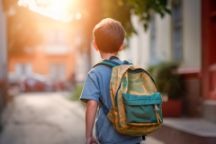
School costs unaffordable for Australia’s most vulnerable, new Swinburne research reveals
New Swinburne research has found ‘free’ Victorian government schools are unaffordable for families battling homelessness.
Monday 26 January 2026


