

World-first guide of psychological strategies for struggling aged care residents developed by Swinburne researchers

Swinburne has led the development of a world-first guide of psychological strategies for residents in aged care homes.
In summary
- Aged care residents with mental health conditions are rarely provided with psychological therapy services.
- Currently, mental health clinicians are not trained well enough to deliver psychological services.
- Swinburne's Professor Sunil Bhar led the development of a world-first guide of psychological strategies for residents in aged care.
More than 50 per cent of people living in Australian nursing homes have mental health conditions such as depression or anxiety.
But residents with such conditions are usually medicated, rather than provided with psychological therapy services which are proven to be incredibly effective.
To combat this, Director of Swinburne’s Wellbeing Clinic for Older Adults Professor Sunil Bhar has led the development of a world-first guide of psychological strategies for residents in aged care homes, funded by Murray PHN.
Professor Bhar says mental health clinicians are currently not trained well enough to deliver psychological services.
“There is much that mental health clinicians can offer older adults in aged care homes. Therapy has been shown to reduce depression and anxiety in ageing populations but is not widely implemented.
“We created a practice guide of step-by-step instructions for delivering these strategies to aged care residents, with and without dementia.”
The guide contains case studies, research evidence, treatment protocols and solutions for overcoming barriers.
Training – including the guide, interactive workshops and meetings – was provided to clinicians working in the Murray region bordering Victoria and NSW.
Professor Bhar now hopes to expand the training across Australia to help the struggling aged care sector, whose residents and workers are facing crises.
“Like many places around the world, Australia is facing an increasingly ageing population. It is imperative that we train the workforce with the tools they need to protect everyone’s mental health.”
“Ageing and mental health impacts us all, whether you’re a worker or resident, or you’re a loved one of either.”
-
Media Enquiries
Related articles
-

- Technology
- Health
- Education
- Science
- University
- Engineering
Swinburne continues to rise in global subject rankings
Swinburne has achieved strong results across 26 subjects in the ShanghaiRanking’s Global Ranking of Academic Subjects 2026.
Thursday 17 September 2026 -

- Technology
- Health
- Science
- University
- Engineering
Swinburne joins global biomaterials research training program
Swinburne has joined the prestigious German Research Foundation-funded International Research Training Group (IRTG) on Multidimensional Biomaterials (MB)2 program
Monday 17 August 2026 -
- Health
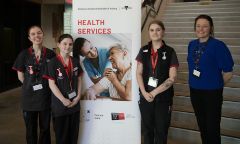
Healthcare learners put skills to the test at WorldSkills regional competition
Swinburne has hosted a WorldSkills healthcare regional competition at its Wantirna campus, spotlighting vocational healthcare student skillsFriday 28 August 2026 -

- Health
Broccoli could treat untreatable rare nerve disease, Swinburne research finds
Swinburne researchers have discovered how broccoli could help treat an incredibly rare uncurable disease that only 200 Australians have.
Monday 10 August 2026 -
- Technology
- Health
- Education
- Business
- Science
- Sustainability
- Engineering
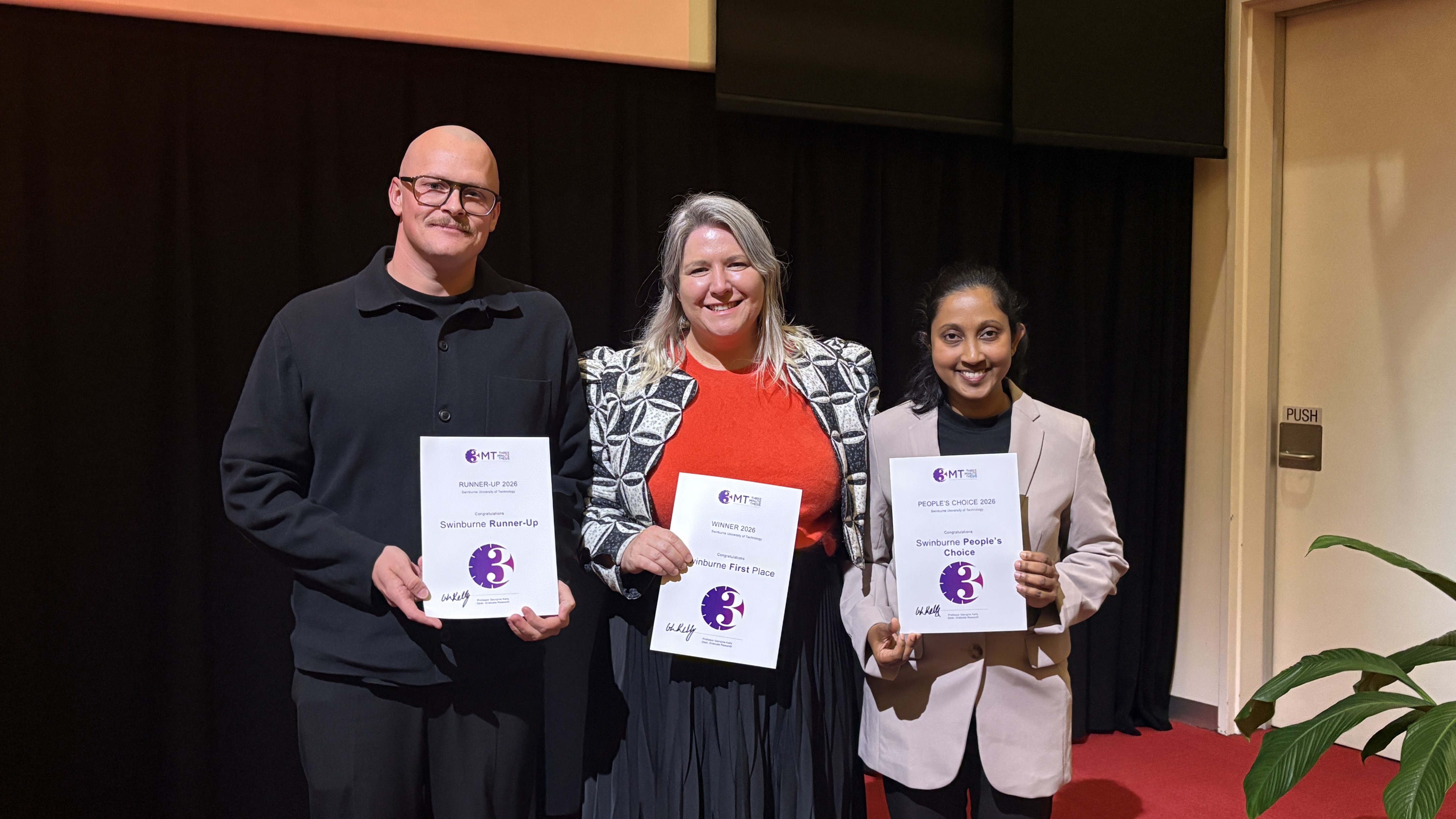
Celebrating Swinburne’s next generation of researchers
Swinburne’s inaugural Research Festival brought together Higher Degree by Research students and early career researchers to learn, share and connect.
Monday 27 July 2026


