

Future space leaders take flight at the 2025 Swinburne Youth Space Innovation Challenge

SYSIC program lead, Dr Sara Webb (right), with Rising Star Award recipients.
In summary
Fifty high school students participated in the 2025 Swinburne Youth Space Innovation Challenge
The Year 10-12 students worked with samples sent to space from the International Space Station
Students also got to experience a lunar survival scenario called Trapped on the Moon
High school students have completed an unforgettable three days of exploring the future of space at the 2025 Swinburne Youth Space Innovation Challenge (SYSIC).
Fifty Year 10-12 students dived into the science of space exploration through immersive workshops, mini challenges, and hands-on activities. Each student had the rare opportunity to work directly with real samples sent to and returned from the International Space Station by Swinburne, including space-grown yogurt.
This year’s participants tackled challenges in space law, gravity, satellites, and microgravity, all while collaborating with internationally recognised astronomers and researchers.
New activities this year included a 3D AstroTour, a digital rover mission, and a lunar survival scenario called Trapped on the Moon.
Dr Sara Webb, SYSIC program lead and Swinburne astrophysicist, says it’s her fifth year of running the event and she couldn’t be more thrilled with the student engagement they’ve had over the years.
“This year, we had 50 space loving students from around Victoria, and their enthusiasm and passion for all things space was inspiring.
“A particular highlight of the program was the Trapped on the Moon experience designed and facilitated by our Space Technology student ambassador Erin Rose. This was a standout highlight for the students, and I’m proud of the work Erin is doing to inspire the next generation of space scientists.”
Student feedback was overwhelmingly positive. “The best program I’ve ever done,” one said.
“This entire event was extremely engaging, and the hands-on learning experience was super fun,” said another.
Several students were awarded prizes for their creativity and effort, named as ‘rising stars’ in space science.
-
Media Enquiries
Related articles
-
.jpg/_jcr_content/renditions/cq5dam.web.256.144.jpeg)
- Design
- Science
- University
- Aviation
- Engineering
Swinburne continues its strong performance in QS World University Rankings by Subject 2026
Swinburne continues its strong performance in the QS World University Rankings by Subject 2026, with 17 subjects placing in the rankings
Thursday 26 March 2026 -
- Astronomy
- Film and television
- Social Affairs
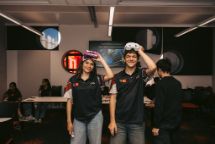
MTC Future Aspirations camp blends STEM and Indigenous culture
The Moondani Toombadool Centre hosted 25 Aboriginal and Torres Strait Islander high school students at its recent Future Aspirations Camp, where it blended cultural activities with university experiences
Monday 02 March 2026 -
- Technology
- Science
- Sustainability
- Engineering
Swinburne’s international collaborations driving meaningful impact
Swinburne is collaborating with international researchers to tackle global challenges in clean energy, sustainable materials and energy-efficient buildings.
Monday 16 March 2026 -
- Technology
- Science
- Sustainability
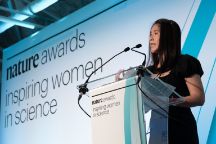
AI innovation protecting biodiversity wins global award for Swinburne researcher
Swinburne Sarawak researcher, Ts Dr Lee Sue Han has won a 2025 Inspiring Women in Science Award for her AI-driven biodiversity research, which uses artificial intelligence to identify plant species, protect ecosystems and support sustainable agriculture.
Friday 06 March 2026 -

- Science
- University
- Sustainability
Swinburne appoints Gordon Chakaodza as new Co-Director of FACET
Gordon Chakaodza has been appointed as Co-Director of the Franco-Australian Indo-Pacific Centre for Energy Transition (FACET), he brings extensive leadership experience in hydrogen and energy transition and will guide FACET’s next phase of growth
Tuesday 17 March 2026
.jpg/jcr:content/renditions/cq5dam.web.1024.576.jpeg)


