

‘Big Wheel’ disk galaxy discovered accidentally by international team

'Big Wheel', the disk with the red glow, has been discovered by an international team, including Swinburne's Dr Themiya Nanayakkara.
In summary
- An international team involving Swinburne University of Technology has discovered a giant spiral disk galaxy in the early cosmos
- Galaxy spectral modelling expert Dr Themiya Nanayakkara is a part of the international team that planned the JWST observations, which accidentally discovered this galaxy
- The disk galaxy challenges our existing models of early formation and hints that dense, gas-rich environments may be the cradle for the universe’s earliest giants
An international team involving Swinburne University of Technology has discovered a giant spiral disk galaxy in the early cosmos.
James Webb Space Telescope (JWST) observations accidentally discovered the disc galaxy after targeting a region of the sky from eleven billion years ago, or two billion years after the Big Bang.
Galaxy spectral modelling expert Dr Themiya Nanayakkara says disk galaxies have been an ongoing puzzle in astronomy and the findings will help rethink the nature of cosmic structures.
“This galaxy not only challenges our existing models of early formation but also hints that dense, gas-rich environments may be the cradle for the universe’s earliest giants,” he says.
Using data from two instruments onboard the JWST, Dr Nanayakkara and the team identified key markers needed for the identification of galaxy disks and the galaxies within this structure.
The observation and analysis of redshifts, morphology, and kinematics led the team to the discovery of this surprisingly large disk galaxy.
“This galaxy, dubbed the ‘Big Wheel’ has an optical radius of around 10 kiloparsec, which is at least three times as large as what is predicted by current cosmological simulations,” Dr Nanayakkara says.
Further analysis based on data from the JWST confirmed that the galaxy contains a disk rotating at around 300 km/s. It is larger than any other kinematically confirmed disks found at similar early time periods, and is comparable to the size of today’s most massive disks.
Dr Nanayakkara says the disk lives in a highly over-dense environment, which may indicate favourable physical conditions for early disk formation. There are few galaxies comparable to the Big Wheel in current simulations, so these conditions are not yet captured in galaxy formation models.
“Environments of this kind are known to host frequent galaxy encounters, mergers and gas flows. Therefore, in order to have a disk form early and grow quickly, galaxy mergers in this environment must have been non-destructive and oriented in particular directions.”
Angular momentum of gas flows moving in conjunction with the galaxy disk may also factor into this, Dr Nanayakkara says.
The investigation paves the way to studying this underexplored. With hopes of more targeted observations, Dr Nanayakkara and his team look forward to larger statistical samples and opening new pathways into the study of early phases of galaxy formation.
Swinburne was the only Australian research institution participating in this investigation.
-
Media Enquiries
Related articles
-
.jpg/_jcr_content/renditions/cq5dam.web.256.144.jpeg)
- Design
- Science
- University
- Aviation
- Engineering
Swinburne continues its strong performance in QS World University Rankings by Subject 2026
Swinburne continues its strong performance in the QS World University Rankings by Subject 2026, with 17 subjects placing in the rankings
Thursday 26 March 2026 -
- Astronomy
- Film and television
- Social Affairs
MTC Future Aspirations camp blends STEM and Indigenous culture
The Moondani Toombadool Centre hosted 25 Aboriginal and Torres Strait Islander high school students at its recent Future Aspirations Camp, where it blended cultural activities with university experiences
Monday 02 March 2026 -
- Technology
- Science
- Sustainability
- Engineering
Swinburne’s international collaborations driving meaningful impact
Swinburne is collaborating with international researchers to tackle global challenges in clean energy, sustainable materials and energy-efficient buildings.
Monday 16 March 2026 -
- Technology
- Science
- Sustainability
AI innovation protecting biodiversity wins global award for Swinburne researcher
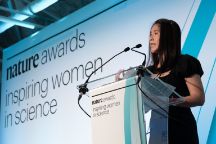
Swinburne Sarawak researcher, Ts Dr Lee Sue Han has won a 2025 Inspiring Women in Science Award for her AI-driven biodiversity research, which uses artificial intelligence to identify plant species, protect ecosystems and support sustainable agriculture.
Friday 06 March 2026 -

- Science
- University
- Sustainability
Swinburne appoints Gordon Chakaodza as new Co-Director of FACET
Gordon Chakaodza has been appointed as Co-Director of the Franco-Australian Indo-Pacific Centre for Energy Transition (FACET), he brings extensive leadership experience in hydrogen and energy transition and will guide FACET’s next phase of growth
Tuesday 17 March 2026
.jpg/jcr:content/renditions/cq5dam.web.1024.576.jpeg)


