

‘A blunt instrument’: Swinburne VC calls on Federal Government to restore fairness to a fractured sector

Swinburne University of Technology has called on the Federal Government to urgently review new Evidence Level (EL) changes, the key vehicle for the approval prioritisation and speed of international student visas.
In summary
- Swinburne University of Technology has called on the Federal Government to urgently review new Evidence Level (EL) changes, the key vehicle for the approval prioritisation and speed of international student visas.
- With the Education Services for Overseas Students legislation defeated before it could be put to a vote, the punitive MD107 will now act as a ‘default cap’ on international student enrolments.
- Professor Pascale Quester, Vice-Chancellor and President of Swinburne University of Technology, said higher education continues to be exploited as a ‘political football’, burdened by reactive policy decisions.
Swinburne University of Technology has today called on the Federal Government to urgently review new Evidence Level (EL) changes, the key vehicle for the approval prioritisation and speed of international student visas.
With the Education Services for Overseas Students legislation defeated before it could be put to a vote, the punitive MD107 will now act as a ‘default cap’ on international student enrolments.
Professor Pascale Quester, Vice-Chancellor and President of Swinburne University of Technology, said higher education continues to be exploited as a ‘political football’, burdened by reactive policy decisions.
“We call on the government to restore equity in the higher education sector,” Professor Quester said.
“This is about healing a deeply fractured system”.
“If universities are locked into Evidence Levels that are ‘evidence’ in name only, MD107 ceases to operate fairly”.
The October freeze on EL adjustments, intended as an interim measure between the enactment of MD107 and the anticipated passage of the ESOS Amendment Bill, has been widely criticised.
On Wednesday 19 November, the Government announced updates to allow some education providers to change ratings, but with large exceptions for providers across higher education, schools, and public vocational education and training sectors.
Professor Quester said the current situation lacks nuance and fairness.
“MD107 is a blunt instrument that must be informed by accurate Evidence Levels. Without this, the system fails to function equitably,” she said.
“This decision, or lack thereof, undermines our system and risks draining Australia of the essential talent we need to transition to a knowledge economy.”
Professor Quester highlighted the broader implications of the uncertainty around visa applications, warning that it risks undermining Australia’s reputation as a desirable destination for international students.
“The plans of international students, who are essential to Australia’s society and economy, will be further disrupted. This undermines trust in our education system,” she said.
With 2025 intakes looming, the uncertainty could have far-reaching consequences, impacting enrolments well into the new year.
The Vice-Chancellor has previously criticised the freeze for encouraging “cartel-like behaviour” among some universities, while stifling others that are committed to nation-building initiatives.
“At Swinburne, we are committed to advancing Australia’s priorities in STEM, advanced manufacturing, and dual-sector education,” Professor Quester stated. “The current situation is untenable – it hinders our progress in these areas and also intensifies existing pressures on the sector.”
Professor Quester urged the Federal Government to revisit its approach, advocating for policies that reward institutions based on merit and risk management, rather than a one-size-fits-all solution.
“We cannot afford to hold back the higher education sector by discouraging innovation and excellence,” Professor Quester said.
“Restoring fairness to this fractured system is not just in the interest of universities: it is essential for a ‘Future Made in Australia’.”
-
Media Enquiries
Related articles
-

- University
Swinburne welcomes calls for reform to Australia’s research ecosystem
Swinburne backs the call for urgent action to build capability and new industries in the Ambitious Australia report.
Tuesday 17 March 2026 -

- Technology
- University
Swinburne secures national funding to boost heavy vehicle safety with real-time hazard detection
Swinburne researchers will develop real-time technology that helps heavy vehicles detect at-height hazards, improving road safety across Australia.
Thursday 12 March 2026 -

- University
Swinburne marks International Women’s Day with powerful call to balance the scales
Swinburne has marked International Women’s Day 2026 with a hybrid event to explore this year’s theme: Balance the Scales.
Wednesday 11 March 2026 -
.jpg/_jcr_content/renditions/cq5dam.web.256.144.jpeg)
- Design
- Science
- University
- Aviation
- Engineering
Swinburne continues its strong performance in QS World University Rankings by Subject 2026
Swinburne continues its strong performance in the QS World University Rankings by Subject 2026, with 17 subjects placing in the rankings
Thursday 26 March 2026 -
- Technology
- Science
- Sustainability
AI innovation protecting biodiversity wins global award for Swinburne researcher
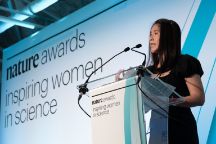
Swinburne Sarawak researcher, Ts Dr Lee Sue Han has won a 2025 Inspiring Women in Science Award for her AI-driven biodiversity research, which uses artificial intelligence to identify plant species, protect ecosystems and support sustainable agriculture.
Friday 06 March 2026


.jpg/jcr:content/renditions/cq5dam.web.1024.576.jpeg)
