

Gold standard for curious students

Professor Laura-Anne Bull: “The experience lights a fire for our students.”
In summary
Opinion for The Australian Financial Review by Deputy Vice Chancellor, Professor Laura Anne Bull
Graduates today deserve more than a piece of paper and a wave goodbye. Long before they toss their caps in the air, they need a genuine experience of working in their chosen field.
This is why Swinburne University of Technology does more than just encourage Work Integrated Learning (WIL); 100 per cent of our undergraduate degrees now incorporate fully scaffolded WIL from first year to graduation.
Swinburne has led the way in this space for more than six decades. Our Horizon 2025 strategy, shaped during COVID-19’s upheaval of the labour market, has been laser-focused on this initiative.
Why? Because today’s job market demands it. Industry tells us that graduates need more than academic knowledge – they need professional experience. WIL equips our students with the skills and confidence they need to excel immediately in the workplace, and our scaffolded model ensures a meaningful experience, guided by dedicated WIL coordinators.
And we know this works. Thirty-five per cent of placement and 20 per cent of internship students receive direct job offers. Our students feel career-ready and their employers get well-prepared graduates. We find that the experience lights a fire for our students: participants are 36 per cent more likely to engage in activities like professional networking early in their careers, skills that take many of us years to develop.
It’s truly exciting to watch this process unfold. I’ve seen learners discover professions they never knew existed and go on to forge successful careers in those fields. This is why WIL isn’t just a trend; it’s the gold standard for education and the path forward for curious learners.
This article was originally published in The Australian Financial Review.
-
Media Enquiries
Related articles
-

- Science
World-first psilocin binge eating disorder trial reveals improvement in all patients
Swinburne University of Technology and Entropy Neurodynamics’ world-first IV-infused psilocin binge eating disorder trial has led to improvement in all participants.
Tuesday 15 September 2026 -

- University
Why skills matter more than ever in technology-infused future
Swinburne leaders reflect on how practical skills, digital capability and flexible learning pathways are preparing people for a changing workforce.
Wednesday 09 September 2026 -
- Student News
- Education
- University
Swinburne tops Victoria for overall educational experience among postgraduate students
Swinburne has been ranked number one in Victorian higher education institutions by domestic postgraduate students for overall educational experience, in the 2025 Quality Indicators for Learning and Teaching Student Experience Survey.
Monday 07 September 2026 -
- Social Affairs
- University
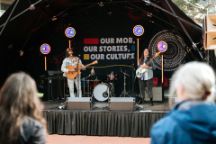
Honouring Country, culture and connection at Swinburne’s inaugural NAIDOC celebration
Swinburne's inaugural NAIDOC celebration celebrated the power of storytelling and provided a space for everyone to engage with Indigenous culture
Thursday 03 September 2026 -

- Astronomy
- Science
- University
Swinburne JWST collaboration to receive prestigious 2027 Berkeley Prize from American Astronomical Society
Swinburne leads the international team who have been awarded the American Astronomical Society’s 2027 Lancelot M. Berkeley Prize for the UNCOVER project
Friday 18 September 2026


