

New $5.2M energy hub helps Victoria build a renewables-ready grid

The $5.2 million investment will feature a future energy grid laboratory with some of the most advanced digital technology.
In summary
- Addressing the challenges of Victoria's renewable energy transition are imperative.
- Victoria’s Minister for Energy and Resources The Hon Lily D’Ambrosio MP has launched the Siemens Swinburne Energy Transition Hub.
- The $5.2 million investment will feature a future energy grid laboratory with some of the most advanced digital technology.
The resources needed to secure a renewable energy future requires collaboration across industries.
Victoria’s Minister for Energy and Resources The Hon Lily D’Ambrosio MP has launched the Siemens Swinburne Energy Transition Hub.
The $5.2 million investment will feature a future energy grid laboratory with some of the most advanced digital technology from Siemens to address the challenges within Victoria’s renewable energy transition.
With a focus on research, development and industry collaboration, the hub is designing reliable solutions, creating opportunities and facilitating groundbreaking activities that leverage Siemens' and Swinburne's extensive experience and expertise in digital energy technology to make an impact.
Professor Karen Hapgood, Swinburne Deputy Vice-Chancellor Research, says the university is incredibly excited about this new collaboration with Siemens, who has partnered with Swinburne over many years.
“Australia’s ambitious carbon reduction targets need a multipronged approach by industry, research and government. The new Siemens Swinburne Energy Transition Hub will be working on new technologies to improve efficiency, supply, integration, storage, transport and use, as well as how we can improve existing technologies and frameworks.”
"We need change fast, and the Siemens-Swinburne team will focus on taking ideas to market – where they can make the most impact as quickly as possible.”
Led by Associate Professor Mehdi Seyedmahmoudian, a distinguished researcher in the School of Software and Electrical Engineering at Swinburne, the hub will be home to a digital twin of Australia’s energy market, enabling commercial-research teams to run simulations of new solutions.
This next generation hub will:
Drive positive environmental and social impact through sustainable energy solutions.
Contribute to Australia's carbon reduction targets and global energy transition efforts.
Empower future generations with knowledge and skills in cutting-edge energy technologies.
Foster economic growth and innovation by promoting industry-academia collaborations.
Accelerate the transition towards next generation electricity grid systems.
Peter Halliday, CEO, Siemens Australia and New Zealand says collaboration between industry and academia is critical to driving better outcomes on key topics of national importance such as the energy transition.
"I’m proud of what the Siemens and Swinburne teams have achieved at the Energy Transition hub, creating a best-of-its-kind for industry.”
“The race to tackle climate change is real and of utmost importance. Australia’s contribution to global emissions is just over 1 per cent. As industry and as a society, we should be focusing on reducing our emissions beyond the 1 per cent, using digitalisation as the key lever to driving long-term sustainability. The hub is a great example of how the best minds can collaborate to help shape the future.”
The Hon Lily D’Ambrosio says Victoria is on track to reach 95 per cent renewable energy generation by 2035 and net zero by 2045 and innovative digital technologies will help us get there. "That’s why facilities like this are so important."
“By expanding and modernising our grid, we will enable cheaper, more reliable renewable energy to be delivered to homes and businesses across Victoria.”
-
Media Enquiries
Related articles
-
- Technology
- University
Swinburne secures national funding to boost heavy vehicle safety with real-time hazard detection
Swinburne researchers will develop real-time technology that helps heavy vehicles detect at-height hazards, improving road safety across Australia.
Thursday 12 March 2026 -
.jpg/_jcr_content/renditions/cq5dam.web.256.144.jpeg)
- Design
- Science
- University
- Aviation
- Engineering
Swinburne continues its strong performance in QS World University Rankings by Subject 2026
Swinburne continues its strong performance in the QS World University Rankings by Subject 2026, with 17 subjects placing in the rankings
Thursday 26 March 2026 -
- Technology
- Science
- Sustainability
- Engineering
Swinburne’s international collaborations driving meaningful impact
Swinburne is collaborating with international researchers to tackle global challenges in clean energy, sustainable materials and energy-efficient buildings.
Monday 16 March 2026 -
- Technology
- Science
- Sustainability
AI innovation protecting biodiversity wins global award for Swinburne researcher
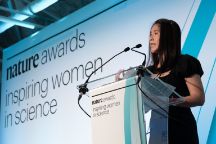
Swinburne Sarawak researcher, Ts Dr Lee Sue Han has won a 2025 Inspiring Women in Science Award for her AI-driven biodiversity research, which uses artificial intelligence to identify plant species, protect ecosystems and support sustainable agriculture.
Friday 06 March 2026 -

- Science
- University
- Sustainability
Swinburne appoints Gordon Chakaodza as new Co-Director of FACET
Gordon Chakaodza has been appointed as Co-Director of the Franco-Australian Indo-Pacific Centre for Energy Transition (FACET), he brings extensive leadership experience in hydrogen and energy transition and will guide FACET’s next phase of growth
Tuesday 17 March 2026

.jpg/jcr:content/renditions/cq5dam.web.1024.576.jpeg)


