

Swinburne rises in QS World University Rankings
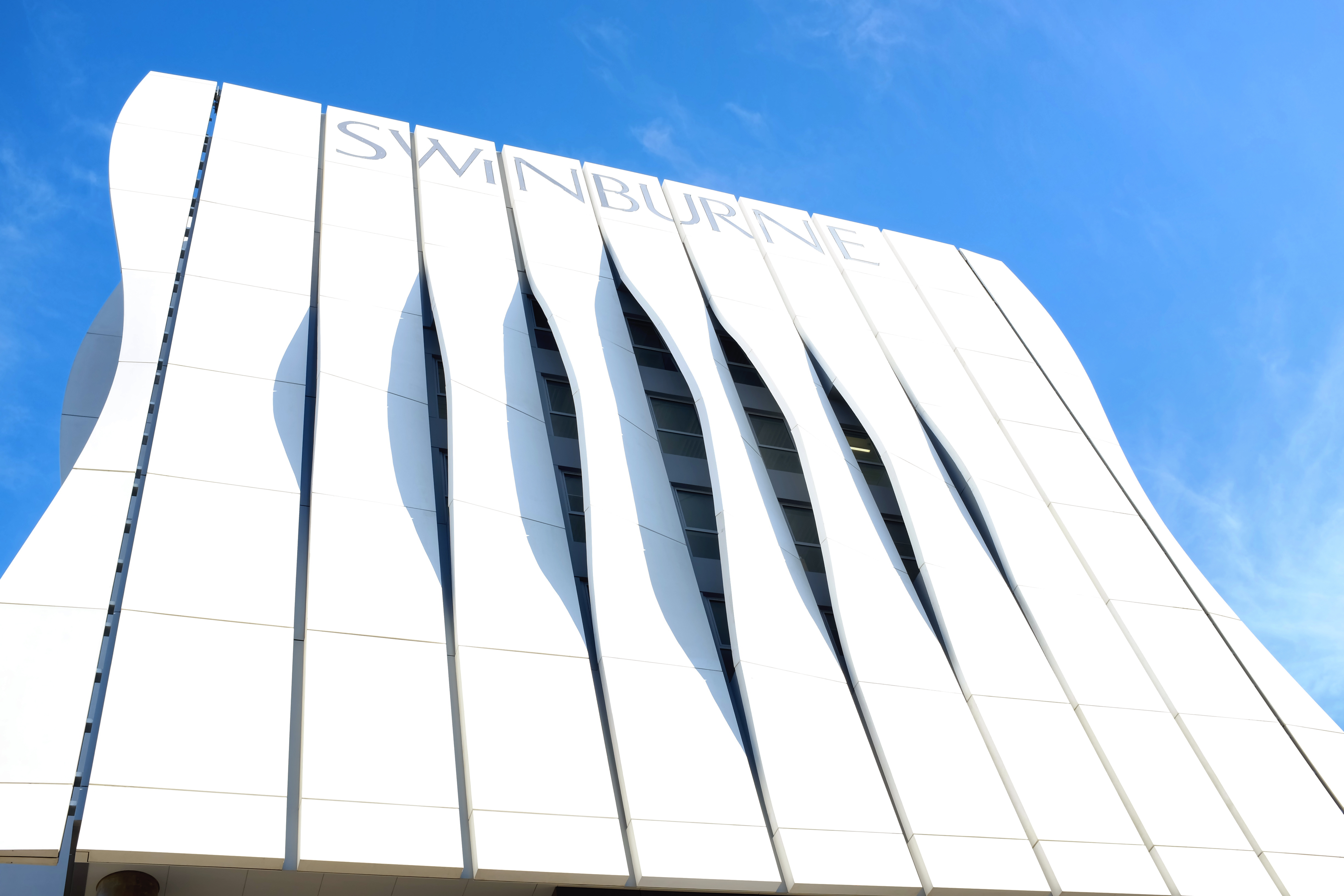
Swinburne has placed 285th in the QS World University Rankings, cementing our status as one of the world’s top 300 universities
In summary
- Swinburne has climbed 11 places to 285th in the QS World University Rankings 2024, up from 296th position the previous year
- The ranking cements Swinburne’s place as one of the world’s top 300 universities
- The QS World University Rankings is one of the world’s most viewed and respected university rankings
Swinburne University of Technology has risen 11 places to number 285 in the QS World University Rankings 2024.
The result cements Swinburne’s position in the top 300 universities globally, among over 2,900 institutions evaluated this year.
The latest success continues Swinburne’s upward trajectory in the QS Rankings, with the university climbing more than 100 places since 2019, and over 250 places since 2015.
Swinburne’s Acting Senior Deputy Vice-Chancellor, Professor Tara Magdalinski, said the ranking was an affirmation of Swinburne as a truly unique university fit for a tech-led world.
“The result recognises our best practice in research, education delivery and student recruitment and highlights Swinburne’s place on the global stage,” Professor Magdalinski said.
“Swinburne is the prototype of global best practice, we are a university that is fit for purpose in a digital future that is very different from the past.”
A key aspect of our exciting rise in this year’s QS rankings is the increased frequency with which Swinburne researchers are cited by their academic peers worldwide.
Now in its 20th edition, the QS World University Rankings is one of the world’s most viewed and respected university rankings.
This year, a total of 2,963 institutions were evaluated (with 1,503 published), from 104 locations around the world. The results encompass the distribution and performance of 17.5 million academic papers published between 2017 and 2021, as well as the 141.6 million citations received by those papers. They also take into account nominations from 2.1 million academics and 617,000 employers.
This year’s ranking assesses universities based on nine criteria: academic reputation, citations per faculty, employer reputation, faculty-student ratio, international faculty, international students, and – new in this edition – employment outcomes, international research network and sustainability.
To view the full tables of QS World University Rankings, visit the QS Top Universities website.
-
Media Enquiries
Related articles
-

- Science
World-first psilocin binge eating disorder trial reveals improvement in all patients
Swinburne University of Technology and Entropy Neurodynamics’ world-first IV-infused psilocin binge eating disorder trial has led to improvement in all participants.
Tuesday 15 September 2026 -

- University
Why skills matter more than ever in technology-infused future
Swinburne leaders reflect on how practical skills, digital capability and flexible learning pathways are preparing people for a changing workforce.
Wednesday 09 September 2026 -

- Student News
- Education
- University
Swinburne tops Victoria for overall educational experience among postgraduate students
Swinburne has been ranked number one in Victorian higher education institutions by domestic postgraduate students for overall educational experience, in the 2025 Quality Indicators for Learning and Teaching Student Experience Survey.
Monday 07 September 2026 -

- Social Affairs
- University
Honouring Country, culture and connection at Swinburne’s inaugural NAIDOC celebration
Swinburne's inaugural NAIDOC celebration celebrated the power of storytelling and provided a space for everyone to engage with Indigenous culture
Thursday 03 September 2026 -

- Astronomy
- Science
- University
Swinburne JWST collaboration to receive prestigious 2027 Berkeley Prize from American Astronomical Society
Swinburne leads the international team who have been awarded the American Astronomical Society’s 2027 Lancelot M. Berkeley Prize for the UNCOVER project
Friday 18 September 2026


