

Swinburne supports first National Quantum Strategy

Swinburne is a leader in quantum technology with four specialised research centres training the next generation of quantum scientists.
In summary
- Swinburne University of Technology welcomes the Federal Government’s first National Quantum Strategy
- Swinburne’s internationally-connected quantum capabilities span advanced quantum theory and theoretical modelling, experimentation and applications, and technological quantum development
- Swinburne’s four quantum research centres include over 30 researchers and graduate students, with undergraduate and postgraduate courses to train the next generation of quantum scientists
Swinburne University of Technology has welcomed the Federal Government’s first National Quantum Strategy.
Swinburne is a leader in quantum technology, particularly cold atom quantum technology, and is ready to engage as a strong research and education partner across the five priority areas of the strategy.
“Swinburne is a world leader in quantum technology and this announcement from the Federal Government signifies its strategic importance to the national agenda,” said Professor Karen Hapgood, Deputy Vice-Chancellor Research.
“Swinburne is ready to play a central role in driving the success of Australia’s first National Quantum Strategy.”
Leaders in quantum technology
Cold atom quantum technology cools atoms down to a fraction of a degree above absolute zero – equivalent to minus 273.15 degrees Celsius and close to the coldest temperatures in the known Universe. They are then stored in a vacuum environment and trapped and manipulated by lasers.
Cold atoms can be used for everything from computing and information processing, through to things like quantum sensing and even timekeeping – some of the best clocks in the world use ultra-cold atoms to keep the most accurate time.
Swinburne’s internationally-connected quantum capabilities span advanced quantum theory and theoretical modelling, experimentation and applications, and technological quantum development. We have developed undergraduate and postgraduate courses to train the next generation of quantum scientists and our four quantum research centres include over 30 researchers and graduate students.
“Working together with industry, research, government and the innovation ecosystem, Swinburne will help upskill and reskill the next generation workforce required to power this revolution and bring people and technology together to build a better world,” Professor Hapgood said.
Swinburne recently announced the launch of an Asia-Pacific quantum computing and technology facility on our Hawthorn campus, supported by an investment from Breakthrough Victoria in global quantum ecosystem leader, Infleqtion (formerly ColdQuanta).
The facility will house world-class quantum capability and develop the future quantum workforce required for this technology revolution.
Learn more about what quantum technology is and how it could transform our world.
-
Media Enquiries
Related articles
-
.jpg/_jcr_content/renditions/cq5dam.web.256.144.jpeg)
- Design
- Science
- University
- Aviation
- Engineering
Swinburne continues its strong performance in QS World University Rankings by Subject 2026
Swinburne continues its strong performance in the QS World University Rankings by Subject 2026, with 17 subjects placing in the rankings
Thursday 26 March 2026 -
- Technology
- Science
- Sustainability
- Engineering
Swinburne’s international collaborations driving meaningful impact
Swinburne is collaborating with international researchers to tackle global challenges in clean energy, sustainable materials and energy-efficient buildings.
Monday 16 March 2026 -
- Technology
- Science
- Sustainability
AI innovation protecting biodiversity wins global award for Swinburne researcher
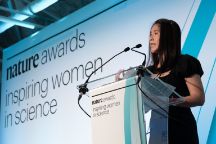
Swinburne Sarawak researcher, Ts Dr Lee Sue Han has won a 2025 Inspiring Women in Science Award for her AI-driven biodiversity research, which uses artificial intelligence to identify plant species, protect ecosystems and support sustainable agriculture.
Friday 06 March 2026 -

- Science
- University
- Sustainability
Swinburne appoints Gordon Chakaodza as new Co-Director of FACET
Gordon Chakaodza has been appointed as Co-Director of the Franco-Australian Indo-Pacific Centre for Energy Transition (FACET), he brings extensive leadership experience in hydrogen and energy transition and will guide FACET’s next phase of growth
Tuesday 17 March 2026 -

- Technology
- Science
- Sustainability
- Engineering
Swinburne to drive innovation in critical minerals research and industry
Swinburne will contribute its expertise to the Critical Metals for Critical Industries Cooperative Research Centre (CMCI CRC)
Thursday 12 March 2026
.jpg/jcr:content/renditions/cq5dam.web.1024.576.jpeg)


