

Swinburne appoints Defence head to tackle crucial and complex landscape

Distinguished Professor Nahavandi is an internationally recognised expert in defence technologies.
In summary
- Swinburne has appointed Distinguished Professor Saeid Nahavandi as its inaugural Associate Deputy Vice-Chancellor Research and Chief of Defence Innovation.
- The appointment will open new opportunities for research in artificial intelligence and cyber security, autonomous vehicles, smart materials, quantum sensing, space technology and more.
- The appointment comes at a pivotal time in Australia's national defence strategy.
Swinburne University of Technology has appointed Distinguished Professor Saeid Nahavandi as its inaugural Associate Deputy Vice-Chancellor Research and Chief of Defence Innovation.
The position’s unique focus on innovation is a first of its kind at a tertiary level in Australia and reflects the crucial need for universities to respond to an increasingly complex and dynamic defence landscape.
New position focuses on innovation in the defence landscape
The appointment will open new opportunities for Swinburne’s research in artificial intelligence and cyber security, autonomous vehicles, smart materials, quantum sensing, space technology and more.
“This appointment leverages Swinburne’s strengths in innovation and technology to place Australia front-and-centre of the research required to meet the needs of modern Australian defence,” said Professor Karen Hapgood, Deputy Vice-Chancellor, Research.
“Distinguished Professor Nahavandi is an internationally recognised expert in defence technologies, with a specific interest in intelligent robotic systems that can be controlled remotely.
“He has worked closely with world-renowned institutions and has created a number of cutting-edge technologies, such as surgical and ultrasound robots.”
Appointment comes at pivotal time in national defence strategy
In April 2023, the Australian Government released its response to the Defence Strategic Review, marking the biggest shift in national military thinking since WWII.
Distinguished Professor Nahavandi will align Swinburne’s research and innovation activities with the Australian Defence Force’s goals of detecting potential threats and protecting Australian defence force personnel across land, sea, air and space.
“The landmark Defence Strategic Review makes clear that the defence technologies of yesterday cannot be relied upon to safeguard Australia’s future,” said Professor Karen Hapgood.
“Distinguished Professor Nahavandi's immediate priorities will be to co-develop Swinburne’s Defence Readiness Strategy, with a focus on ‘detect and protect’, and to establish a Defence Engagement team to support research and innovation requirements of the Australian Defence Force.
“This bolstered capability will enable and support our researchers to collaborate with defence partners to strategically develop new capabilities.
“It will allow us to establish key partnerships and initiatives that align with significant alliances (AUKUS, QUAD) and Swinburne’s research ecosystem,” said Professor Hapgood.
Distinguished Professor Nahavandi comes from Deakin University, where he held the positions of Alfred Deakin Professor, Pro Vice-Chancellor (Defence Technologies) and Director of the Institute for Intelligent Systems Research and Innovation.
He holds an associate position at Harvard University and was the 2021 Australian Space Awards Researcher of the Year and the 2021 Australian Defence Industry Innovator of the Year.
More on Swinburne’s defence strategy can be read in the Research Strategy 2025.
-
Media Enquiries
Related articles
-

- University
Swinburne welcomes calls for reform to Australia’s research ecosystem
Swinburne backs the call for urgent action to build capability and new industries in the Ambitious Australia report.
Tuesday 17 March 2026 -
- Technology
- University
Swinburne secures national funding to boost heavy vehicle safety with real-time hazard detection
Swinburne researchers will develop real-time technology that helps heavy vehicles detect at-height hazards, improving road safety across Australia.
Thursday 12 March 2026 -

- University
Swinburne marks International Women’s Day with powerful call to balance the scales
Swinburne has marked International Women’s Day 2026 with a hybrid event to explore this year’s theme: Balance the Scales.
Wednesday 11 March 2026 -
- Technology
- Science
- Sustainability
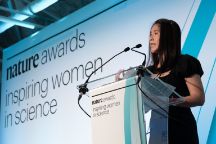
AI innovation protecting biodiversity wins global award for Swinburne researcher
Swinburne Sarawak researcher, Ts Dr Lee Sue Han has won a 2025 Inspiring Women in Science Award for her AI-driven biodiversity research, which uses artificial intelligence to identify plant species, protect ecosystems and support sustainable agriculture.
Friday 06 March 2026 -

- Science
- University
- Sustainability
Swinburne appoints Gordon Chakaodza as new Co-Director of FACET
Gordon Chakaodza has been appointed as Co-Director of the Franco-Australian Indo-Pacific Centre for Energy Transition (FACET), he brings extensive leadership experience in hydrogen and energy transition and will guide FACET’s next phase of growth
Tuesday 17 March 2026


