

What is quantum technology?

Laser reflection on an optic table in a quantum laboratory. Swinburne researchers are using lasers to manipulate cold atom quantum technology.
In summary
- Quantum technology uses the building blocks of nature (subatomic particles) to improve our lives
- It can be used across pharmaceuticals, energy, finance, transport, defence, communications and health
- Cold quantum technology uses atoms cooled down to a fraction of a degree above absolute zero
Quantum technology is complicated. But let’s break it down to make it a little easier to understand.
A quantum is a really, really small particle; think subatomic. So, a quantum of light is a photon, a quantum of electricity is an electron. Think particles like proton, neutron, Higgs boson, and all sorts of quarks (up, down, charm, strange, top).
Quantum technology uses the building blocks of nature. It’s physics, computing and a new form of technology all rolled up in one.
Wrap your brain around quantum tech
The benefit of quantum technology is the speed and the increase in computing power.
It has huge potential across many sectors, including pharmaceuticals, energy, finance, transport, defence, communications and health.
For our everyday lives, the technology could improve GPS accuracy, navigation systems in planes, phone towers, financial trading systems, and even driverless cars. It could also give us more secure communications and data systems, as well as more accurate medical imaging through quantum sensing.
So, then… what is cold quantum technology?
Cold atom quantum technology begins with tiny atoms cooled to extremely low temperatures. Or, to put it another way, these are atoms cooled down to a fraction of a degree above absolute zero – which is equivalent to minus 273.15 degrees Celsius – so basically the coldest temperatures in the known Universe!
They are then stored in a vacuum environment and trapped and manipulated by lasers.
Cold atoms are really useful in quantum technologies. They can be used for everything from computing and information processing, through to things like quantum sensing and even timekeeping. Some of the best clocks in the world use ultra-cold atoms to keep the most accurate time.
The ColdQuanta-Swinburne Technology Centre launched in 2022 with the support of a $29 million investment by Breakthrough Victoria.
Building a quantum workforce
Australia’s national science agency, CSIRO, estimated Australia’s quantum technology industry has the potential to support 19,000 new jobs and generate $6 billion in annual revenue by 2045.
Quantum breakthroughs require long-term investment and a skilled talent pool. However, one of the major challenges facing the quantum technology sector is the lack of a qualified workforce.
The ColdQuanta–Swinburne Quantum Technology Centre is working on overcoming this challenge by building a world-class quantum science, industry and research facility to facilitate collaborations and opportunities for local job development and economic growth.
The Centre will expose around 50 students to cold atom quantum technology and, over the next few decades, will provide much needed skills to the quantum workforce here in Australia and around the world.
-
Media Enquiries
Related articles
-
- Technology
- Science
- Sustainability
- Engineering
Swinburne’s international collaborations driving meaningful impact
Swinburne is collaborating with international researchers to tackle global challenges in clean energy, sustainable materials and energy-efficient buildings.
Monday 16 March 2026 -
- Technology
- Science
- Sustainability
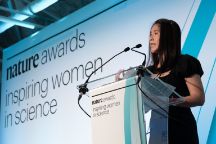
AI innovation protecting biodiversity wins global award for Swinburne researcher
Swinburne Sarawak researcher, Ts Dr Lee Sue Han has won a 2025 Inspiring Women in Science Award for her AI-driven biodiversity research, which uses artificial intelligence to identify plant species, protect ecosystems and support sustainable agriculture.
Friday 06 March 2026 -

- Science
- University
- Sustainability
Swinburne appoints Gordon Chakaodza as new Co-Director of FACET
Gordon Chakaodza has been appointed as Co-Director of the Franco-Australian Indo-Pacific Centre for Energy Transition (FACET), he brings extensive leadership experience in hydrogen and energy transition and will guide FACET’s next phase of growth
Tuesday 17 March 2026 -

- Technology
- Science
- Sustainability
- Engineering
Swinburne to drive innovation in critical minerals research and industry
Swinburne will contribute its expertise to the Critical Metals for Critical Industries Cooperative Research Centre (CMCI CRC)
Thursday 12 March 2026 -
- Technology
- Social Affairs
- Health
- Science
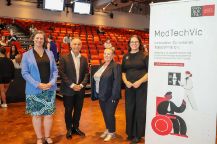
Driving meaningful progress in assisted living tech
Swinburne’s MedTechVic hub annual showcase brings together research, lived experience and practical innovation in assisted living technologies. This year's theme was ‘Real innovation, real lives’, highlighting the hub’s ongoing commitment to driving inclusive innovation.
Thursday 12 February 2026


