

Gloria tackles climate challenge in China through virtual internship

Bachelor of Screen Production student Gloria Lai.
In summary
- Swinburne student Gloria Lai has stepped out of her comfort zone and helped promote climate action in China with through Swinburne Abroad.
- Swinburne Abroad’s Climate Action Project is a virtual overseas internship where students work in groups to consult for organisations to develop a climate action plan and help the business improve performance.
- Students who undertake virtual overseas internships report improved employability and cultural intelligence
Swinburne student Gloria Lai has stepped out of her comfort zone and helped promote climate action in China through Swinburne Abroad.
The Bachelor of Screen Production student has enriched her degree with a virtual overseas internship at world-leading sustainable energy company, Sungrow.
Film-making is Gloria’s first passion and main study area, but she is also keenly aware of the global climate crisis, and wanted to educate herself on the issue through an internship.
Working with a global leader
Through Swinburne Abroad, Gloria was placed with Sungrow, a global firm spanning six continents that specialise in the research, development and production of renewable energy equipment like solar panels and batteries.
This opportunity was facilitated through Swinburne Abroad’s Climate Action Project, a virtual overseas internship where students work in groups to consult for organisations to develop a climate action plan and help the business improve performance. The program is supported by Swinburne partners Virtual Internships and Pomegranate Global.
Gloria said she feels more work-ready after completing the placement earlier this year, having never been exposed to a professional working environment before.
“Getting to collaborate with higher up representatives is daunting, but makes you feel your work is valued and you are being heard,” she said.
“They understand that the interns are students who are willing to learn, so they offered a sense of support throughout the internship.”
Harnessing tech to overcome travel barriers
While international travel hampered most students’ plans to study overseas in recent years, Swinburne students have leveraged the opportunities of their technology-focused and globally-connected university to undertake virtual placements throughout the pandemic.
Swinburne Global Mobility Associate Director, Stewart Collins, said virtual overseas programs are likely to be part of the university’s study abroad options long after the pandemic ends.
“When students couldn’t leave the country due to Covid-19, we provided students with virtual programs through Swinburne Abroad,” Stewart said.
“Working globally, whether it be physically or virtually, is an excellent way for students to get that experience, intercultural understanding, networking opportunities, and learning a language.
“We think there’s a place for virtual programs long term. It’s great for sustainability and accessibility for students who can’t afford to travel, or have family commitments, or who have a disability.”
The virtual overseas programs are offered in summer and winter break, and students who have participated report the experience was worthwhile, saying they think the opportunity has increased their employability and cultural intelligence.
“It wasn’t just students doing an internship online with an organisation in Asia, for example,” Stewart said.
“They would do cooking classes, have virtual catch ups, do trivia, and other activities to engage with people in another country as well.”
Zero emissions travel for Swinburne staff and students
As part of Swinburne’s Net Zero 2025 Pathway, all Swinburne university-related travel is now carbon-neutral through purchasing of carbon offset units equivalent to the emissions generated from our travel.
In 2022, Swinburne’s carbon offsets are being purchased through the Arnhem Land Fire Abatement project which is Aboriginal owned and a not for profit delivering carbon emission abatement outcomes.
“We think studying abroad is a meaningful experience, so it’s important that students continue to travel,” Stewart said.
“But we can be more sustainable in the way we do that.
“We go through a predeparture briefing with students that includes their impact on environment.
“For example, if a student goes to study in Germany for a semester, we would talk with them about thinking about where they can get a bus or train rather than a taxi or some budget airlines.”
Beyond the classroom
Gloria urges all Swinburne students to consider undertaking internships during their studies.
Whether to enrich learning in your primary study area or pursuing interests outside of studies, she said it would help students to seek out new perspectives.
“It doesn’t matter what your background is,” she said.
“I’m studying media and film, but I’m learning about a world issue which is very different to my normal studies.
“It’s great tapping into other interests and passions because it provides a really good balance.”
Contact Swinburne Abroad for more information on overseas study options.
-
Media Enquiries
Related articles
-
- Design
- Technology
- Science
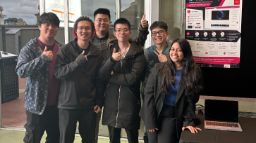
Swinburne students AI-powered learning platform wins Design for Change 2026
Swinburne Master of Technology students receive first prize in the 2026 Design for Change competition with VidVersity Transformation.
Monday 06 July 2026 -
- Technology
- Health
- Education
- Business
- Science
- Sustainability
- Engineering
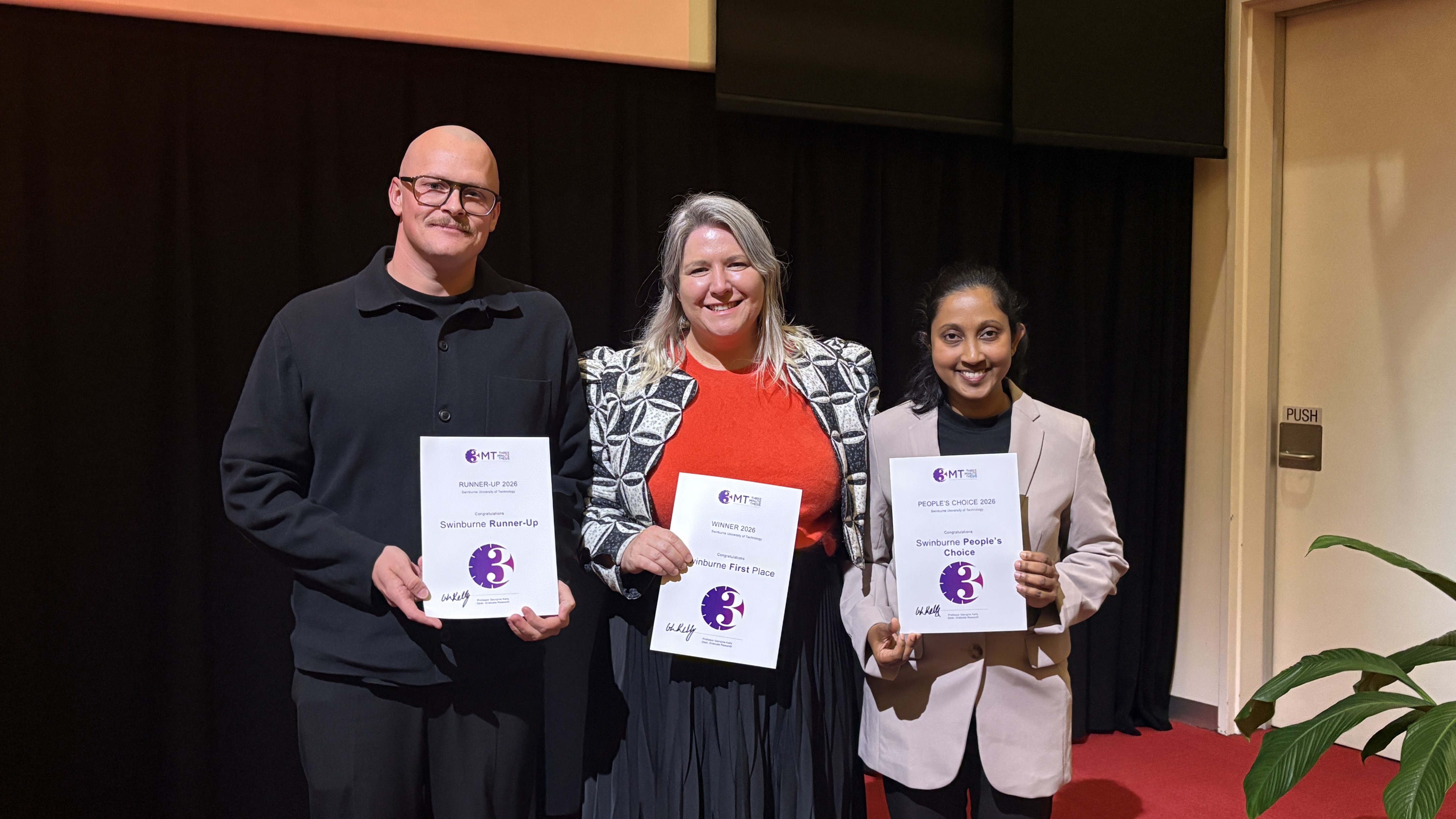
Celebrating Swinburne’s next generation of researchers
Swinburne’s inaugural Research Festival brought together Higher Degree by Research students and early career researchers to learn, share and connect.
Monday 27 July 2026 -
- Technology
- Education
- Science
- University
Swinburne and Geotab to advance AI-powered transport innovation and research
The Geotab-Swinburne Transport Innovation Hub will connect industry professionals, policymakers and researchers to translate insights into solutions.
Wednesday 03 June 2026 -
- Technology
- Education
- Science
- University
Swinburne helps accelerate medical innovations through ACMD partnership
Swinburne is a partner in the new hospital-based engineering research centre, the Aikenhead Centre for Medical Discovery (ACMD).
Thursday 11 June 2026 -
- Design
- Technology
- Education
Future Services Studio imagines the next chapter of Australian design
The Future Services Studio workshops held during Melbourne Design Week 2026 brought together industry, research and the public to explore progressive design methods and the practical integration of generative AI.
Friday 12 June 2026


