

Swinburne partners with ZERO Living on sustainable housing project

Swinburne’s School of Engineering has been collaborating with ZERO Living to develop smart energy monitoring systems for the company’s environmentally sustainable homes.
In summary
- Swinburne is collaborating with ZERO Living to engineer a series of inner urban zero energy homes
- The homes are wired to monitor major appliances in real-time, with Swinburne engineers analysing the data and suggesting energy-saving opportunities
- Each home is also 100 per cent carbon negative
For the past three years Swinburne University of Technology’s School of Engineering has been collaborating with Melbourne-based company ZERO Living to develop smart energy monitoring systems for the company’s all-electric, battery-powered homes.
ZERO Living has partnered with Enphase Energy to build sustainable, energy efficient houses in Melbourne. Fitted with Enphase Energy microinverter-equipped solar panels and Tesla batteries, each house generates more than twice as much energy as it consumes.
Each home is also 100 per cent carbon negative.
ZERO Living’s partnership with Enphase Energy allows them to deliver a system that provides longevity, scalability, advanced analytics and reliability. The homes are wired to monitor major appliances in real-time, with Swinburne engineers analysing the data and suggesting energy saving opportunities to the resident via a smartphone app to ensure zero living.
Lecturer in Swinburne’s Department of Civil and Construction Engineering, Dr Morshed Alam, commends the ZERO Living model for engineered energy efficiency. “This model is a world first and we're thrilled to act as scientific partners to monitor continuing performance throughout the life of the dwellings,” says Dr Alam.
Three years ago, ZERO Living built three fully-engineered houses in Footscray, which it rents out through AirBnB as ‘living laboratories’ to monitor their energy use. Data collected from almost 600 short-term guests has been used to compare the performance of various solar panels, appliances and equipment.
Monitoring of these ‘living labs’ by Swinburne confirmed they produce significantly more energy than they consume and achieve zero energy bills. ZERO Living now has five of these houses for sale in the western Melbourne suburb of Albion, with more in the pipeline in neighbouring suburbs. The company can also design and build a ZERO energy home on a client’s block of land.
“In a previous project funded by the Australian Research Council’s Industrial Transformation Research Hub, we found that buildings consume two to three times more energy than predicted during the design stage, which is a threat to reach our 2050 climate target,” says Dr Alam.
“We identified key factors behind the energy performance and implemented those in this study to ensure zero living is achieved in real life. One of the key lessons we have learned in this experiment is appliances are as important as heating and cooling.”

Swinburne engineers monitor the energy use of the ZERO Living homes in real time.
ZERO Living co-founder Tom Graze says: “Our zero-energy house is fully monitored, right down to separate circuits for the fridge, oven and heat pumps, with that data transferred to Swinburne to update the ZERO smartphone app. We also provide tips and tricks to reduce energy use even further.
“As more fully monitored ZERO Living homes come online, that data will help continually improve future homes, so each ZERO Living homeowner is paying it forward to help improve the world.”
-
Media Enquiries
Related articles
-

- Technology
- University
Swinburne secures national funding to boost heavy vehicle safety with real-time hazard detection
Swinburne researchers will develop real-time technology that helps heavy vehicles detect at-height hazards, improving road safety across Australia.
Thursday 12 March 2026 -
.jpg/_jcr_content/renditions/cq5dam.web.256.144.jpeg)
- Design
- Science
- University
- Aviation
- Engineering
Swinburne continues its strong performance in QS World University Rankings by Subject 2026
Swinburne continues its strong performance in the QS World University Rankings by Subject 2026, with 17 subjects placing in the rankings
Thursday 26 March 2026 -
- Technology
- Science
- Sustainability
- Engineering
Swinburne’s international collaborations driving meaningful impact
Swinburne is collaborating with international researchers to tackle global challenges in clean energy, sustainable materials and energy-efficient buildings.
Monday 16 March 2026 -
- Technology
- Science
- Sustainability
AI innovation protecting biodiversity wins global award for Swinburne researcher
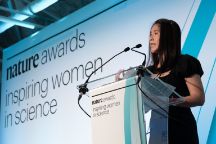
Swinburne Sarawak researcher, Ts Dr Lee Sue Han has won a 2025 Inspiring Women in Science Award for her AI-driven biodiversity research, which uses artificial intelligence to identify plant species, protect ecosystems and support sustainable agriculture.
Friday 06 March 2026 -

- Science
- University
- Sustainability
Swinburne appoints Gordon Chakaodza as new Co-Director of FACET
Gordon Chakaodza has been appointed as Co-Director of the Franco-Australian Indo-Pacific Centre for Energy Transition (FACET), he brings extensive leadership experience in hydrogen and energy transition and will guide FACET’s next phase of growth
Tuesday 17 March 2026

.jpg/jcr:content/renditions/cq5dam.web.1024.576.jpeg)


