

World-leading Swinburne research will influence climate modelling

Acacia species in arid Australia. Credit: Mark Adams.
In summary
- Restoring acacia woodlands would be by far the best way to capture carbon from the atmosphere in outback Australia
- New data about the ability of trees and vegetation to acquire carbon and contribute to rainfall is likely to have major implications for climate modelling
- The research will help improve rainfall predictor models, especially in tropical zones
Ground-breaking research about the ability of trees and vegetation to acquire carbon and contribute to rainfall is likely to have major implications for climate modelling.
Published in one of the world’s leading science journals, the research – led by Swinburne University of Technology’s Professor of BioScience and Innovation, Mark Adams – is the culmination of three years’ work and is the third major study his group has published.
Professor Adams says their latest study shows that in dry climates like Australia, trees and other forms of vegetation respond to rising carbon dioxide in the atmosphere by increasing their efficiency in using water to acquire carbon.
'Vegetation that thrives in drier climates, like Acacia woodlands found throughout inland Australia, are particularly well placed to increase their carbon capture efficiencies,' says Professor Adams.
'They have the ability to acquire nitrogen from the atmosphere, bypassing soil nitrogen.'
Expanding data collection beyond Europe and the United States
These findings counter previous understandings of water use efficiency, which were based largely on research in Europe and the eastern USA, where humid conditions and histories of nitrogen pollution mask the underlying effects of aridity.
The majority of the world’s terrestrial surfaces are considered arid and lack the nitrogen pollution found in Europe and the USA.
Redefining climate models that predict rainfall
The Swinburne research is also significant for climate models used to predict future rainfall, which is critical for tropical regions where rainfall can be dictated by terrestrial conditions, not necessarily by oceans.
'Water use efficiency is now built into most modern climate models used to predict future rainfall. The greater understanding of how water use efficiency in trees and vegetation varies across the globe will help improve the models,' says Professor Adams.
Huge leap forward in availability of data
Data was painstakingly collected from 343 individual sources and more than 10,000 observations of the abundance of stable isotopes of carbon. The public availability of the data collected by Professor Adams and his research group will improve the scientific community’s ability to rapidly and positively influence climate modelling into the future.
Nature Communications science journal
This research was published in Nature Communications, which is an open access, multidisciplinary journal dedicated to publishing high-quality research in all areas of the biological, health, physical, chemical and Earth sciences. Papers published by the journal aim to represent important advances of significance to specialists within each field.
-
Media Enquiries
Related articles
-
- Technology
- Science
- Sustainability
- Engineering
Swinburne’s international collaborations driving meaningful impact
Swinburne is collaborating with international researchers to tackle global challenges in clean energy, sustainable materials and energy-efficient buildings.
Monday 16 March 2026 -
- Technology
- Science
- Sustainability
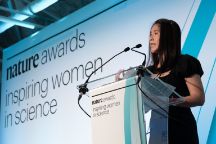
AI innovation protecting biodiversity wins global award for Swinburne researcher
Swinburne Sarawak researcher, Ts Dr Lee Sue Han has won a 2025 Inspiring Women in Science Award for her AI-driven biodiversity research, which uses artificial intelligence to identify plant species, protect ecosystems and support sustainable agriculture.
Friday 06 March 2026 -

- Science
- University
- Sustainability
Swinburne appoints Gordon Chakaodza as new Co-Director of FACET
Gordon Chakaodza has been appointed as Co-Director of the Franco-Australian Indo-Pacific Centre for Energy Transition (FACET), he brings extensive leadership experience in hydrogen and energy transition and will guide FACET’s next phase of growth
Tuesday 17 March 2026 -

- Technology
- Science
- Sustainability
- Engineering
Swinburne to drive innovation in critical minerals research and industry
Swinburne will contribute its expertise to the Critical Metals for Critical Industries Cooperative Research Centre (CMCI CRC)
Thursday 12 March 2026 -
- Technology
- Social Affairs
- Health
- Science
Driving meaningful progress in assisted living tech
Swinburne’s MedTechVic hub annual showcase brings together research, lived experience and practical innovation in assisted living technologies. This year's theme was ‘Real innovation, real lives’, highlighting the hub’s ongoing commitment to driving inclusive innovation.
Thursday 12 February 2026


