

Sustainability at Swinburne

At Swinburne, we continue to accelerate our efforts towards a sustainable future, as we strive to achieve carbon neutrality by 2025
In summary
- Swinburne’s commitment to sustainability is one of our core values and is embedded across everything we do at the university
- We have committed to be carbon neutral by 2025 and have implemented a number of initiatives in our daily operations to achieve this goal
- Our research community continues to explore tangible ways to fight climate change
Swinburne’s commitment to sustainability is one of our core values. It’s embedded across our university, in our daily operations and research activities, as we strive to ensure a sustainable future.
As a signatory to the United Nations Sustainable Development Goals, Swinburne has committed to be carbon neutral by 2025. This pledge has led to several initiatives to reduce emissions across our campuses.
Running on renewables
In July 2020 Swinburne began using renewable electricity across all of our campuses. Through a contract with energy company Iberdrola Australia, Swinburne has been procuring our electricity from the Cherry Tree Wind Farm, which is located near the town of Seymour in Victoria’s Goulburn Valley.

Swinburne’s arrangement with Iberdrola Australia to procure renewable electricity from Cherry Tree Wind Farm is also an opportunity to support a Victorian project and employment in the region.
Converting to renewable electricity has saved the university 23,000 tonnes of carbon emissions over the last 12 months, with emissions from electricity representing more than 70 per cent of our carbon footprint.
Fighting modern slavery
Today, more than 40 million people are estimated to be trapped in modern forms of slavery around the world.
Modern slavery can take many forms, including:
- being forced to work for free or to pay off a debt,
- child slavery
- forced marriages
- domestic servitude.
Swinburne has committed to taking the necessary steps to identify and resolve any form of modern slavery in the university’s operations, our suppliers and our partner organisations.
Our modern slavery statement outlines Swinburne’s commitments and approach to identifying areas of risk and key activities to combat this important human rights issue.
Swinburne, along with 34 other universities, has recently committed to implementing a sector-wide modern slavery technology solution, called FRDM Inc. This social tech solution will integrate the sector’s efforts in combating modern slavery and allow for greater collaboration and increased transparency across the universities’ supply chains.
Exploring hydrogen as a clean energy source for the future
Members of our research community have been exploring the use of hydrogen as a clean energy source for the future.
In 2021, Swinburne received $10 million from the Victorian Government to build the Victorian Hydrogen Hub (VH2), in partnership with CSIRO and Germany’s ARENA 2036. The hub will bring together researchers, industry partners and businesses to test, trial and demonstrate new and emerging hydrogen technologies. VH2 will also support sustainable manufacturing practices and the ability to store clean energy from renewable sources, striving to create a sustainable future for all.
‘With the world increasingly looking to decarbonise, the quest for net zero emissions is as strong as ever. Policymakers, energy firms and scientists are hoping to use hydrogen as fuel for the future of power generation, long-haul transportation and industry,’ says Gordon Chakaodza, Director of VH2.
Incorporating sustainability principles into procurement
In August 2021, Swinburne launched a new procurement policy and procedure that supports sustainability.
Our new procurement framework is designed to drive better environmental, social and economic outcomes. This includes considering the carbon neutrality of the products and services offered, the risks of modern slavery along the supply chain, as well as the diversity and inclusion priority of our suppliers.
‘In this cost-constrained environment, it is more important than ever to ensure that every dollar we spend delivers sound commercial and social outcomes that fulfil our requirements,’ explains Swinburne’s Director of Sustainability and Procurement, Rhiannon Jones.
‘To help us reach out net zero by 2025 goal, it is critical that we prioritise ways to reduce emissions across our supply chain and be more thoughtful about how we use our resources,’ she says.
For more information on our sustainability initiatives, visit Swinburne’s sustainability and environment page.
-
Media Enquiries
Related articles
-
- University
- Student News
Swinburne secures New Colombo Plan funding, expanding global opportunities for students
Swinburne has secured $943,000 in New Colombo Plan funding, expanding student opportunities for study, work and internships across the Indo-Pacific
Friday 06 February 2026 -
- Technology
- University
World-first partnership with Adobe drives tech-fluency at Swinburne
Swinburne has become the first Adobe Creative Campus in the world to provide all staff and learners with Adobe Creative Cloud, including Adobe’s full offering of generative AI tools
Tuesday 27 January 2026 -
- Design
- Technology
- Health
- Law
- Education
- Business
- Science
- University
- Engineering
Swinburne moves up in Times Higher Education World University Rankings by Subject 2026
Swinburne University of Technology has performed strongly in the Times Higher Education World University Rankings by Subject 2026, with two subjects moving up the ranks.
Thursday 22 January 2026 -
- University
- Engineering
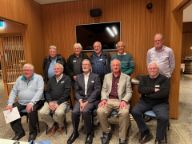
Mechanical engineering alumni celebrate fifty years since graduation
Swinburne’s mechanical engineering graduates from 1975 celebrate a fifty-year anniversary, reminiscing on their time at Swinburne and their careers.
Tuesday 13 January 2026 -

- University
Australia Day Honours for Swinburne community
Swinburne alumni have been recognised for their service to various industries and communities in the 2026 Australia Day Honours list.
Monday 26 January 2026


