

Law students get hands-on with the technologies changing the legal industry

Law student Jules Ioannidis, who helped create the chatbot, is working in the legal tech industry and enjoys bringing together his skills and interests in law and technology.
In summary
- Swinburne law students have created a chatbot to help fellow law students
- Swinburne Law School’s Legal Technology and Innovation Unit explores how technologies are changing the legal industry
- Many Swinburne law students are now pursuing careers in the growing legal tech industry
Swinburne law students have created an innovative chatbot solution to help law students navigate their degree, as part of Swinburne Law School’s Legal Tech Clinic.
The clinic builds on the Legal Technology and Innovation unit, which explores how technology and software is changing and improving the delivery of legal services, and grows students’ skills in developing innovative and user-friendly solutions to complex challenges.
Many of Swinburne Law School’s students are now pursuing careers in the growing area of ‘legal tech’.
Solving problems with technology
Law students Jules Ioannidis, Stuart Boyd and Alexandra Kepas, created the chatbot as a solution to respond to the high number of enquiries from law students about their course planning.
They used ‘Josef’, a legal automation platform, to create the chatbot that checks the progress of a student’s degree. The chatbot asks students a series of questions, before automating a tailored and detailed ‘health check’ report.

Chatbots are a fun and engaging way to streamline interactions between people and services, says student Jules
Fourth-year student Jules, says “By learning to build chatbots, I’ve gained the skills to automate legal processes and help fill the demand for affordable legal advice.”
For classmate Alexandra, this project opened up a new way of approaching legal problems.
“I learnt that despite not having experience in these technologies or coding, I was more than able to extend my skill set to include this sort of problem-solving and develop an understanding for the processes and limitations associated with design-thinking,” she says.
Technology transforming law
Bachelor of Laws Course Director and Convenor of the Legal Technology and Innovation Unit, Mitchell Adams says the skills developed through this project are critical for the changing legal industry.
“The students have come up with a truly innovative and unique solution and have developed skills to translate the law into a computer program,” he says.
“Legal tech will change the way lawyers will address legal problems. The Swinburne Law School legal tech program prepares our students for this changing profession, and the future of law.”
Inspiring career choices
Swinburne Law School’s focus on technology and the future is inspiring some of its students, including Jules and Stuart, to pursue careers in legal technology.
Jules is in his fourth year of a Bachelor of Laws/Bachelor of Computer Science (cybersecurity) degree. He currently works as a legal intern at Fourth Line, a risk management system that helps financial planning groups meet their legal obligations. He has also just started collaborating on a number of legal tech projects for a large mid-tier Australian law firm.
“I chose to study law and computer science because I saw an opportunity to transform the legal profession with new technologies capable of improving efficiency, lowering costs and expanding access to justice,” he says.

Jules chose to study at Swinburne for its focus on preparing students to thrive in an increasingly digitalised economy
Jules can trace his budding career in legal technology to a ‘tea and biscuits’ networking event at Swinburne Law School. There, he met other law students interested in legal tech, which led to work experience and job opportunities in the legal tech industry.
“I find it really rewarding being able to bring together my skills and interests in law and technology to work in a dynamic and flourishing industry…I particularly enjoy working on solutions from start to finish and being able to bridge the divide between law and technology.”
Final year Bachelor of Law/Bachelor of Science student, Stuart Boyd says he discovered a whole new way of thinking about and tackling legal problems after studying a legal tech elective.
“The skills I have learnt are going to be increasingly important for law graduates and it’s great we have a head start at Swinburne.”

Stuart’s interest in technology has increased during his time studying at Swinburne Law School
-
Media Enquiries
Related articles
-

- Student News
- Law
Students tour South Korea’s evolving legal landscape
Swinburne University of Technology’s law students recently undertook a two-week study tour to South Korea, focused on legal affairs, political systems and local customs. The group of 14 students, led by Dr Jacqueline Meredith, took part in an immersive educational experience designed to deepen their understanding of international legal systems.
Thursday 07 August 2025 -
- Law
Top Law Student Awarded Supreme Court Prize
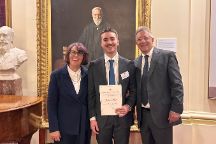
Swinburne graduate, Zachary Plant, was presented with the Supreme Court Prize by Chief Justice Richard Niall and Federal Court Chief Justice Mortimer for academic excellence, as Swinburne’s top Law student for 2024.
Monday 14 July 2025 -

- Law
Students develop tech solution for major Melbourne law firm
Swinburne Law students have created an innovative triage tool to streamline Australian Consumer Law assessments for major consumer products law firm, CIE Legal.
Monday 14 July 2025 -

- Law
Academic discovery and cultural exchange during Vietnam tour
Students made lifelong connections and gained international industry insights on the first Law, Governance and Culture study tour to Vietnam.
Tuesday 20 August 2024 -

- Law
Swinburne law academic wins Victorian Premier’s History Award
Associate Professor Amanda Scardamaglia has won this year’s award for writing the first book that documents the visual history of print advertising in Australia.
Thursday 29 October 2020


