


Bachelor of Design (Industrial Design) (Honours)
70.0
Overview
Creativity meets practicality in our Bachelor of Design (Industrial Design) (Honours). Study the emotional impact of design, as well as the mechanics of structures. Think about materials, not just maths. From furniture to med-tech devices, you'll be ready for any design brief. And with a focus on new technologies and sustainability, you'll emerge ready for any future.
Apply ATAR-free and secure your future
The best move you’ll make in Year 12 is not leaving your future to chance. Apply for Swinburne’s Early Entry Program now and you could secure an offer before exams – no ATAR required.
Your industry experience
Bolster your CV with real industry experience while you study through our Work Integrated Learning programs – a guaranteed part of all our bachelor degrees. This can include placements, internships or industry-linked projects.
In this degree, you'll work on industry-linked briefs in our Capstone projects and applied innovation studios.
Skills you’ll learn
- Problem solving
- Idea generating
- Concept development
- Industry-standard CAD programs operating
- Design for manufacturing understanding
Your career opportunities
- Industrial designer
- Product designer
- Service designer
- Model maker
- Computer-aided designer
- Design consultant
Key codes
International student visa
International students in Australia who hold student visas are required to study full-time and on campus. Courses that are taught entirely online are only available to international students studying outside Australia or those in Australia who are not on a student visa. Online courses are not available to international students in Australia who hold a student visa.
Why Swinburne?
Ranked Top 150 in Art and Design
#1 in Melbourne for graduate salary one year out
5 stars for overall experience
#1 in Melbourne for graduate found full-time employment 4 months after completing their degree
-

"Swinburne provided access to a range of design software and labs with top-of-the-line computers. In addition, I had access to every tool I could dream of. From 3D printers to laser cutters and flatbed CNCs, all available for us to explore to our heart's content."
Jake , Bachelor of Design (Industrial Design) (Honours)

Related courses
-

Bachelor of Design
-

Bachelor of Engineering (Honours)
-

Bachelor of Design (Interior Architecture) (Honours)
-
Bachelor of Engineering (Honours)
-

Diploma of Design (UniLink)
-
Bachelor of Design
Qualifications
One of the following:
- successful completion of the Victorian Certificate of Education (VCE) or its equivalent, such as an interstate or international Year 12 qualification
- completion or partial completion of an approved tertiary qualification (including certificates IV (completed), diplomas, advanced diplomas, associate degrees and degrees).
Guaranteed Entry ATAR
70.0
Lowest ATAR to receive an offer in 2025 [after adjustment factors]
71.45
You’ll be guaranteed a place in this course if you meet or exceed the ATAR Guaranteed Entry Score, provided you meet the course prerequisites.
If your ATAR is below the guaranteed entry score, you can still be offered a place as your ATAR may be adjusted based on subject adjustments, equity schemes or other factors.
Subject adjustments:
- A study score of 25 in Art Creative Practice, Product Design and Technologies, Furnishing T, any Mathematics, Art Making and Exhibiting, Systems Engineering or Visual Communication Design equals 4 aggregate points per study.
Overall maximum of 15 points. Subject adjustment points are applied to the aggregate, not the ATAR.
Students admitted to the course with prior tertiary studies that satisfy part of the academic requirements of this course may be eligible for academic credit.
*Applicants without a formal qualification but with significant and relevant work experience will be considered if they can demonstrate that they can undertake the course with a reasonable prospect of success.
Successful completion of Australian Year 12 or equivalent overseas qualification.
This will be assessed at the time of your application. To check your eligibility for this course, visit our entry requirements for international students page.
Course prerequisites
- VCE Units 3 and 4: a minimum study score of 20 in any English (except EAL) or 25 in English as Alternate Language (EAL) or equivalent and
- VCE Units 3 and 4: a minimum study score of 20 in any English (except EAL) or 25 in English as Alternate Language (EAL) or equivalent.
Admission requirements
Meeting the minimum entry requirements for the course does not guarantee an offer of a place. Check admission requirements for general information about the admission process.
English language requirements
Satisfactory completion of one of the following:
- IELTS overall band of 6.0 (Academic Module) with no individual band below 6.0
- Swinburne’s English for Academic Purposes (EAP 5 Advanced level) with overall 65%, all skills 65% or above
- or equivalent measures available at English language requirements.
Need to undertake an English assessment for entry?
A prerequisite for many courses, the Pearson Test of English (PTE Academic) can now be done at our Hawthorn campus.
Informed Choices
Informed Choices helps you make confident decisions about your course selection. The information in this section outlines course components and support services, giving you the knowledge you need upfront to be equipped to succeed in your studies.
Informed Choices covers five areas of course requirements and capability:
- Sensory
- Mobility and movement
- Legal, duty of care and professional
- Learning and knowledge creation; and
- Interpersonal.
Required components
Required components are essential functions and attributes that are encountered in different learning and assessment contexts throughout the course.
The examples below show how these components appear in practice, which can guide your approach to learning and participation throughout the course.
Sight
Students in the Bachelor of Design (Industrial Design) (Honours) will use and interpret visual information, including colour and/or facial cues, to maintain safety and make accurate assessments.
Some activities are core to safety and professional practice. Therefore, there may be limited flexibility for adjustments in activities such as:
Producing visual design outputs using manual sketching and CAD tools, aligned with manufacturing industry standards
Monitoring safety in studio workshop environments when using industrial equipment
Using safety goggles in studio or workshop settings.
Sound
Students in the Bachelor of Design (Industrial Design) (Honours) will use hearing to respond to vocal cues and differentiate sounds and tone, to maintain safety and make accurate assessments.
Some activities are core to safety and professional practice. Therefore, there may be limited flexibility for adjustment in activities such as:
Responding to safety alarms from equipment or the workshop environment.
Touch
Students in the Bachelor of Design (Industrial Design) (Honours) will use touch to feel tactile differences and changes in objects, assess physical conditions, and respond to discomfort or danger, to maintain safety and make accurate assessments.
Some activities are core to safety and professional practice. Therefore, there may be limited flexibility for adjustments in activities such as:
Handling different materials and noticing texture, flexibility, and resistance to shape to refine designs and create artefacts.
Feeling and testing how models or products feel to adjust based on how it responds when used.
Adaptable components
The following sensory components are required in this course. Reasonable adjustments can likely be supported.
| Component | Definition |
|---|---|
| Smell | Distinguish the differences and changes in smell for identifying odours, detecting hazards (like smoke or gas), and enhancing taste, to maintain safety and make accurate assessments |
Required components
Required components are essential functions and attributes that are encountered in different learning and assessment contexts throughout the course.
The examples below show how these components appear in practice, which can guide your approach to learning and participation throughout the course.
Strength
Students in the Bachelor of Design (Industrial Design) (Honours) will develop and use strength to lift, move, or hold objects safely using physical effort.
Some activities are core to safety and professional practice. Therefore, there may be limited flexibility for adjustments in activities such as:
Manipulating and physically handling objects of various dimensions whilst operating machinery
Producing full‑scale proof of concept using fabrication and rapid prototyping methods.
Dexterity
Students in the Bachelor of Design (Industrial Design) (Honours) will use fine and coordinated movements of the hands and limbs to complete tasks that require precision and control.
Some activities are core to safety and professional practice. Therefore, there may be limited flexibility for adjustments in activities such as:
Managing hand–eye coordination for sketching, model making, fabrication, prototyping, and design refinement.
Adjusting dials and mechanisms to operate equipment safely
Steadiness
Students in the Bachelor of Design (Industrial Design) (Honours) will use steadiness to maintain balance, control, and stable movement while standing, walking, or performing physical tasks.
Some activities are core to safety and professional practice. Therefore, there may be limited flexibility for adjustments in activities such as:
Operating machinery and equipment during prototyping.
Gross motor skills
Students in the Bachelor of Design (Industrial Design) (Honours) will use gross motor skills to coordinate whole body movements such as lifting, walking, standing, or maintaining posture or balance.
Some activities are core to safety and professional practice. Therefore, there may be limited flexibility for adjustments in activities such as:
Using workshop facilities and equipment.
Adaptable components
The following mobility and movement components are required in this course. Reasonable adjustments can likely be supported.
| Component | Definition |
|---|---|
| Endurance | Sustain physical effort and concentration over extended periods without experiencing excessive fatigue. |
| Stamina | Perform short-term, high intensity physical tasks while maintaining control and energy. |
| Fine motor skills | Execute small, precise movements efficiently, such as manipulating tools, equipment, or controls. |
Required components
Required components are essential functions and attributes that are encountered in different learning and assessment contexts throughout the course.
The examples below show how these components appear in practice, which can guide your approach to learning and participation throughout the course.
Duty of care
Students in the Bachelor of Design (Industrial Design) (Honours) will act in ways that support personal safety and the safety of others.
Some activities are core to safety and professional practice. Therefore, there may be limited flexibility for adjustment in activities such as:
Taking personal responsibility for safety
Mitigating physical injury and damage to property during workshops
Completing compulsory Occupational Health and Safety training to use studio and workshop facilities.
Adaptable components
The following professional components are required in this course. Reasonable adjustments can likely be supported.
| Component | Definition |
|---|---|
| Codes of conduct | Follow professional rules, standards, and ethical guidelines provided by professional association(s). |
| Cultural sensitivity (including equity awareness) | Respect diverse cultures, identities, and perspectives by acting in inclusive, fair, and nonjudgemental ways. |
| Engage effectively | Interact with others honestly, respectfully, and responsibly to build trust and professional relationships. |
| Professional reflection | Review your learning and performance to identify areas for improvement. |
Adaptable components
The following learning and knowledge creation components are required in this course. Reasonable adjustments can likely be supported.
| Component | Definition |
|---|---|
| Cognition | Apply thinking skills such as attention, memory, language, and perception to focus, learn, and complete tasks over a continued period of time. |
| Understand and apply information | Interpret and use information by following instructions, making decisions, solving problems and applying knowledge. |
| Critical thinking and analysis | Analyse and evaluate information objectively to form well-reasoned conclusions. |
| Digital literacy | Use digital tools and technologies effectively to access, create, and apply knowledge. |
Adaptable components
The following interpersonal components are required in this course. Reasonable adjustments can likely be supported.
| Component | Definition |
|---|---|
| Verbal communication | Express ideas clearly through spoken language, supported by tone and body language, to support understanding and feedback. |
| Social cues | Notice and respond to unspoken communication such as body language, facial expression, gestures and pace of conversations. |
| Written communication | Express information through written formats including via software, print or handwriting. |
| Collaboration and teamwork | Work with others to build trust, contribute to shared goals, and maintain positive team dynamics. |
| Conflict resolution | Address disagreements calmly and respectfully to reach beneficial outcomes. |
| Emotional regulation | Take part in interactions with others in a way that supports respectful and productive communication. |
| Adaptability | Respond to changes by adjusting plans and managing different tasks as situations change. |
Credit transfer
Credit is granted in recognition of previous study and/or experience and allows students to gain advanced standing towards their course. Applicants are assessed on a case-by-case basis.
Recognition of prior learning
Recognition of Prior Learning (RPL) allows students to gain credit (advanced standing) towards their course in recognition of skills and knowledge gained through work experience, life experience and/or formal training. Applicants are assessed on a case-by-case basis.
Apply for a pathway course
Pathways allow students to progress from one qualification to another where the first course is recognised as an entry requirement and/or provides credit (advanced standing) to the second.
How credit points work
Successful completion of the Bachelor of Design (Industrial Design) (Honours) requires students to complete units of study to the value of 400 credit points. All units of study are valued at 12.5 credit points unless otherwise stated.
What your course could look like
This is the indicative sequence for Semester 1, 2026 only. You are advised to use the study plan template available via your student portal in conjunction with your course planner to plan your studies. Sequence may also vary depending on advanced standing and exemptions. The unit offering information is correct at the time of publication, however changes may occur.
| Units of study | Unit code |
|---|---|
| Semester 1 | |
|
Twentieth Century Design
Core unit, 12.5 credit points |
DDD10001 |
|
Introductory Design Studio
Core unit, 12.5 credit points |
DDD10006 |
|
Product Visualisation 1: Hand Sketching
Core unit, 12.5 credit points |
DID10001 |
|
Materials, Finishes and Form
Core unit, 12.5 credit points |
DID10006 |
| Semester 2 | |
|
User Centered Design
Core unit, 12.5 credit points |
DID10004 |
|
Product Visualisation 2: Digital Sketching
Core unit, 12.5 credit points |
DID20007 |
|
Digital Modelling
Core unit, 12.5 credit points |
DPD20001 |
|
Elective
Elective unit |
|
| Units of study | Unit code |
|---|---|
| Semester 1 | |
|
Design and Emotion Studio
Major unit, 12.5 credit points |
DID20001 |
|
Materials and Processes
Major unit, 12.5 credit points |
DID20002 |
|
Product Visualisation 3: Surface Modelling and Rendering
Major unit, 12.5 credit points |
DID20008 |
|
Elective
Elective unit |
|
| Semester 2 | |
|
Contemporary Design Issues
Core unit, 12.5 credit points |
DDD20004 |
|
Digital Manufacturing
Major unit, 12.5 credit points |
DID30001 |
|
Elective
Elective unit |
|
|
Elective
Elective unit |
|
Want to see the full range of electives?
Learn about all the electives you can take in the course handbook.
| Units of study | Unit code |
|---|---|
| Semester 1 | |
|
Products in Context: Theories of Industrial Design
Major unit, 12.5 credit points |
DID30003 |
|
Furniture Design
Major unit, 12.5 credit points |
DDD30004 |
|
Elective
Elective unit |
|
|
Elective
Elective unit |
|
| Semester 2 | |
|
Socially Responsible Design Studio
Major unit, 12.5 credit points |
DID30002 |
|
Online Enterprise and Opportunities
Major unit, 12.5 credit points |
DID30004 |
|
Elective
Elective unit |
|
|
Elective
Elective unit |
|
| Units of study | Unit code |
|---|---|
| Industrial Design Honours Stream | |
|
Methods for Design Research
Honours unit, 25.0 credit points |
DDD40001 |
|
Capstone: Industrial Design Major Project 1
Honours unit, 25.0 credit points |
DID40001 |
|
Elective
Industrial Design Stream unit |
|
|
Professional Design Attributes
Honours unit, 12.5 credit points |
DPD40004 |
|
Capstone: Industrial Design Major Project 2
Honours unit, 25.0 credit points |
DID40002 |
| or | |
| Design Factory Melbourne Honours Stream | |
|
Methods for Design Research
Honours unit, 25.0 credit points |
DDD40001 |
|
DFM: Design Innovation and Disruption
Honours unit, 25.0 credit points |
DDD60030 |
|
Project Management and Practice
Honours unit, 12.5 credit points |
DDD30038 |
|
Professional Attributes for Design
Honours unit, 12.5 credit points |
DDD30036 |
|
DFM: Designing Futures
Honours unit, 25.0 credit points |
DDD70031 |
2026 tuition fees
Yearly fee* ($AUD)
$9,537.00
Total fee* ($AUD)
$38,148.00
2026 tuition fees
Yearly fee* ($AUD)
$45,010.00
Fees are estimates only
Published student tuition fees for 2026 unit enrolments in HE Commonwealth Supported Place (CSP) and Undergraduate Full Fee Paying (FFP) are subject to change based on individual circumstances at enrolment. Fees may vary for units studied in future years, with part-time fees being proportionally lower depending on the number of units taken per semester. Enrolled students will receive reasonable notice of any fee changes before payment is due.
Fees are estimates only
The indicative course fees shown apply to international students for the relevant year, based on a standard study load per year. Fees are assessed according to actual study load each semester, with variations to study load resulting in tuition fee adjustments. These fees generally include the Student Services and Amenities Fee (SSAF) and are subject to annual review. Enrolled students will receive reasonable notice of any fee changes before payment is due.
How do I pay my fees?
HECS-HELP is a loan and discount scheme available to you if you are eligible and enrolled in a Commonwealth supported place. A HECS-HELP loan can cover all or part of your contribution amount. You can also choose to pay your fees up front.
International students need to pay tuition fees up-front by the relevant due date. You can find the due dates on your Statement of Account.
To pay your fees:
- log in to My Finances
- check your Australian bank account details are correct
- check your Statement of Account to see how much you owe
- pay using your preferred payment method.
Eligibility for HECS-HELP
You are eligible for a HECS-HELP loan if you have been offered a Commonwealth Supported Place (CSP) for an undergraduate degree at Swinburne or a UniLink course, and you:
- are an Australian citizen and doing at least one unit of your course in Australia; or
- hold a permanent humanitarian visa and will be living in Australia for the duration of your course; or
- hold a New Zealand Special Category visa and meet the special eligibility requirements for New Zealand citizens.
Student services and amenities fee
This funding serves to improve the student experience at Swinburne. You may use many or just some of the services and amenities that the fee provides.
The fee shown in the capped amount for 2026.
This funding serves to improve the student experience at Swinburne. You may use many or just some of the services and amenities that the fee provides.
This amenities fee is included within your annual tuition fee listed above. The fee shown is the capped amount for 2026.
Please refer to the Student Services Amenities Fee page for more information.
SSAF fee* ($AUD)
$373.00
SSAF fee* ($AUD)
$373.00
Scholarships
Scholarship applications for 2026 are open. Scholarships at Swinburne are about providing opportunity, promoting equity and recognising excellence and achievement. We want you to reach your potential and achieve your life and career goals.
Our handy guide will assist you to gather documents for your application.
When you apply for a Swinburne course, we automatically consider you for an international scholarship of up to 20 per cent off your course fees – no separate application required! Just apply for your Swinburne course of choice and when we review your course application, we will also assess you for an international scholarship.
Apply through an agent
Most international students use an education agent to help them through the application process. Swinburne has agents all over the world that can help you with your application to study. Search for a Swinburne representative in your country. If your country is not listed, please contact us.
Apply directly
Ready to take on a new challenge and reach your academic goals? If you already know which course you want to study and understand the entry requirements, what are you waiting for? Apply online! Remember, you cannot apply direct if you have an active VTAC application.
Apply through VTAC
International students currently studying Year 12 in Australia must apply through VTAC. VTAC is the central office that administers the application processes for places in tertiary courses, scholarships and the Special Entry Access Scheme at universities, TAFEs and independent tertiary colleges in Victoria.
VTAC is the central office that administers the application processes for places in tertiary courses, scholarships and the Special Entry Access Scheme at universities, TAFEs and independent tertiary colleges in Victoria.
Applying through Early Entry Program?
If you are applying through the EEP Program you will need a special code to apply.
-
- Design
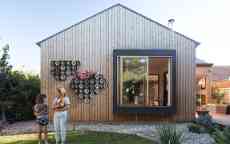
From fold-up furniture to homes for bees, industrial design on show
Industrial Design Honours students design products for urban living for humans and insects.Monday 11 November 2019
