

Key research activities
Over the years, our team at the Social Innovation Research Institute has worked to address pressing challenges across various areas of society. We believe that innovation should be accessible to everyone, and that technology should contribute to the wellbeing of all members of society.
On this page:
Digital economy and society
The rise of dating apps generates a number of issues regarding cultures of health and wellbeing, including risks of sexual assault and transmission of sexually transmitted infection (STI).
This Australian Research Council Linkage Project (in collaboration with ACON Health, Family Planning NSW and the University of Sydney) addressed the need for detailed firsthand accounts to better understand how health, wellbeing and safety were experienced and negotiated through dating apps.
Our mixed-methods study offered new insights into the role of dating and hook-up apps in everyday negotiations of consent, condom use, contraception and other aspects of sexual health, mental health and wellbeing.
The reports offer insights into key findings and recommendations for professionals engaging with young people. These insights have also informed the work of ACON Health and Family Planning NSW, along with other workers supporting young people.
Digital inclusion
-
Report: Uncovering the digital divide in the Western Parkland City
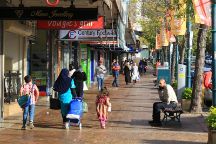
Targeted research findings benchmark the digital inclusion divide between Western Parkland City and the rest of Greater Sydney.
-
Podcast: Ensuring Equity in the Age of AI

Anthony McCosker discusses the complexities of AI in society and raises the importance of ensuring that everyone, regardless of their background, can benefit from AI.


Project SOPHIA was an exploratory study that sought to assess the extent to which changes in public awareness and engagement could be detected in response to the Victorian Government's Ending Family Violence 10-year plan.
For public policies to achieve social change, they must increase awareness, community engagement and uptake of information about the target social issue.
Using data analytical techniques, we explored public attitudes and discourse towards family violence online – correlating these to changes in public policy over time.
The study presented a richer understanding of attitudes towards family violence in Victoria. The findings informed adjustments to the Victorian Government’s outcomes metrics with a greater focus on perpetrators.
In partnership with Eastern Community Legal Centre, our researchers produced an innovative digital intervention into preventing elder abuse by disrupting negative stereotypes around ageing.
The two-phase OPERA (Older People: Equity, Respect and Ageing) Project focused on understanding how ageism is perceived and experienced by older people, and how that evidence can be used to frame co-designed digital storytelling about positive community experiences of ageing.
The issue of elder abuse is not well understood by the general public and continues to be underreported as a form of family violence in Australia. The major issues facing policy makers and service providers are the lack of evidence about the social drivers of elder abuse and the lack of evaluated primary prevention strategies.
Working with Guide Dogs Australia and DXC Technology, the teams from the Social Innovation Research Institute and the Digital Innovation Lab at Swinburne helps people with disability to have independent capacity to lead ordinary lives.
A community survey established that people with low vision and blindness face persistent challenges in accessing digital information, venues and transport, as well as overcoming isolation and managing social connections.
Our prototype Peer Support Platform seeks to address these challenges by enabling members of this growing community to gain access to high-quality information and participate in activities, events and gatherings.
The prototype also aims to promote collaboration and partnerships among the government and local communities to increase inclusivity, accessibility and community participation for people with disability.
Our researchers were commissioned by the Federal Department of Social Services in collaboration with Good Things Foundation and the eSafety Commissioner to evaluate the impact and social return on investment of Be Connected – a national response to the digital inclusion needs of older Australians (2017-2020).
The evaluation found Be Connected has a significant impact on building the digital skills, confidence and online safety practices of older Australians. The evaluation concluded that Be Connected represents an appropriate, effective and efficient investment in the digital inclusion of older Australians.
The program has developed a network of more than 3,000 partners delivering digital skills to more than 580,000 learners. Based on the positive outcomes evidenced through the evaluation, funding for Be Connected has been extended and continues to provide essential support for millions of older Australians today.
The digital age is changing humanitarianism with new modes of networked communication and interaction. Working with the Australian Red Cross, this project used Instagram as a source of insights into the way people engage with humanitarian activities.
As a popular visual social media platform, Instagram provided intimate access to the humanitarian acts and the social good values that people were engaging with, sharing and promoting to others.
Since much of the research on volunteering and humanitarian action focuses on formal activities, large-scale campaigns and global crisis events, we sought to understand what acts of service people were doing informally in their local communities.
Working alongside Social Data Analytics Lab, we were able to develop a typology of humanitarian action mapped to situations and settings across Melbourne and wider Victoria.
While many older Australians are embracing the social and health benefits of digital life, there is a disproportionate number who do not understand, cannot access, or have little experience with newer digital and online technologies.
In partnership with Telstra, City of Boroondara and Knox City Council, our researchers engaged with seniors to break down the barriers they face in learning new digital skills and participating in society online.
The project developed ways to improve and sustain seniors’ use of digital technologies through problem-based, creative digital storytelling and social media workshops.
Immediate outcomes of the project included participants reporting enhanced social connectedness and interaction through digital channels with community groups and health services, and even family and friends.
Rebadged as Social Seniors, the program was made more widely available through a partnership between Telstra and Public Libraries Victoria.

Regulating Facebook
Facebook gained worldwide media attention for banning Australians from accessing news on its platform in response to the Australian Federal Government's news media code legislation. Our panel of media experts discusses the opportunities and pitfalls of platform regulation, as well as its potential impacts on users.
Humanitarian action and environment
In response to the 2019–2020 bushfire crisis, Australians engaged in an astounding level of charitable giving and volunteering to help communities and wildlife affected by the devastating fires.
This innovative rapid scoping project identified, described and mapped the everyday humanitarianism enacted by individuals and community groups in response to the bushfire crisis.
This project aimed to investigate community engagement in a feasibility study by C4NET into the implementation of microgrids in two regional Victorian towns – Donald and Tarnagulla.
We interviewed community members and held roundtable discussions with people involved in implementing other large technology-based projects in regional communities.
A key barrier was a lack of basic knowledge of the technology – there was no shared “energy literacy” between the community and the groups implementing the technology.
To address this, we produced an energy literacy toolkit – a series of narrated and animated videos explaining fundamental terms and concepts in electricity generation and transmission, as well as their relevance to microgrids.
Extending this approach, we ran a two-day workshop at Tarnagulla Primary School, where we helped students create their own videos about electricity and power generation.
Public interest technology

Technology x Society Forum
The impact of technology on our society is one of the defining challenges and opportunities of our time. It is critical to consider how technology and innovation affects not only our industrial systems, but the entire political, social and economic systems.
Social connection
This project – funded by the Australian Research Council Linkage Grant – aimed to enhance social connection within local communities. It was a partnership involving RMIT University, Australian Red Cross, Neami National, City of Casey, City of Whittlesea, City of Wyndham and Today Design.
Running from 2022 to 2025, the project focused on outer metropolitan areas that were culturally and economically diverse and rapidly growing – exploring social infrastructure that underpins face-to-face, online and hybrid social connection.
Building on previous work by Australian Red Cross and Swinburne University of Technology, the project aimed to:
Participating councils and community organisations have implemented the Social Connection Framework, applied the social connection toolkits in practice and undertaken social connection measurement – creating important outcomes for the project.
There is considerable evidence that social connection is a significant factor contributing to employee wellbeing and is associated with higher productivity, creativity and job satisfaction, and with lower absenteeism and staff turnover.
Allianz Australia engaged Swinburne to co-design evidence-based methods to ‘boost’ social connection thinking and activities within its flexible working policy and in light of staff working from home during COVID-19.
The project aimed to generate knowledge and tools relevant to the Allianz Australia culture that would support employees to maintain and enhance their connectedness with each other and with the company, especially during COVID-19.
This is an introduction and preliminary summary of a project underway for four Melbourne councils. The project explores ‘Community Social Connection Infrastructure’ across four metropolitan Local Government Areas (LGAs).
It audits and maps place-based social connection assets and experiences using a typology developed from multiple projects about social connection funded by Australian Red Cross.
The project made recommendations regarding investments in Community Infrastructure of Social Connection in the four participating LGAs in the included council regions and provided foundations for the ARC Linkage project Activating social connection to address isolation in Australia.
In 2021 during the COVID-19 pandemic, The Salvation Army's Innovation team held a workshop with the Social Innovation Research Institute and Uniting to identify solutions to address social isolation and destigmatise loneliness.
This led to a partnership in co-designing an evidence-based social connection assessment tool for residential aged care to assist frontline and support staff, as well as family members to better understand social connection, identify and respond to gaps, and minimise loneliness and isolation.
In a nine-month pilot feasibility study, the residents and staff were given training about social connection. They also took part in co-designing and testing a simple tool to collect information about the residents' preferred social activities and places within the facility and the local community.
The tool was implemented in 2023 and 2024 across four residential aged care settings in Victoria and New South Wales to address social isolation concerns associated with depression, self-harm, cognitive decline and reduced physical health.
The tool was used by 45 older people with 32 providing feedback. Residents noted existing gaps in social connection – highlighting the tool's potential to improve care. Staff found the tool beneficial in conceptualising, valuing and facilitating consistent discussions with residents about social connection.
In addition, five e-learning modules were created as part of the project:
Social Connection Tool
Guide for Residential Aged Care
Development and Evaluation
Social Connection 101
Aimed at those working or volunteering in local government, non-profit sector and community services, this resource offers something different to the multiple works depicting the problems of loneliness and isolation.
Contact the Social Innovation Research Institute
If your organisation would like to collaborate with us to solve a complex problem, or you simply want to contact our team, get in touch by calling +61 3 9214 8180 or emailing sii@swinburne.edu.au.