

Swinburne achieves carbon neutral certification

Swinburne’s Latelab is an all-electric building, supplied with 100% purchased renewable electricity.
In summary
Swinburne has reached a major milestone in its sustainability journey, becoming one of the first universities in Victoria to be certified carbon neutral
Reducing operational emissions remains the priority, with offsetting used as a secondary option only when necessary
Researchers across the Swinburne ecosystem are striving to solve sustainability challenges facing community and industry
Swinburne University of Technology has reached a major milestone in its sustainability journey, becoming officially certified as carbon neutral under Climate Active Carbon Neutral Standard for Organisations. This achievement underscores Swinburne’s unwavering commitment to environmental responsibility and a sustainable future.
In 2019, Swinburne declared a climate emergency and pledged to achieve carbon neutrality by 2025. The certification reflects a comprehensive approach to emissions management, including a review of the emissions boundary to encompass both areas in the university’s control and those that can be influenced through supply chain decisions.
Swinburne has also maintained its spot in the top 300 in the world in the QS Sustainability Rankings 2026.
A focus on emissions reduction
For Swinburne, reducing operational emissions remains the priority, with offsetting used as a secondary option only when necessary. These efforts align with the Paris Agreement’s target of net-zero emissions by 2050.
Swinburne’s carbon offsets have been carefully selected to deliver maximum benefits to the Swinburne community and beyond. This includes supporting the Kuamut Rainforest Conservation Project in Malaysia, home to Swinburne’s Sarawak campus, reinforcing the university’s commitment to global impact.
Swinburne continues to integrate sustainability into everything we do.
“Swinburne’s commitment to emissions reduction is more than just words, it is reflected in our actions across our campus development, operations and research,” said Swinburne Vice-Chancellor and President Professor Pascale Quester.
Swinburne has purchased 100 percent renewable electricity since 2020, and is taking significant steps in campus design, management and operations.
The Latelab, an all-electric building powered entirely by renewable energy, exemplifies our approach to sustainable design. The embodied carbon emissions from the construction of the Latelab were reduced through the refurbishment of an existing building and material selection, with all residual emissions offset. Further reductions are achieved through a smart air-conditioning system that minimises energy use through occupancy sensors, plus other innovative operational approaches.
Research with a purpose
Swinburne’s commitment to reducing its environmental footprint and building a sustainable future extends to research. Swinburne’s future-focused research combines science, technology and innovation to deliver collaborative and sustainable impact.
Through the Innovative Planet flagship pillar, Swinburne partners with industry to advance sustainable technologies.
Researchers across the Swinburne ecosystem strive to solve sustainability challenges in areas including transport and mobility, infrastructure, advanced manufacturing, aviation, space and aerospace, supply chain and logistics, energy transition and many more.
“Achieving carbon neutrality is a significant step, but our sustainability journey continues. We are constantly working to identify new ways to reduce our impact on the environment,” Professor Quester said.
“We are focused on securing a sustainable future across all our endeavours and building a greener future for all.”
Learn more about our sustainability initiatives at www.swinburne.edu.au/about/strategy-initiatives/sustainability-environment/carbon-neutrality.
-
Media Enquiries
Related articles
-
- Technology
- Science
- Sustainability
- Engineering
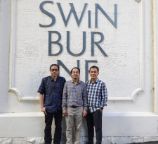
Swinburne’s international collaborations driving meaningful impact
Swinburne is collaborating with international researchers to tackle global challenges in clean energy, sustainable materials and energy-efficient buildings.
Monday 16 March 2026 -
- Technology
- Science
- Sustainability
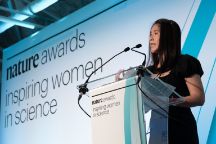
AI innovation protecting biodiversity wins global award for Swinburne researcher
Swinburne Sarawak researcher, Ts Dr Lee Sue Han has won a 2025 Inspiring Women in Science Award for her AI-driven biodiversity research, which uses artificial intelligence to identify plant species, protect ecosystems and support sustainable agriculture.
Friday 06 March 2026 -

- Science
- University
- Sustainability
Swinburne appoints Gordon Chakaodza as new Co-Director of FACET
Gordon Chakaodza has been appointed as Co-Director of the Franco-Australian Indo-Pacific Centre for Energy Transition (FACET), he brings extensive leadership experience in hydrogen and energy transition and will guide FACET’s next phase of growth
Tuesday 17 March 2026 -
- Technology
- Science
- Sustainability
- Engineering
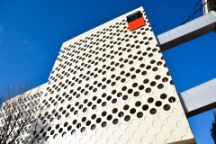
Swinburne to drive innovation in critical minerals research and industry
Swinburne will contribute its expertise to the Critical Metals for Critical Industries Cooperative Research Centre (CMCI CRC)
Thursday 12 March 2026 -
- Technology
- Science
- University
- Aviation
- Sustainability
- Engineering
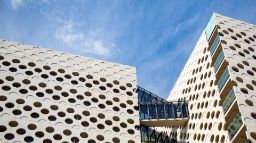
Swinburne secures AEA funding in aerospace, critical metals, sustainable steel production and protective helmet design
Swinburne University of Technology researchers have secured over $1.6 million in funding from Australia’s Economic Accelerator (AEA) Ignite grants.
Thursday 22 January 2026


