

Swinburne secures funding in Software, Neuroscience, and Media Policy

Swinburne secures funding in Software, Neuroscience, and Media Policy
In summary
Swinburne has secured three grants from the Australian Research Council to advance research in software engineering, neuroscience and media policy
A project led by Professor Tsong Chen and Dr. Huai Liu has received $538,465 to improve metamorphic testing, a common software testing method.
A project led by Dr Dragan Rangelov has received $906,695 on risky choices, with implications for sectors from finance to defence.
A project led by Professor Ramon Lobato and Honourary Professor Jock Given has received $468,508 to examine how Australians’ access to free-to-air TV is changing amid industry decline.
Swinburne University of Technology researchers have been awarded more than $1.9 million in the latest round of Australian Research Council (ARC) Discovery Projects 2026.
The three funded projects aim to advance knowledge and deliver practical benefits across software engineering, neuroscience and media policy.
Swinburne’s Deputy Vice-Chancellor Research, Professor Karen Hapgood, said she is proud Swinburne is leading research that addresses real world challenges.
“These projects highlight the world-class research being undertaken across our university, from the social and health sciences through to science and engineering - all working together towards our common goal of creating transformative impact for the betterment of society,” said Professor Karen Hapgood, Deputy Vice-Chancellor Research.
Localising failures in software testing
A project led by Professor Tsong Chen and Dr Huai Liu has received $538,465 to make metamorphic testing, a common software testing method, more effective by finding the test cases that really detect failures.
“This is the sixth metamorphic testing project awarded to Swinburne by the ARC. The ARC’s continued support has helped to establish Swinburne as the world’s leading research group in metamorphic testing, with Professor Chen and myself among the most prolific contributors in this field,” said Professor Huai Liu.
Aiming to strengthen software reliability, this project will develop new approaches to identify the specific test cases that reveal failures in metamorphic testing, a widely used software testing technique.
Metamorphic testing, adopted by ISO as a standard technique and widely regarded as the most essential testing method for AI systems, plays a vital role in ensuring AI reliability. By combining theoretical insights with innovative testing methods, the project will create advanced debugging tools and fault-tolerance technologies.
This research will support safer and more secure digital systems by improving software quality and reducing the risk of failures in critical applications.
The project investigators are Professor Tsong Chen and Dr Huai Liu.
Neural noise and risky decision-making
A project led by Dr Dragan Rangelov has received $906,695 to investigate the impact of neural noise on risk-related decision-making, with implications across sectors from finance to defense.
“We’re uncovering how tiny bursts of brain activity can sway our decisions when the stakes are high. By using advanced brain imaging and safe brain stimulation, we hope to turn these insights into practical ways to help people make smarter choices under pressure,” said Dr Dragan Rangelov.
Aiming to improve decision-making under risk, this project will investigate how neural noise in the brain influences people’s risky choices. The research will combine behavioural testing, brain imaging and non-invasive neuromodulation to uncover how the brain regulates decisions in high-stakes situations. This project will support safer and more effective decision-making across sectors from finance to defence, helping strengthen Australia’s resilience to disruptive events.
The project investigators are Dr Dragan Rangelov, Professor Jason Mattingley, Professor Christian Ruff and Dr Gilles de Hollander.
The future of free-to-air television
A project led by Professor Ramon Lobato and Honourary Jock Given has received $468,508 to explore how Australians’ access to television is changing as the free-to-air broadcast industry declines.
“Most Australian viewers have made the switch to streaming, but not everyone can afford subscription services like Netflix - and many still rely on free-to-air channels and the content they produce. Our project looks at the growing inequity in Australian television access and how it can be mitigated through policy reform, audience adaptation and technological innovation,” said Professor Ramon Lobato.
Aiming to understand the future of free-to-air television, this project will investigate how Australian television content and culture are changing amid industry decline. The research will develop methods to identify those most affected and assess how viewing experiences are evolving. This project will inform public policy, support equitable access, and foster informed debate, ensuring the sector continues to serve vital social functions, including emergency communications and media equity.
The project investigators are Professor Ramon Lobato, Honourary Professor Jock Given, Professor Catherine Johnson and Dr Alexa Scarlata.
The Discovery Projects scheme sits under the ARC’s broader Discovery Program and aims to support research by individuals or teams across all disciplines that expand the knowledge base or improve research capacity in Australia.
-
Media Enquiries
Related articles
-

- Technology
- University
Swinburne secures national funding to boost heavy vehicle safety with real-time hazard detection
Swinburne researchers will develop real-time technology that helps heavy vehicles detect at-height hazards, improving road safety across Australia.
Thursday 12 March 2026 -
- University
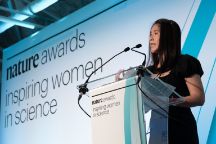
Swinburne marks International Women’s Day with powerful call to balance the scales
Swinburne has marked International Women’s Day 2026 with a hybrid event to explore this year’s theme: Balance the Scales.
Wednesday 11 March 2026 -
- Technology
- Science
- Sustainability
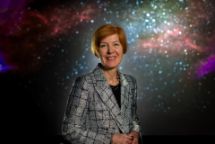
AI innovation protecting biodiversity wins global award for Swinburne researcher
Swinburne Sarawak researcher, Ts Dr Lee Sue Han has won a 2025 Inspiring Women in Science Award for her AI-driven biodiversity research, which uses artificial intelligence to identify plant species, protect ecosystems and support sustainable agriculture.
Friday 06 March 2026 -
- University
Time to dare to be bold
This opinion piece by Swinburne's Vice-Chancellor and President, Professor Pascale Quester AO, was originally published in the Herald Sun on Monday 23 February, 2026.
Monday 23 February 2026 -
- University
Swinburne's response to the national Racism@Uni survey results
Swinburne's Vice-Chancellor Professor Pascale Quester has written to all members of the Swinburne community following the release of the Racism@Uni survey results and recommendations.
Tuesday 17 February 2026


