

Changing the trajectory of reconciliation

Melinda Cilento delivered the address at the 2025 Swinburne Annual Reconciliation Lecture
In summary
Melinda Cilento delivered the address at the 2025 Swinburne Annual Reconciliation Lecture
She shared insights from two decades of engagement with reconciliation efforts across Australia
The Swinburne Annual Reconciliation Lecture is hosted by the Moondani Toombadool Centre and the National Centre for Reconciliation Practice
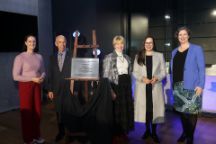
Melinda Cliento shared a personal and honest reflection on Australia’s reconciliation journey at the 2025 Swinburne Annual Reconciliation Lecture.
Melinda Cilento is currently serving as Chief Executive of the Committee for Economic Development of Australia (CEDA), and brings deep expertise from her career as a respected economist and senior business leader.
She began by remembering the historic moment in May 2000, when approximately 250,000 people walked across the Sydney Harbour Bridge in a powerful symbol of reconciliation between Indigenous and non-Indigenous Australians. Melinda spoke about how this year’s National Reconciliation Week theme, Bridging Now to Next, references that historic moment and how it’s an opportunity to reflect on what has been achieved and what hasn’t.
“As is every National Reconciliation Week, that theme is intended to connect with all of us, and as an opportunity to reflect on how we might contribute to reconciliation,” says Melinda.
Her address, titled 'Reconciliation Reflections – Views from a 20-Year Novice,' offered insights shaped by two decades of engagement with reconciliation efforts across Australia. Melinda focused on the topic of trying to understand reconciliation from both Indigenous and non-Indigenous perspectives.
“The agenda of reconciliation remains as critical as ever for Australia. Without the full engagement of First Nations people in the life of this country, Australia is and will be forever diminished. Yet I feel we are still not taking reconciliation and First Nation rights and empowerment seriously,” says Melinda.
Based on her own experience, Melinda highlighted four things that could change the trajectory of reconciliation:
Firstly, reconciliation will only succeed if non-Indigenous people start playing their part as genuine advocates and allies. This means delivering Acknowledgements of Country with authenticity and respect, speaking out against racism, championing First Nations rights, engaging others in conversations about our shared history, and embedding reconciliation in both personal lives and organisational culture.
Secondly, we need as many tools as possible to advance reconciliation, including Reconciliation Action Plans. If you do a Reconciliation Action Plan well, you change hearts, cultures and minds. They are not perfect, but a way to engage and a way to lift expectations.
Thirdly, we need truth telling more than ever in this country. Without sharing our stories, encouraging honest reflection, and upholding and respecting human rights, any progress we make will lack a sustainable foundation. As a nation, we need to get an honest view of our history.
Finally, we need to invest more in reconciliation.
“If we are going to get serious about truth telling, we need to see a serious investment to ensure a shared understanding about what it means for Indigenous and non-Indigenous people alike... and can I make this point, really, really clearly, this is not investment in reconciliation that comes at the expense of any other funding for First Nations communities, programs and people. This is about funding for the whole nation and should be funded as such. It shouldn’t be out of First Nations budgets... it needs to be acknowledged as such,” says Melinda.
The Swinburne Annual Reconciliation Lecture is hosted by the Moondani Toombadool Centre. The evening was officially opened with a Acknowledgement of Country from Wurundjeri man Colin Hunter IV. The annual lecture is an integral part of Swinburne’s Reconciliation Plan. It seeks to deepen national understanding of reconciliation and promote systemic change through engagement, outreach, education, and research.
-
Media Enquiries
Related articles
-
- Technology
- Education
- Science
- University
Swinburne helps accelerate medical innovations through ACMD partnership
Swinburne is a partner in the new hospital-based engineering research centre, the Aikenhead Centre for Medical Discovery (ACMD).
Thursday 11 June 2026 -

- Student News
- University
Indigenous students connect through sport at Intervarsity Day
Indigenous students from across Victoria came together for a landmark intervarsity event, building connection and community through competition.
Wednesday 17 June 2026 -

- University
Further update on Windsor Community Children's Centre
Swinburne’s Council made the decision to approve, in principle, the sale of the property for $8.4m subject to the completion of negotiations with Stonnington.
Tuesday 02 June 2026 -
- Social Affairs
- University
All in for National Reconciliation Week at Swinburne
Swinburne hosted events across our three Melbourne campuses to mark National Sorry Day and National Reconciliation Week 2026
Wednesday 10 June 2026 -
- University
Swinburne maintains top 300 spot in QS World University Rankings 2027
Swinburne has placed 291 in the QS World University Rankings 2027, maintaining its top 300 spot
Thursday 18 June 2026


