

From waste to walls: how your morning coffee can supercharge sustainable construction

Swinburne's Dr Yat Wong firing bricks made from coffee waste
In summary
- Swinburne’s Dr Yat Wong has invented a sustainable brick made from coffee waste
- The product has landed an IP licensing deal with Green Brick to bring the product to market
- The brick could reshape Australia’s construction industry by lowering its carbon footprint
Bricks made from used coffee grounds could soon reshape Australia’s construction industry, and its carbon footprint, thanks to researchers at Swinburne University of Technology.
Led by Dr Yat Wong, the project has now reached a commercial milestone: an IP licensing deal with Green Brick to bring the product to market with the support of Hampton Capital. The low-emission bricks are made by blending used coffee waste from cafes and restaurants with clay, then adding an alkali activator. This process allows the bricks to be baked at temperatures below 400 degrees Celsius, 80 per cent lower than traditional firing temperatures.
“It’s lighter on energy, faster to produce, and designed to reduce electricity-related CO₂ emissions by up to 80 per cent per unit,” Dr Wong said.
Dr Yat Wong
Traditional brick manufacturing is energy-intensive and relies heavily on high-temperature kilns powered by fossil fuels. By contrast, this new method dramatically lowers the environmental toll, providing a sustainable alternative for an industry under increasing pressure to decarbonise.
Sustainability isn’t the only benefit: the bricks double the Australian minimum standard for strength.
Green Brick’s founder, Philip Ng, says it’s not just about disrupting the brick, it’s about redefining how construction materials are valued in a net-zero economy.
“For the last century, materials have been judged by one thing: cost per square metre, but in the next chapter, we’ll judge them by carbon, transparency, and circularity. And those metrics favour a whole new kind of product,” Ng says.
Coffee consumption in Australia is booming, with over 1.3 million cups sold every day, generating roughly 10,000 tonnes of spent coffee grounds each year. Most of that waste ends up in landfill, where it emits methane, a potent greenhouse gas. Redirecting that waste stream into a valuable building product offers a dual environmental benefit: reducing both landfill and emissions.
-
Media Enquiries
Related articles
-
- University
Swinburne welcomes calls for reform to Australia’s research ecosystem
Swinburne backs the call for urgent action to build capability and new industries in the Ambitious Australia report.
Tuesday 17 March 2026 -
- Technology
- University
Swinburne secures national funding to boost heavy vehicle safety with real-time hazard detection
Swinburne researchers will develop real-time technology that helps heavy vehicles detect at-height hazards, improving road safety across Australia.
Thursday 12 March 2026 -
- University
Swinburne marks International Women’s Day with powerful call to balance the scales
Swinburne has marked International Women’s Day 2026 with a hybrid event to explore this year’s theme: Balance the Scales.
Wednesday 11 March 2026 -
- Technology
- Science
- Sustainability
- Engineering
Swinburne’s international collaborations driving meaningful impact
Swinburne is collaborating with international researchers to tackle global challenges in clean energy, sustainable materials and energy-efficient buildings.
Monday 16 March 2026 -
- Technology
- Science
- Sustainability
AI innovation protecting biodiversity wins global award for Swinburne researcher
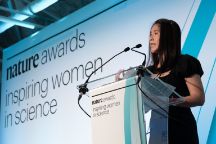
Swinburne Sarawak researcher, Ts Dr Lee Sue Han has won a 2025 Inspiring Women in Science Award for her AI-driven biodiversity research, which uses artificial intelligence to identify plant species, protect ecosystems and support sustainable agriculture.
Friday 06 March 2026


