

Swinburne’s space stars on show at Parliament House

In summary
Swinburne University of Technology hosted a three-day exhibition at Queens Hall in Victoria’s Parliament House
The showcase highlighted the innovative work being done at Swinburne to support the burgeoning space science sector
Visitors test-drove a virtual lunar rover, delved into the cosmos through a virtual reality experience, and chatted with students involved with Swinburne’s space science programs for high schools
The global space industry propels innovation and economic growth on Earth, and is projected to be worth $1 trillion by 2040. As it brings new jobs to Victoria, Swinburne University of Technology is helping educate the future workforce to power this industry at every level, from high school to vocational training to PhD research.
Swinburne’s Space Showcase at Parliament House highlighted groundbreaking research and industry collaborations across astronomy and astrophysics, supercomputing, and world-class space technologies and materials.
“At Swinburne, we’re passionate about driving the technology and innovation needed to propel the space sector. As Australia’s University of the Year for Space, and ranked number 50 in the world for Space Science, we’re proud to display our world-class space capabilities on Victoria’s parliamentary stage," says Deputy Vice-Chancellor, Research, Professor Karen Hapgood.
“As the Education State, backed by our major manufacturing industry, Victoria is well placed to support the growth of the space industry.”
-
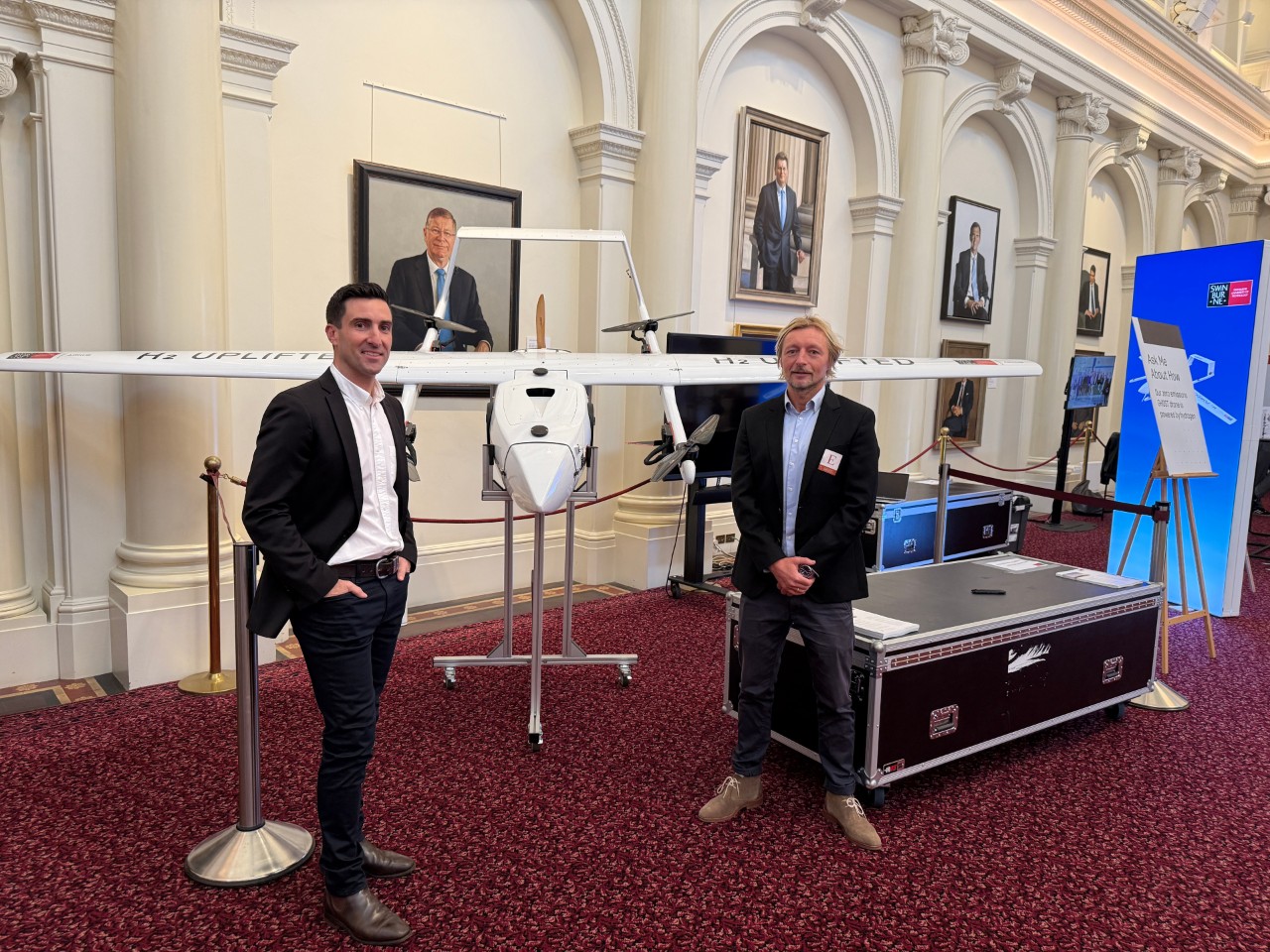 Swinburne's next-gen hydrogen-powered GHOST drone
 -
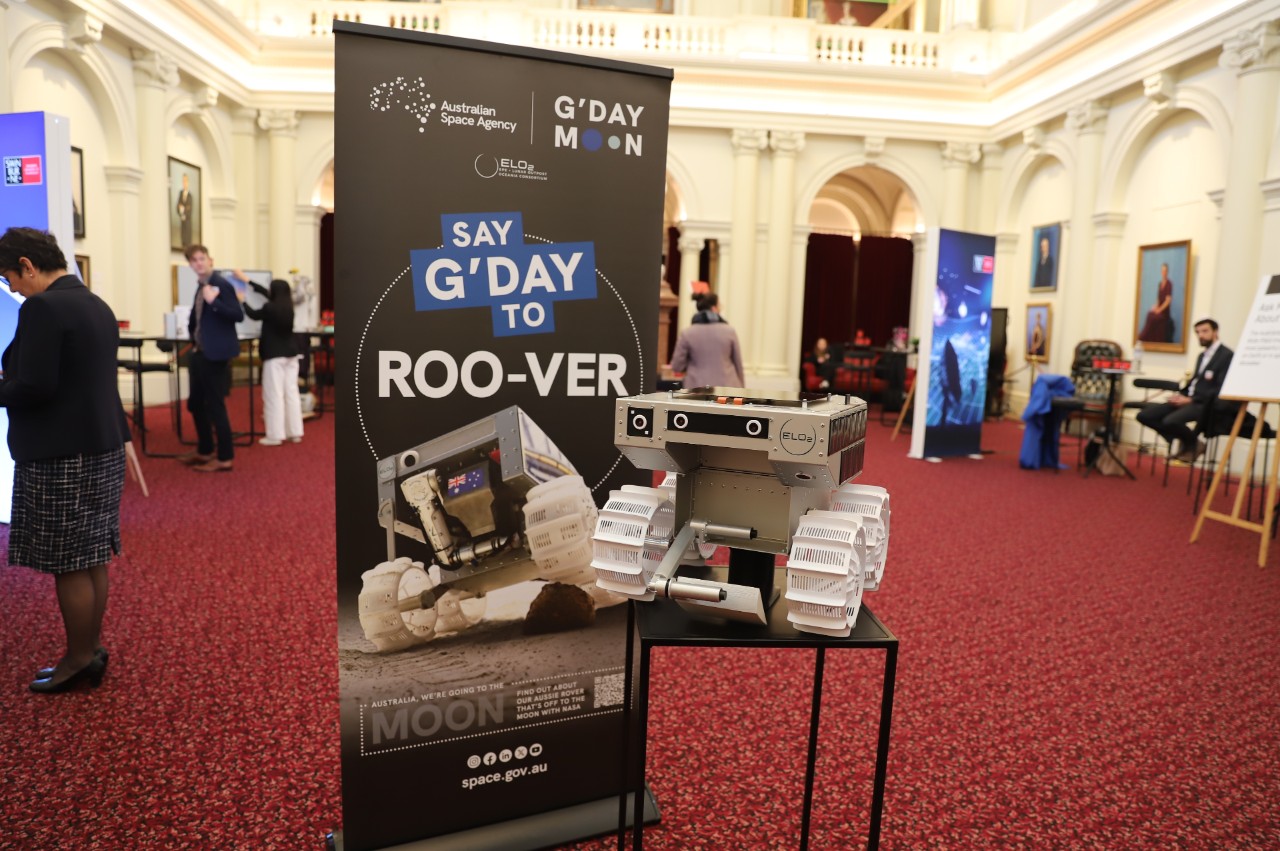 A model of Roo-ver – Australia’s first lunar rover
 -
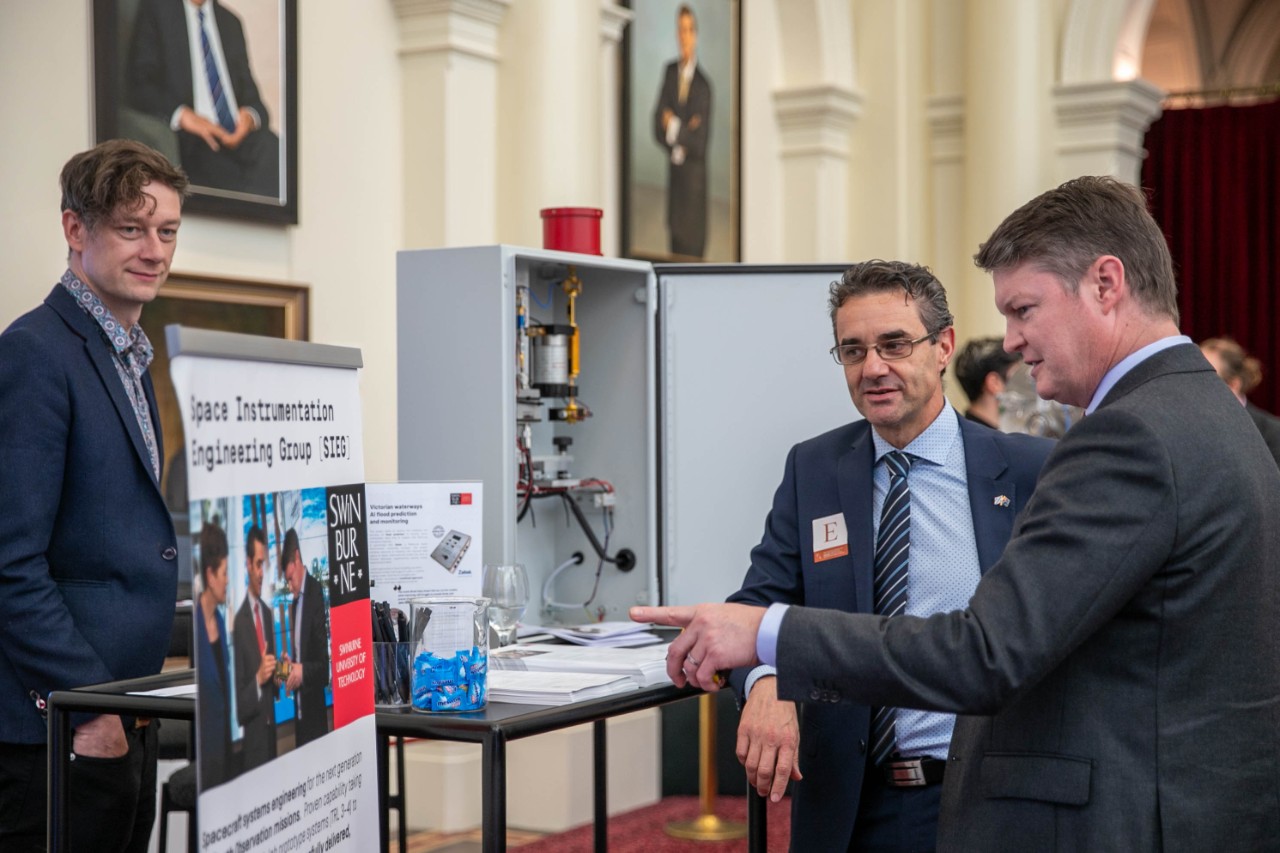 Space Instrumentation Engineering Group with Ben Carroll, Deputy Premier of Victoria
 -
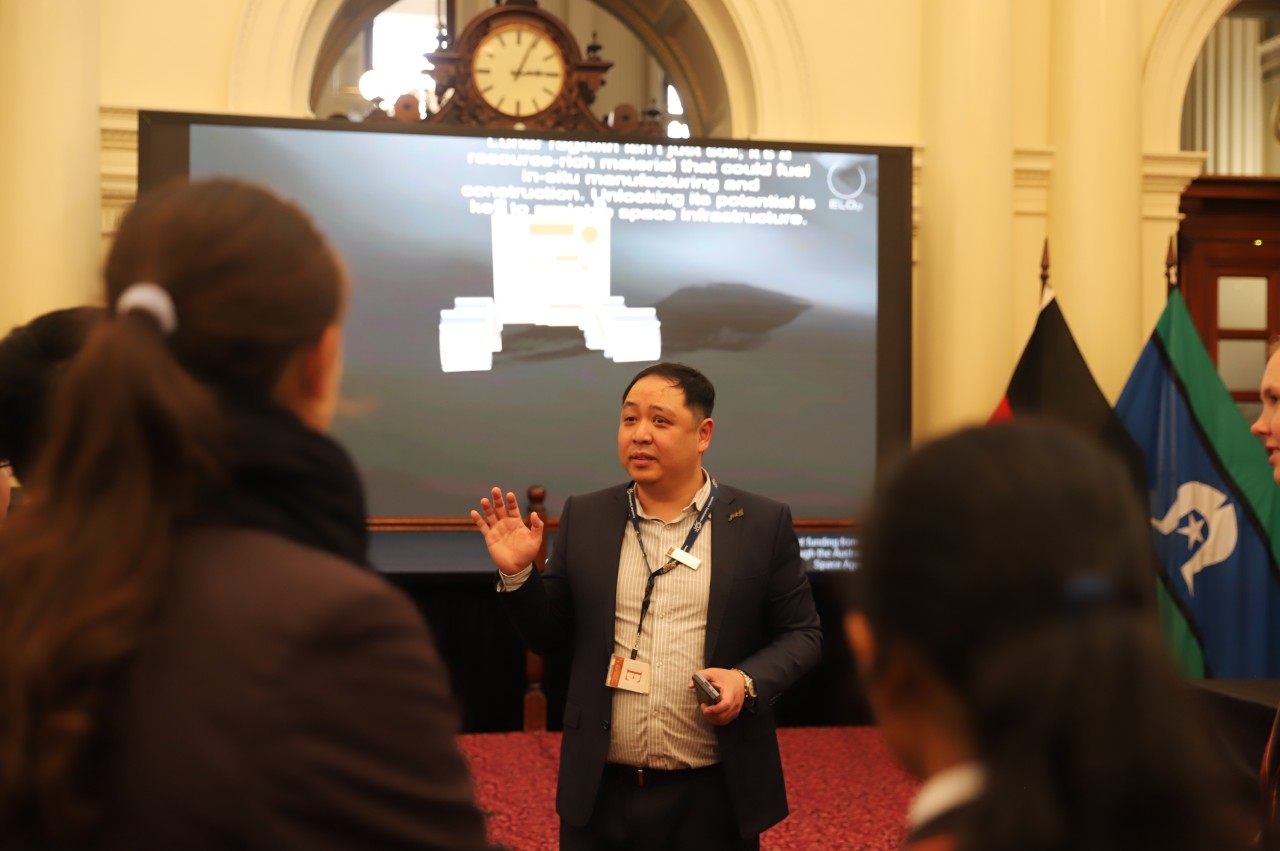 A/Prof. Andrew Ang speaking sharing Swinburne's Lunar Rover Experience
 -
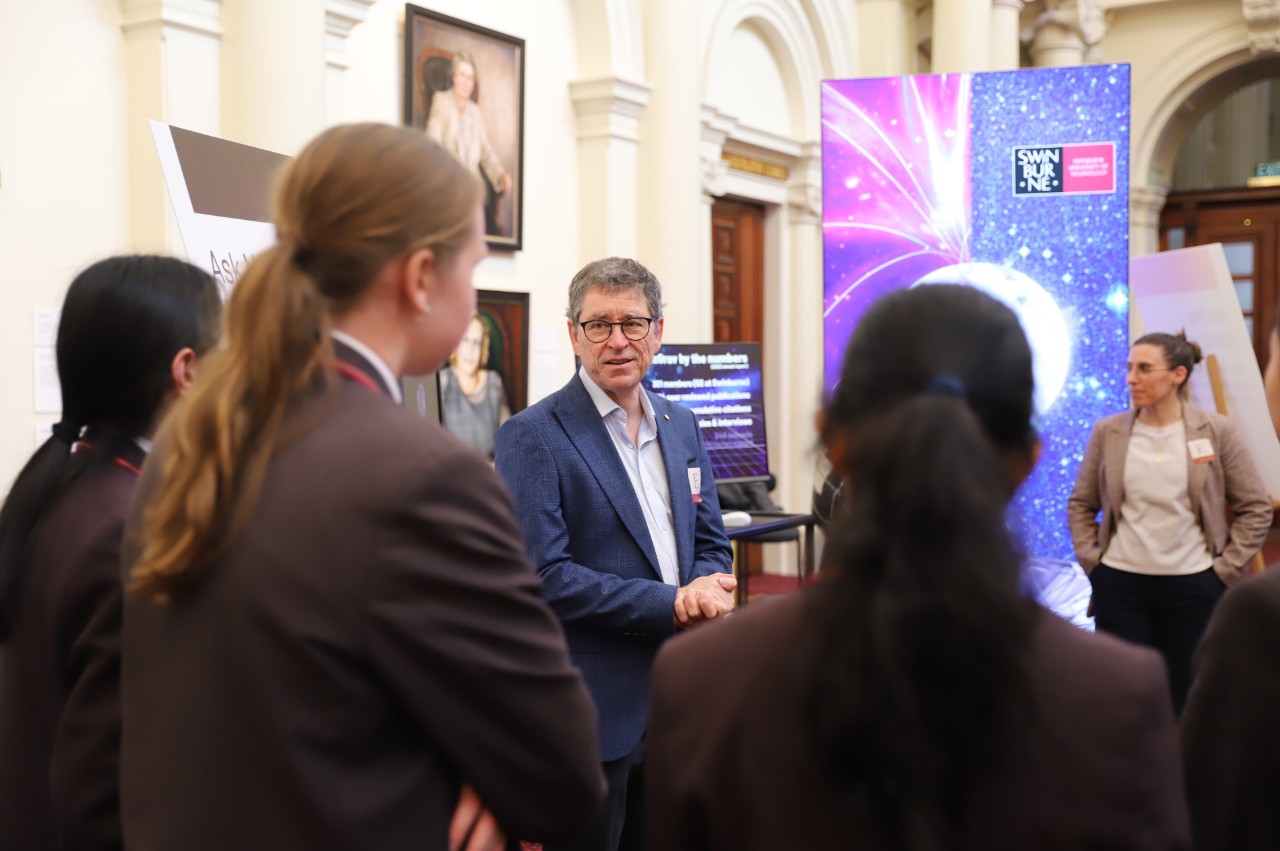 Haileybury high school students hearing from Prof. Matthew Bailes
 -
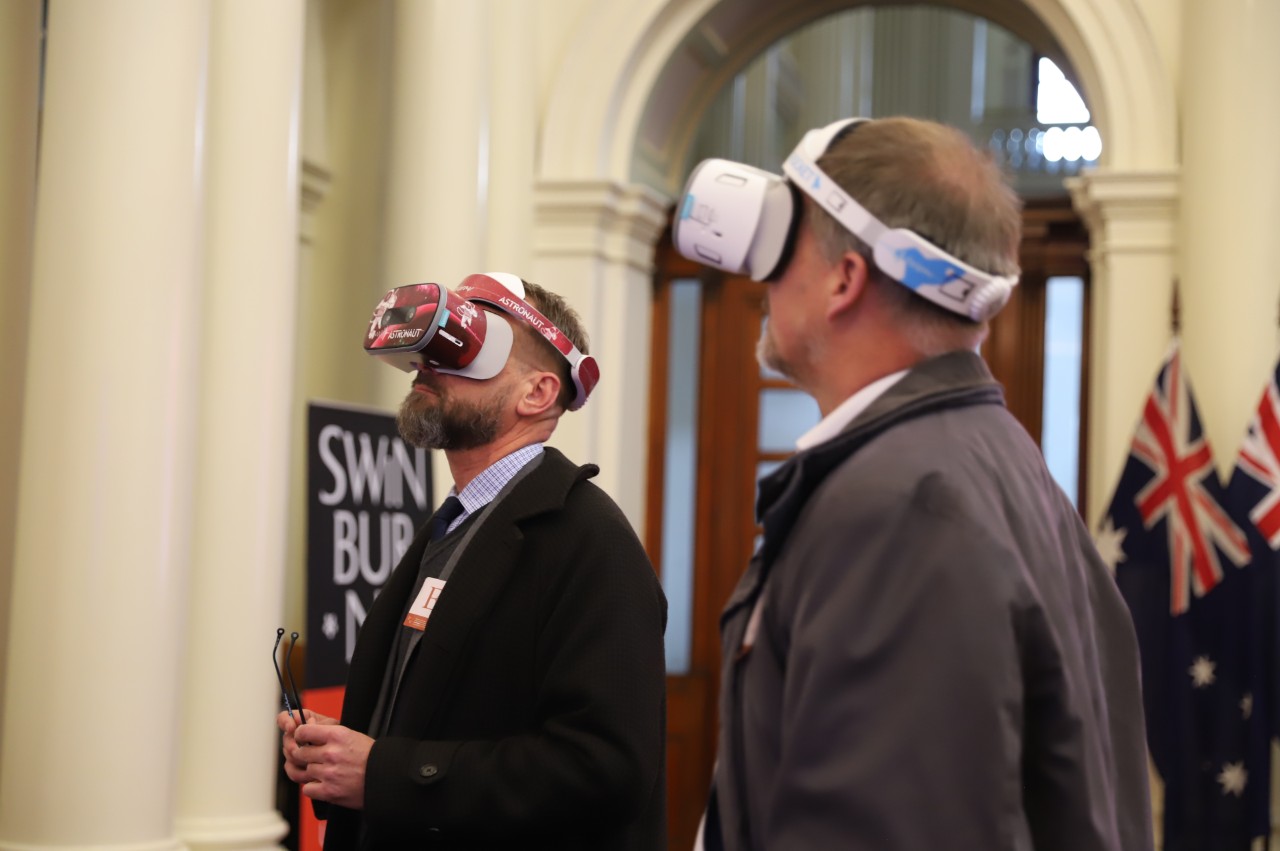 Visitors delving into the cosmos with OzGrav's virtual reality experience
 -
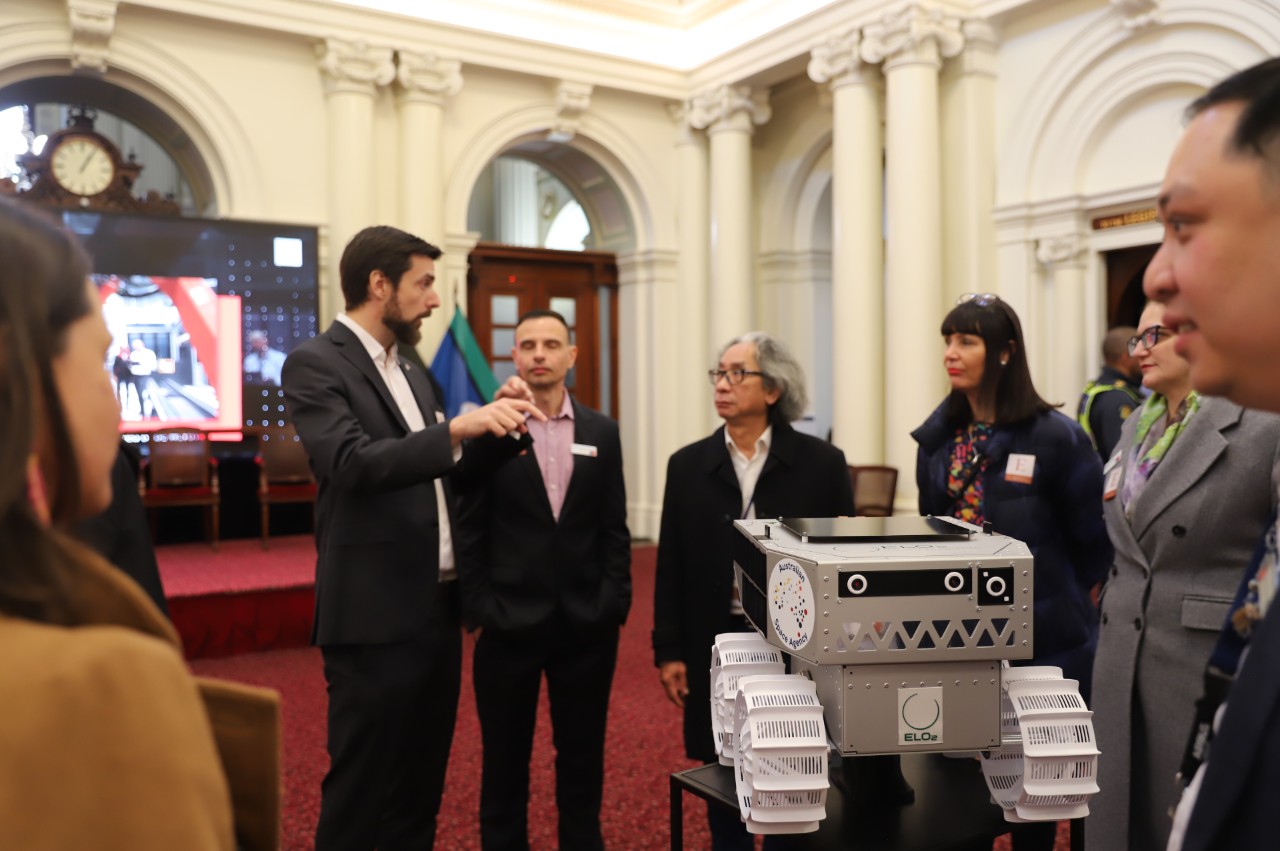 A glimpse of a model of Roo-ver along with presentations from Sam Webster, Deputy Director of ELO2
 -
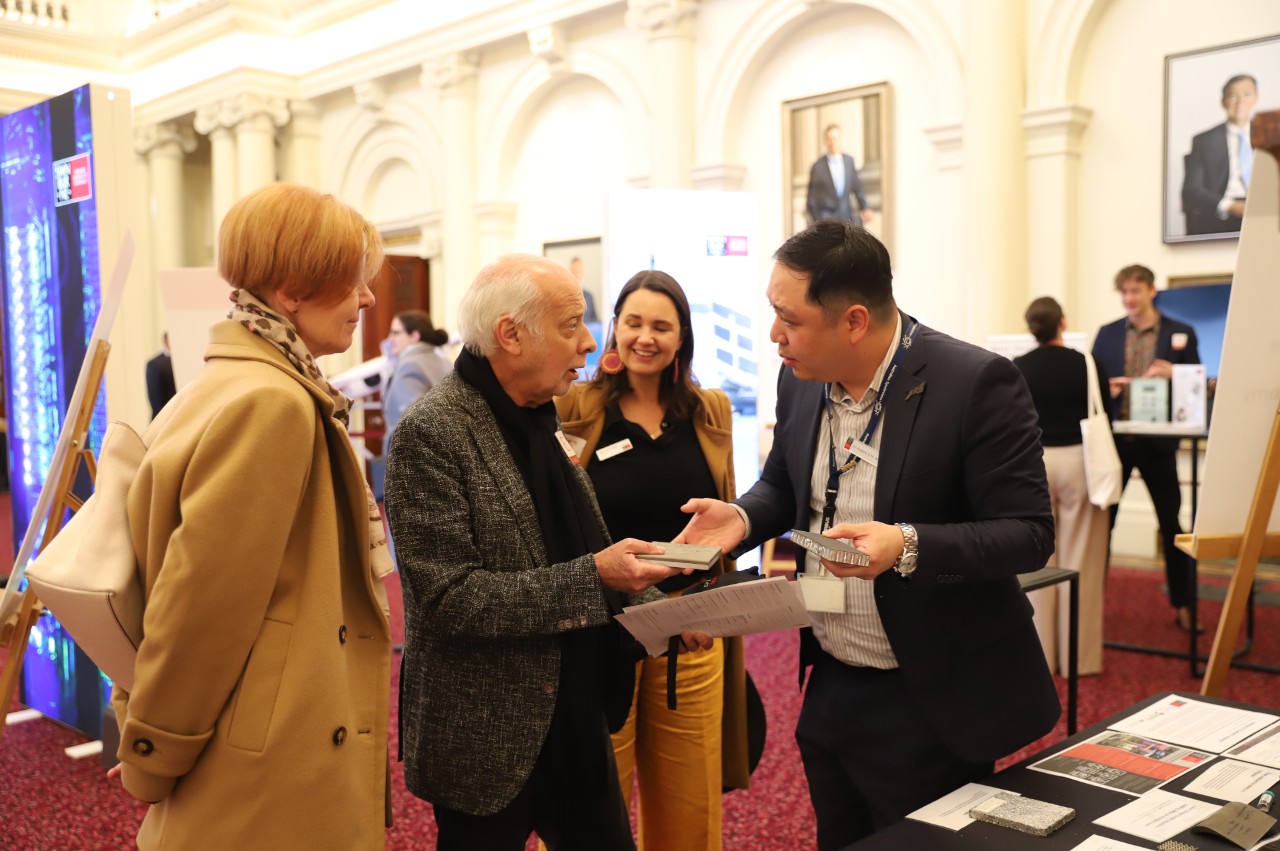 A/Prof. Andrew Ang speaking to attendees including Vice-Chancellor Professor Pascale Quester
 -
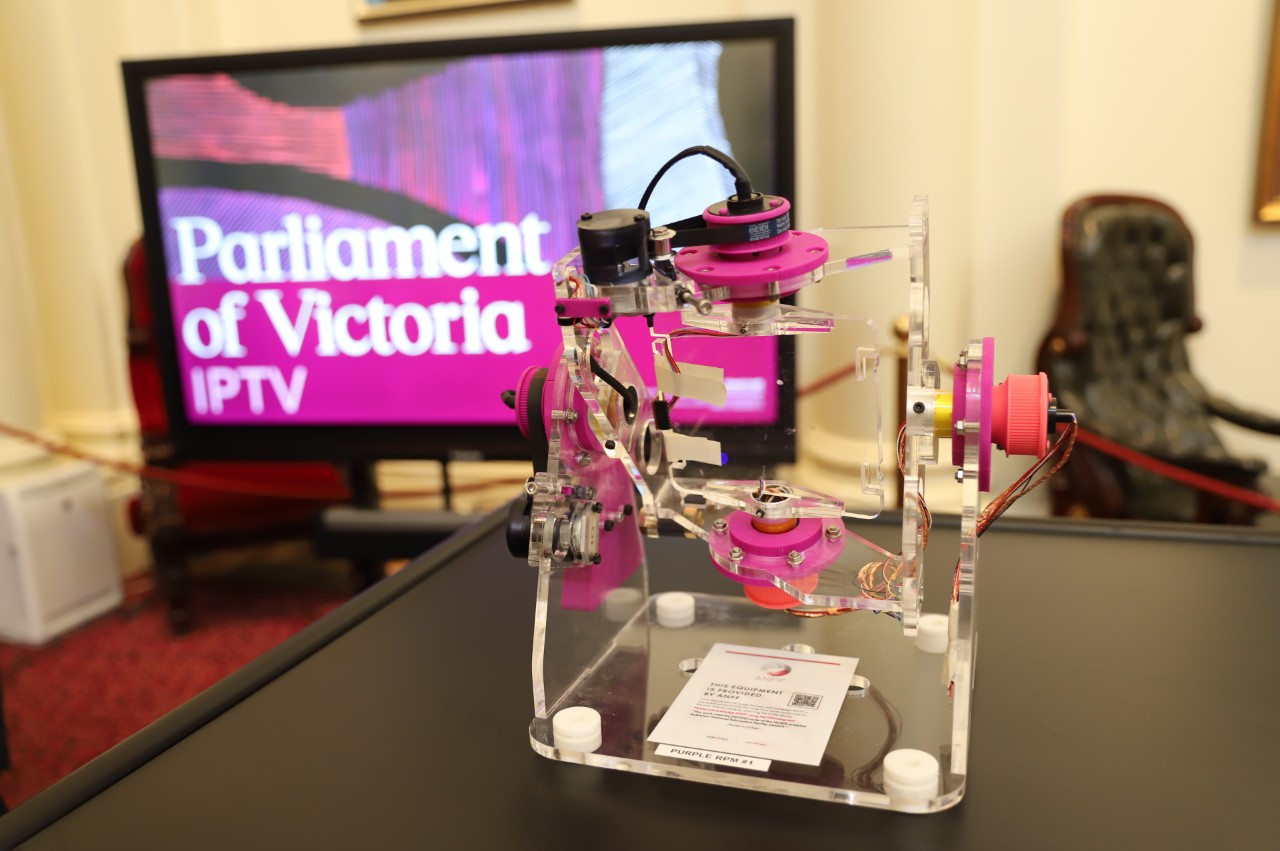 Showcasing our Digital Manufacturing Capabilities


Exploring Swinburne’s space capabilities
Throughout the exhibition, visitors heard from Swinburne’s star astrophysicists and astronomers. Among those onsite were 2024 Prime Minister’s Prize for Science winner, Professor Matthew Bailes, as well as Swinburne’s Chief Scientist, Professor Virginia Kilborn.
Researchers from Swinburne’s Swinburne’s Space Technology and Industry Institute were available to speak to politicians on everything from advanced manufacturing and materials for space, to space robotics, interpreting Earth Observation data, and combatting space radiation’s effects.
Major Victorian Government-funded projects that were on display included the Ngarrgu Tindebeek supercomputer, the Aerostructures Innovation Research (AIR) Hub which pioneers groundbreaking research into space and complex ecosystems on Earth, and our next-gen zero emissions hydrogen drone.
Also on show was the work of Swinburne’s researchers at the world-leading ARC Centre of Excellence for Gravitational Wave Discovery (OzGrav), whose VR experiences bring the Universe to students, educators and the public.
Guests were also treated to a glimpse of a model of Roo-ver – Australia’s first lunar rover – along with presentations from Sam Webster, Deputy Director of ELO2, the consortium delivering the Roo-ver Mission. Swinburne is a key research partner in the mission, which will see ELO2 design, build, and operate a historic Aussie-made rover on the Moon later this decade. The mission is made possible by a grant from the Australian Space Agency, who has partnered with NASA.
Our researchers will contribute vital space radiation and lunar dust mitigation technology, supporting Roo-ver’s successful deployment on the Moon’s harsh surface.
-
Media Enquiries
Related articles
-
/crop-swinburne-virtual-universe-show-2.jpg/_jcr_content/renditions/cq5dam.web.256.144.jpeg)
- University
- Science
Swinburne welcomes Federal Government’s new Statement on Space
Swinburne University of Technology has welcomed the Australian Government’s new Statement on Space.
Tuesday 21 July 2026 -

- University
- Aviation
- Engineering
Swinburne appoints Dr Patryk Burka as AIR Hub Director
Dr Patryk Burka has been appointed as Director of Swinburne’s Aerostructures Innovation Research Hub (AIR Hub)
Monday 04 May 2026 -
- Technology
- Science
- University
- Aviation
- Sustainability
- Engineering
Swinburne secures AEA funding in aerospace, critical metals, sustainable steel production and protective helmet design
Swinburne University of Technology researchers have secured over $1.6 million in funding from Australia’s Economic Accelerator (AEA) Ignite grants.
Thursday 22 January 2026 -

- Astronomy
- Technology
- Science
- Engineering
Meet Swinburne’s Roo-ver Mission team
Roo-ver will be Australia's first lunar rover, and it’s being designed, built and tested in Australia. Swinburne is playing a key role in the design and construction of Roo-ver, through its involvement in the ELO2 Consortium.
Wednesday 26 November 2025 -

- Technology
- Health
- Science
- University
- Aviation
- Engineering
Swinburne’s Mobile Innovation Lab hits the road
Swinburne’s Mobile Innovation Lab is a cutting-edge mobile facility designed for research, industry collaboration, STEM education, training and outreach.
Thursday 06 November 2025
/crop-swinburne-virtual-universe-show-2.jpg/jcr:content/renditions/cq5dam.web.1024.576.jpeg)


