

Swinburne-led fungi experiment blasts off to the International Space Station

Students from Haileybury College in collaboration with Swinburne University
In summary
- An experiment developed by Swinburne has blasted off to space containing three species of fungi - Lion’s Mane, Turkey’s Tail and Cordyceps
- The experiment, spearheaded by Swinburne's astrophysicists Dr Sara Webb and Dr Rebecca Allen, was designed, tested, and built with the assistance of high school students from Haileybury College
- The students involved in the project are particularly interested in understanding how the fungi’s properties might be harnessed to support astronaut health for long-duration space missions
In the early hours of Sunday 4 August 2024 (AEST), a rocket payload containing three species of fungi – Lion’s Mane, Turkey’s Tail and Cordyceps – embarked on a journey to the International Space Station (ISS), as part of an experiment developed by Swinburne University of Technology.
The experiment, spearheaded by Swinburne's astrophysicists Dr Sara Webb and Dr Rebecca Allen, was designed, tested, and built with the assistance of high school students from Haileybury College. This collaborative effort is part of the Swinburne Haileybury International Space Station Experiment (SHINE) program, which aims to provide students with hands-on experience in space science by involving them in the creation of experiments that explore the effects of microgravity.
"We're extremely excited to see the launch of our 6th experiment to the International Space Station! On board the SpaceX NG-21 resupply mission are our three mushroom species, ready to live in microgravity for the next month," said Dr Webb.
"Although our vials are too small to see the full fruiting bodies of the mushrooms, we'll be able to explore how the networks grow and adapt to the microgravity environment."

Fungi sample
Fungi to provide space survival insights
The fungi samples, which include the root-like mycelium networks from which mushrooms grow, are expected to yield valuable insights into how these organisms survive and adapt to the unique conditions of space. The students involved in the project are particularly interested in understanding how the fungi’s properties might be harnessed to support astronaut health for long-duration space missions.
The fungi are making their way to the ISS aboard a SpaceX Falcon 9 rocket, part of NASA's Cygnus NG-21 cargo resupply mission. This experiment marks Swinburne’s sixth payload to the ISS, continuing a tradition of innovative research that has previously grown microgreen seeds in space and even the components to create the first yogurt in space.
Dr Webb highlighted the significance of the SHINE program, noting that it not only contributes to scientific research, but also inspires the next generation of science, technology, engineering, and mathematics (STEM) leaders.
"What makes this experiment extra special is that it was designed with the assistance of high school students from Haileybury College as part of our SHINE program. Each year we task expectational groups of students from the college to design and test multiple experiments, preparing to finalise what is sent to space the following year. Their work over the years highlights how bright the future of STEM in this country is, with the next generation leading the way," she said.
Since its inception in 2017, the SHINE program has been dedicated to providing secondary students with a unique opportunity to design, build, and program their own experiments to be conducted aboard the ISS. By engaging in this cutting-edge research, students gain valuable skills and experiences that prepare them for future STEM careers.
As the experiment unfolds in the microgravity environment of the ISS, researchers and students alike are eager to discover what insights the fungi will reveal, potentially paving the way for new advancements in space exploration and health science.
-
Media Enquiries
Related articles
-
- Astronomy
- Film and television
- Social Affairs
MTC Future Aspirations camp blends STEM and Indigenous culture
The Moondani Toombadool Centre hosted 25 Aboriginal and Torres Strait Islander high school students at its recent Future Aspirations Camp, where it blended cultural activities with university experiences
Monday 02 March 2026 -
- Technology
- Science
- Sustainability
- Engineering
Swinburne’s international collaborations driving meaningful impact
Swinburne is collaborating with international researchers to tackle global challenges in clean energy, sustainable materials and energy-efficient buildings.
Monday 16 March 2026 -
- Technology
- Science
- Sustainability
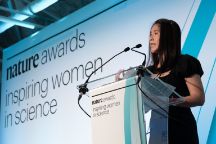
AI innovation protecting biodiversity wins global award for Swinburne researcher
Swinburne Sarawak researcher, Ts Dr Lee Sue Han has won a 2025 Inspiring Women in Science Award for her AI-driven biodiversity research, which uses artificial intelligence to identify plant species, protect ecosystems and support sustainable agriculture.
Friday 06 March 2026 -

- Science
- University
- Sustainability
Swinburne appoints Gordon Chakaodza as new Co-Director of FACET
Gordon Chakaodza has been appointed as Co-Director of the Franco-Australian Indo-Pacific Centre for Energy Transition (FACET), he brings extensive leadership experience in hydrogen and energy transition and will guide FACET’s next phase of growth
Tuesday 17 March 2026 -
- Technology
- Science
- Sustainability
- Engineering
Swinburne to drive innovation in critical minerals research and industry
Swinburne will contribute its expertise to the Critical Metals for Critical Industries Cooperative Research Centre (CMCI CRC)
Thursday 12 March 2026


