

Swinburne appoints new Director of Innovative Planet Research Institute

Professor Allison Kealy, a leader in geodesy, joins Swinburne as the inaugural Director of the university's Innovative Planet Research Institute.
In summary
- Professor Allison Kealy has been appointed as the inaugural Director of Swinburne University's Innovative Planet Research Institute.
- A leader in geodesy, Allison will be responsible for driving the strategic direction of Swinburne’s sustainability research agenda.
- The Innovative Planet Research Institute was established to advance cross-disciplinary research to support a sustainable future.
Leading geodesy expert, Professor Allison Kealy, has been appointed as the inaugural Director of Swinburne University's Innovative Planet Research Institute.
The Innovative Planet Research Institute embodies Swinburne’s passion for sustainability and dedication to achieving a carbon neutral world by 2050 or earlier.
A key driver of Swinburne’s Horizon 2025 Strategic Plan, the Institute’s cross-disciplinary research brings together sustainable materials, clean energy and hydrogen, the circular economy, urban sustainability, smart energy management and supply chain decarbonisation, with social sciences and humanities, to help create a sustainable future.
Swinburne's Professor Karen Hapgood, Deputy Vice-Chancellor, Research, welcomed Professor Kealy to the new role.
"As the inaugural Director of the Innovative Planet Research Institute, Professor Allison Kealy will drive Swinburne’s sustainability research agenda, making progress and impact on critical sustainability challenges facing the world," Professor Hapgood said.
“I look forward to seeing engagement, collaboration and partnerships between research, industry and government within our flagship research area, Innovative Planet, and in line with the United Nations Sustainable Development Goals (UNSDG).”
A leader and expert in geodesy
Professor Kealy is a proven leader and expert in the field of geodesy – the science of measuring Earth’s shape, orientation and gravity. Professor Kealy has a specific research interest in sensor fusion, Kalman filtering and estimation theory, high precision satellite positioning, GNSS quality control, wireless sensor networks and located based services.
With an undergraduate degree in Land Surveying from The University of the West Indies, and a PhD in GPS and Geodesy from the University of Newcastle, Professor Kealy has had an extensive academic career creating impact across the world.
Additionally, Professor Kealy brings a raft of industry and government experience to Swinburne, most recently as the Executive Director of Surveying and Spatial at the Department of Transport and Planning within the Victorian Government. She has also held senior positions at SmartSat CRC, Sir Lawrence Wackett Centre, RMIT University and The University of Melbourne.
Utilising her wealth of research, industry and government experience, Professor Kealy will lead the Innovative Planet Research Institute in advancing ground-breaking technology solutions that tackle, head-on, the sustainability and regeneration challenges facing our society today.
-
Media Enquiries
Related articles
-
- Astronomy
- Film and television
- Social Affairs
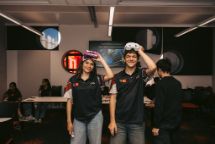
MTC Future Aspirations camp blends STEM and Indigenous culture
The Moondani Toombadool Centre hosted 25 Aboriginal and Torres Strait Islander high school students at its recent Future Aspirations Camp, where it blended cultural activities with university experiences
Monday 02 March 2026 -
- Technology
- Science
- Sustainability
- Engineering
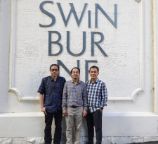
Swinburne’s international collaborations driving meaningful impact
Swinburne is collaborating with international researchers to tackle global challenges in clean energy, sustainable materials and energy-efficient buildings.
Monday 16 March 2026 -
- Technology
- Science
- Sustainability
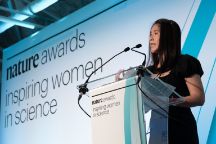
AI innovation protecting biodiversity wins global award for Swinburne researcher
Swinburne Sarawak researcher, Ts Dr Lee Sue Han has won a 2025 Inspiring Women in Science Award for her AI-driven biodiversity research, which uses artificial intelligence to identify plant species, protect ecosystems and support sustainable agriculture.
Friday 06 March 2026 -

- Science
- University
- Sustainability
Swinburne appoints Gordon Chakaodza as new Co-Director of FACET
Gordon Chakaodza has been appointed as Co-Director of the Franco-Australian Indo-Pacific Centre for Energy Transition (FACET), he brings extensive leadership experience in hydrogen and energy transition and will guide FACET’s next phase of growth
Tuesday 17 March 2026 -
- Technology
- Science
- Sustainability
- Engineering
Swinburne to drive innovation in critical minerals research and industry
Swinburne will contribute its expertise to the Critical Metals for Critical Industries Cooperative Research Centre (CMCI CRC)
Thursday 12 March 2026


