

Healthy hearts for an overlooked group

Dr Clara Zwack worked from a Yooralla Business Enterprise to collect and analyse participant health data
In summary
- This Swinburne-led research works with health providers to improve the health and wellbeing outcomes for young people with an intellectual disability
- The research has undertaken the largest data collection of young people with an intellectual disability in Australia
- Young people with an intellectual disability have a high risk of heart disease and early death
The largest study to collect heart health data from young Australians with an intellectual disability has inspired new findings on how to minimise health inequities.
Young people with intellectual disabilities are woefully understudied. Because the research can be difficult – there are challenges with recruitment and getting consent – retrospective data is often used, or even results from a broader demographic of people with disability.
Enter Swinburne researcher Dr Clara Zwack, who was inspired to embark on a PhD exploring screening for risk factors in this group to improve their health and wellbeing outcomes and help minimise health inequities. She was supervised by an Iverson Health Innovation Research Institute team – nursing clinician, researcher and lecturer Professor Rachael McDonald and expert in cardiometabolic diseases Associate Professor Elisabeth Lambert – and worked in tandem with industry partners Yooralla and Goulburn Options in Seymour.
They found that young people with an intellectual disability have a high risk of heart disease, which may be leading to early death.
There are many factors contributing to this statistic, including lower levels of physical activity, not participating in organised activity, poor diet, lacking basic health knowledge and higher levels of stress.
The good news? With better awareness and support from health professionals, early detection and prevention of health issues for 18- to 45-year-olds with intellectual disabilities could save lives.
Dr Zwack says stress and anxiety is not commonly considered in this population. Building interventions to start addressing these issues could make a significant difference.
“Knowing about these risk factors means that we can create user-centred and user-led interventions, including digital interventions, physical interventions and ensure mainstream disability services are aware of the exclusion.
“People with intellectual disabilities were being seen by health professionals, but these issues weren’t being detected,” said Dr Zwack.
Early intervention could improve the health of young people with an intellectual disability later on in their lives, it’s more cost effective and it can reduce risk of early death.
The team have recommended additional measures be applied to young people with an intellectual disability so cardiovascular health issues are identified. For example, regular blood checks wouldn’t usually occur for a 20-year-old, but are warranted for a 20-year-old with an intellectual disability.
“Having a profile for a demographic like this one allows health professionals to develop and use targeted and more effective diagnostic measures,” said Dr Zwack.
The researchers found a community keen to volunteer for the study, with strong connections to their health providers.
“People with intellectual disabilities are passionate about their own health and do want to live a healthy life. They know and understand their own health and they want to be as healthy as possible, but need support that health professionals are not providing at the moment,” Dr Zwack says.
“A multidisciplinary team is needed to solve complex problems and issues. No single profession can address the complexity here.”
-
Media Enquiries
Related articles
-

- Astronomy
- Film and television
- Social Affairs
MTC Future Aspirations camp blends STEM and Indigenous culture
The Moondani Toombadool Centre hosted 25 Aboriginal and Torres Strait Islander high school students at its recent Future Aspirations Camp, where it blended cultural activities with university experiences
Monday 02 March 2026 -
- Technology
- Social Affairs
- Health
- Science
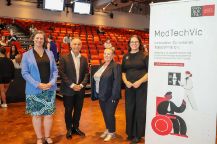
Driving meaningful progress in assisted living tech
Swinburne’s MedTechVic hub annual showcase brings together research, lived experience and practical innovation in assisted living technologies. This year's theme was ‘Real innovation, real lives’, highlighting the hub’s ongoing commitment to driving inclusive innovation.
Thursday 12 February 2026 -

- Design
- Technology
- Health
- Law
- Education
- Business
- Science
- University
- Engineering
Swinburne moves up in Times Higher Education World University Rankings by Subject 2026
Swinburne University of Technology has performed strongly in the Times Higher Education World University Rankings by Subject 2026, with two subjects moving up the ranks.
Thursday 22 January 2026 -

- Health
Revealing the parental role in preventing childhood internet addiction and how to combat it
New Swinburne-led research has found that the use of mobile devices by primary school-aged children for gaming, social media and streaming significantly increases the risk of internet addiction – and parents are the main influence.
Tuesday 20 January 2026 -

- Astronomy
- Technology
- Health
- Science
- University
- Sustainability
- Engineering
Swinburne highly cited researchers reach the top in 12 fields
Ten Swinburne academics have been named on the Highly Cited Researchers 2025 list, released by Clarivate
Tuesday 02 December 2025


