

Can butterfly wings help detect COVID-19 faster?


Professor Baohua Jia (right) and Dr Han Lin (left) from Swinburne were part of an international team who made the breakthrough discovery that butterfly wings hold the key to concentrating light for quicker and more accurate virus detection.
In summary
- Swinburne and Australian National University (ANU) researchers have discovered a new way to concentrate light on a chip for potential molecular or virus detection
- This technology, inspired by the butterfly wing structure, can potentially reduce the turnaround on virus test results, such as for COVID-19, to a matter of minutes with higher accuracy
- Their finding is a fundamental breakthrough in the rules of nanophotonics - the study and engineering of light at a miniscule scale
An international team, led by Swinburne University of Technology and Australian National University (ANU), have made a breakthrough discovery that could potentially lead to faster, more accurate molecular or virus tests, including for COVID-19.
The researchers were inspired by how light is concentrated in butterfly wings and have discovered a new way to concentrate light on a chip, which has powerful potential for molecular or virus detection.
Solving one of the greatest challenges in their field
The team is co-led by Director of Swinburne’s Centre for Translational Atomaterials, Professor Baohua Jia, and head of the ANU’s Nonlinear Physics Centre, Distinguished Professor Yuri Kivshar. Together, they have solved one of the most persistent challenges in the study and engineering of light at nanoscale (known as nanophotonics): light field enhancement at a nanoscale. Basically, how to produce huge light energy on a miniscule scale.
Faster and more accurate virus detection
Their discovery enables the creation of ultracompact sensing chips. These are the size of 100 microns (for context, that’s the size of a strand of your hair) with unprecedented sensitivity for detecting pathogens.
It brings enormous advantages, including faster and more accurate molecular detection in blood and saliva. This would vastly improve our ability to test and track viruses, reducing the chance of community transmission of contagious viruses. And, it could also play an important role in preventative health by revolutionising how surplus sugars and other anomalies in the blood are detected.
Looking to nature for breakthroughs in the lab
Butterfly wings, which inspired the breakthrough, are made up of thousands of layers of tiny scales. When light hits a butterfly

‘We should always learn from nature. In this work, nature-inspired innovation creates the solution to this challenge,’ says Distinguished Professor Yuri Kivshar from ANU, who co-led the research with Professor Baohua Jia from Swinburne.
So, the researchers set to work designing and fabricating a nanophotonic chip that mimicked the structure of a Bicyclus butterfly wing. 3D laser nanoprinting took place in Swinburne’s Advanced Manufacturing and Design Centre.
With the chip in hand, they deposited a testing sample on top and found they had achieved the impossible: they’d uncovered a way to manipulate space and time to concentrate light precisely as they pleased.

Putting the pieces of the puzzle together. Butterfly wings inspired the creation of nanostructures that allowed more light energy to be concentrated.
Brighter light means a brighter (and more sustainable) future
Because concentrated light has the power to pick up fewer pathogenic cells, it means everything can be scaled right down – wait times, sample sizes and testing materials. With less wastage, it’s a sustainability win too.
‘We think this breakthrough will bring new possibilities and opportunities into this entire field,’ Dr Yao Liang, the first author of this study, adds.
‘We are glad we have done the “mission impossible” in this field,’ says Dr Han Lin. ‘We are looking forward to developing more applications based on this technology in the near future,’ Prof. Baohua Jia adds.
The finding was made possible by a $357,600 grant from the Australian Research Council Discovery Project scheme.
The research has been selected for publication in the prestigious Nano Letters journal.
-
Media Enquiries
Related articles
-

- Astronomy
- Film and television
- Social Affairs
MTC Future Aspirations camp blends STEM and Indigenous culture
The Moondani Toombadool Centre hosted 25 Aboriginal and Torres Strait Islander high school students at its recent Future Aspirations Camp, where it blended cultural activities with university experiences
Monday 02 March 2026 -

- Student News
- Social Affairs
How Michael is creating change centred in culture
Swinburne student Michael Phelan founded the Reconnect mentoring program at the Bimberi Youth Justice Centre
Monday 02 March 2026 -
- Technology
- Science
- Sustainability
AI innovation protecting biodiversity wins global award for Swinburne researcher
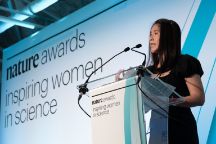
Swinburne Sarawak researcher, Ts Dr Lee Sue Han has won a 2025 Inspiring Women in Science Award for her AI-driven biodiversity research, which uses artificial intelligence to identify plant species, protect ecosystems and support sustainable agriculture.
Friday 06 March 2026 -
- University
- Student News
Course Changers: Meet students who found their path by changing their studies
For some students, changing course or major can be part of finding the right path at Swinburne – and support is available to help make the switch
Tuesday 10 March 2026 -

- University
Time to dare to be bold
This opinion piece by Swinburne's Vice-Chancellor and President, Professor Pascale Quester AO, was originally published in the Herald Sun on Monday 23 February, 2026.
Monday 23 February 2026


